A ladder supplier should help buyers choose by work condition, not by material slogan. Aluminum and fiberglass ladders are often compared as if one is always better, but the right choice depends on weight, electrical environment, corrosion exposure, storage, transport, user skill, and job frequency. For distributors, the buying risk is stocking a ladder line that looks complete but does not match how customers actually work. A good supplier conversation starts with the job, the user, and the storage path.
JADDUO manufactures ladder products for household, trade, and industrial buyers that need practical reach, stable structure, and clear product matching. Since this article is about material selection and supplier planning, the focus is on how buyers should compare work conditions and available ladder categories without forcing one material into every use case.

Start With the Work Environment
The first decision is not material. It is the place where the ladder will be used.
Indoor maintenance and light handling
For indoor maintenance, retail backrooms, and light household tasks, weight and storage often matter more than extreme environmental resistance. Aluminum ladders are often valued because they are easier to move. JADDUO’s A Frame Design Stick Box Ladder Aluminum is a relevant product reference for buyers comparing compact step-ladder handling and everyday reach tasks.
Outdoor height and transport
Outdoor work may require longer reach, repeated vehicle loading, and stable foot contact on less predictable ground. Buyers should ask whether the user will carry the ladder alone, how often it moves between sites, and whether the ladder needs accessories such as hooks or balance support. A good ladder supplier should connect those answers to structure, not only catalog height.
Electrical risk changes the conversation
Where live electrical exposure may exist, ladder selection needs qualified safety judgment and local rule compliance. Fiberglass is often discussed for electrical environments, but buyers should not treat material as permission to work unsafely. Training, condition inspection, and correct job planning still matter.
Storage and transport decide daily acceptance
A ladder that fits the technical requirement but is hard to move may not be used correctly. Buyers should measure vehicle space, storage racks, doorways, and the distance users carry the ladder. This is where a ladder supplier can add real value by discussing handling, not only material type.
Aluminum Strengths and Limits
Aluminum is widely used because it is practical, but it is not universal.
Light handling helps frequent users
When a ladder is carried many times a day, lower handling burden can decide whether users work safely or improvise with the wrong object. Aluminum ladders can be attractive for store staff, property teams, and home users who need quick setup and takedown.
Surface condition still matters
Even a practical ladder needs regular inspection. Dents, bent rails, loose rivets, damaged feet, or unstable joints should remove the ladder from use until reviewed. A ladder supplier should give buyers inspection language that ordinary staff can follow.
Extension use needs careful matching
JADDUO’s Extension Ladder category gives buyers a starting point when height and outdoor reach become central. The material choice should be paired with length, overlap, foot design, storage path, and how the user will secure the ladder at the work area.
Aluminum lines still need segmentation
Not every aluminum ladder belongs in the same sales bucket. Step ladders, telescopic ladders, extension ladders, and compact household ladders answer different jobs. A distributor should ask the supplier to separate products by use case so the catalog does not become a list of heights with no buying logic.
Fiberglass Considerations Without Overclaiming
Fiberglass has important use cases, but buyers still need to ask practical questions.
Heavier handling can affect behavior
If a ladder is too heavy for the user, the material benefit may be lost through poor handling. Teams may drag the ladder, set it at a bad angle, or avoid moving it to the safest position. A ladder supplier should discuss weight honestly, especially for long ladders.
Inspection is different from aluminum
Fiberglass surfaces should be checked for cracks, blooming, contamination, or damage that may affect safe use. Buyers should ask suppliers how inspection and storage guidance will be presented to end users. A ladder line is stronger when the customer knows what to look for after months of work.
Historical comparison can support the buyer
JADDUO’s article on fiberglass vs aluminum ladder for your next industrial project naturally continues the same material comparison for readers who want a broader industrial view. It should support, not replace, project-specific risk judgment.
Supplier Checks Before Placing an Order
Before approving a ladder supplier, record evidence that can be checked against the selected model: applicable certification and test scope, material specification, maximum load, available lengths, closed dimensions, gross weight, inspection method, replacement-part support, MOQ, lead time, and packaging standard. JADDUO’s company profile lists ISO9001:2015 quality management, EN131-certified telescopic ladders, negotiable wholesale/OEM MOQ, and 15-30-day custom production lead times. Confirm the order-specific quotation and model documents before approval.
The final supplier decision should test whether the ladder range fits real selling conditions.
Ask for use-case grouping
A supplier should be able to group ladders by indoor maintenance, outdoor reach, vehicle loading, household storage, and work-condition risk. If every ladder is described with the same generic promise, the buyer has little help building a shelf or catalog.
Review accessories and stability features
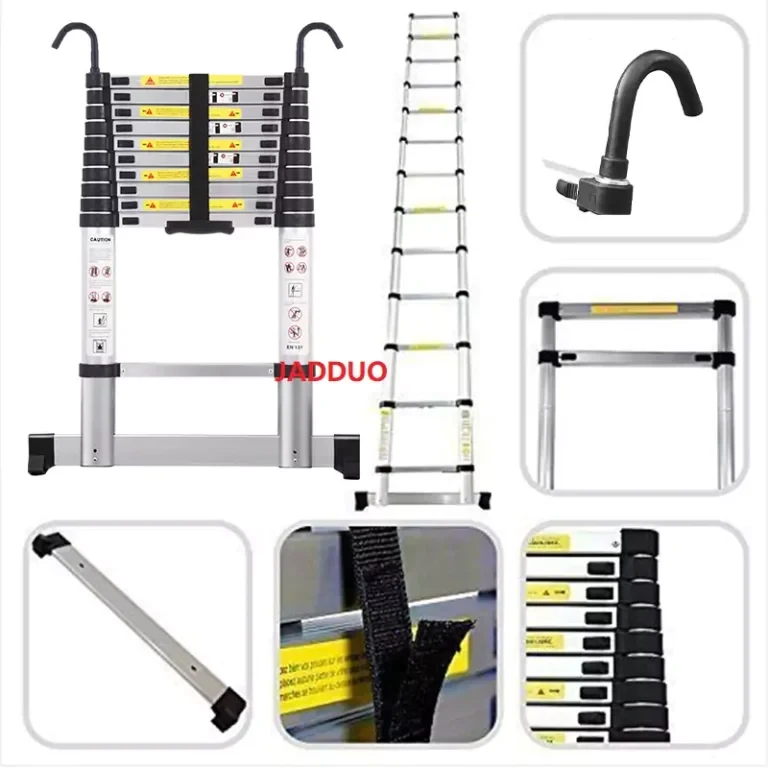
JADDUO’s Pole Single Telescopic Ladder With Hookbalance Bar is a useful reference when buyers consider hook support, telescopic use, and balance-bar handling. Accessories should be treated as use-case tools, not decoration.
Check packaging, labels, and reorder consistency
Aluminum vs. Fiberglass: Quick Purchase Decision
| Work condition | Starting material | Confirm before order |
| Frequent carrying and indoor maintenance | Aluminum | Closed size, handling weight, feet, hinges, and task height. |
| Potential electrical exposure | Fiberglass candidate | Qualified safety review, exact intended use, inspection method, and local rules. |
| Outdoor reach and repeated transport | Either, by configuration | Length, overlap, support points, storage path, accessories, and securing method. |
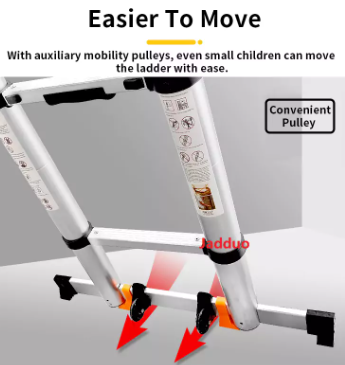
For wholesale buyers, the ladder must arrive clearly packed, labeled, and consistent enough for reorder. Packaging should protect rails, feet, hinges, and accessories. Labels should help the end user choose the right ladder without needing the supplier’s sales team in the aisle.
Ask for failure examples
A useful supplier can explain common misuse, transport damage, storage problems, and inspection failures. These examples help buyers write better product pages and staff training. They also reveal whether the ladder supplier understands field use or only repeats catalog descriptions.
For distributors, these examples also help sales teams recommend with more confidence when customers describe messy real jobs instead of neat catalog scenarios during busy counter conversations.
Build the range around user confidence
The final line should help customers feel they chose the right ladder before they climb. Clear height grouping, use-condition labels, accessory notes, and inspection reminders all support that confidence. A ladder supplier that helps with this structure can reduce wrong purchases and strengthen repeat orders.
Conclusion
Aluminum and fiberglass ladders answer different work conditions. Aluminum often fits frequent handling and lighter movement; fiberglass enters the conversation where electrical-risk environments require qualified judgment. A ladder supplier should help buyers compare environment, handling, height, inspection, and storage before choosing the final line.
Contact
If your team is comparing aluminum ladders, extension ladder categories, or supplier options for different work conditions, send your project and order details through JADDUO’s contact page.
FAQ
Should a ladder supplier recommend aluminum or fiberglass first?
The supplier should ask about work environment, electrical exposure, height, handling, storage, and user training before recommending a material.
Are aluminum ladders only for light work?
No. Aluminum ladders can serve many work conditions, but buyers still need to match structure, height, duty needs, and inspection rules to the job.