
The load capacity of a ladder’s rungs is so often listed as a single number on a product page. Yet that single number is almost always of little use to serious potential buyers. Does the number include the weight of clothing and tools that the worker will be wearing? Does the number apply to all configurations of the ladder? Is the platform load capacity listed separately? Is the number specific to a particular model or are the numbers for all similar models in the product family identical?
To ensure a safe and suitable ladder for use by homeowners, contractors, retailers and importers alike, these are important questions to consider when purchasing a ladder that meets the required height. The rating must be considered as part of a complete use brief and the working load, configuration and floor conditions all need to be suitable.

What the Rating Usually Means
The maximum load of a model is the total load that the ladder is designed to carry when it is in that position. That includes the user and any footwear, tools, materials, etc. that will be on the ladder while it is being carried in that position up against a surface, while it is being used while standing on it, etc. Don’t push to try to exceed this number and don’t rely on an overloaded or damaged ladder to hold its own weight.
In addition to the load capacity of a ladder, also take into account the floor conditions and the support. A ladder with sufficient load capacity can still topple over if one end of it is standing on a slippery floor or if the top contact is poor. The load capacity is a structural characteristic and must not be confused with the setting up, checking and correct use of a ladder.
In the United States, the American Ladder Institute explains duty-rating categories such as Type I, Type IA and Type IAA. Those categories are useful when a buyer is comparing products for the US market, but a category name should not replace the actual manufacturer’s model rating and instructions. A European or other market may use a different marking system.
Separate User Weight From Working Load
Suppose a worker weighs 85 kg, carries 8 kg of tools and brings a 5 kg material pack. The ladder needs a published working limit that covers the combined 98 kg, with a sensible margin for the task and the approved position. A product listing that says “150 kg capacity” should still be read as a total load limit, not as 150 kg available for tools after the worker climbs on.
Will the Platform Height be Limited by the same height as the Ladder? For a multi-position ladder, are the ratings for A-frame, leaning and platform configurations different? Don’t create a higher rating than the manual says!
Check the Rating Against the Ladder Type
Load to structure will vary from product to product. A step ladder will carry load mainly in the center of the front and rear sections. An extension ladder will carry load through the rails, rungs, feet and upper contact point. Telescopic ladders require section locks to be fully engaged prior to use. Platform ladders have standing surfaces and in some designs, guardrails and support frames.
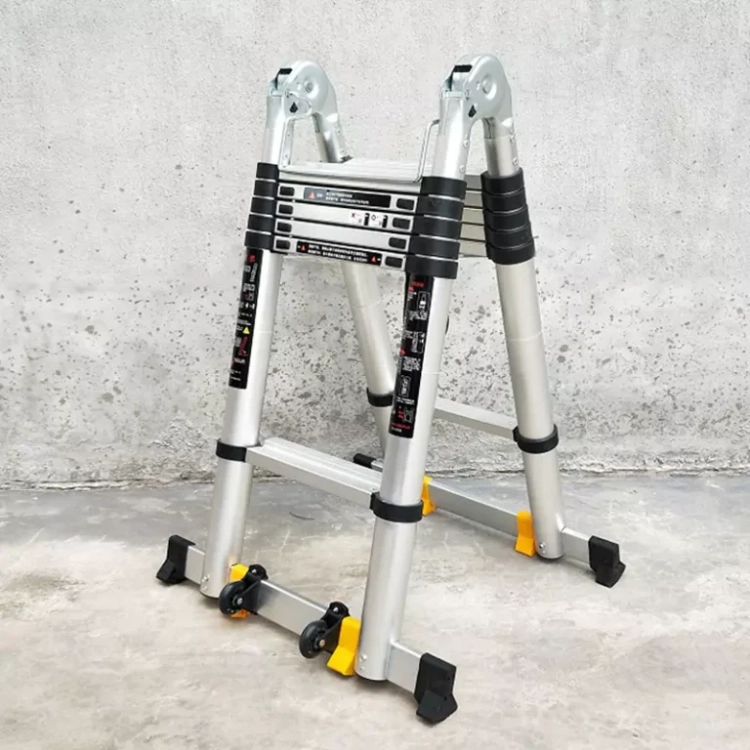
The Jadduo multipurpose ladder range is configured in a number of different designs and therefore the configuration must be checked. Ladders can be used in an A-frame form, as a straight ladder or as a work platform. However, the design and instructions need to have been supplied for that specific use. Therefore a rating given for use as an A-frame would not necessarily be transferable to another model used in a different form. Check the supplied drawings, lock condition and platform instructions carefully.
| Buyer check | What to record | Common mistake |
| Model | Full model code and revision | Using a family name only |
| Total load | Worker plus tools and materials | Treating the rating as tool capacity |
| Position | A-frame, straight, extension or platform | Applying one mode’s rating to every mode |
| Surface | Flat, stable and suitable for the feet | Focusing on capacity while ignoring setup |
| Documentation | Manual, label and product drawing | Relying on a sales headline |
| Condition | Locks, rungs, feet and rails intact | Using the original rating after damage |
Height Does Not Increase Capacity
There is a common misconception that longer ladders are stronger as they reach higher. However, longer rails can significantly change the way a ladder is handled, its deflection and the forces that are imposed upon the support points. The rating of a ladder is specific to the tested or specified model and position and should not be assumed to relate to the height of the ladder.
The same rule also applies to accessories such as balance bars, contact stabilizers, contact surfaces and wheel kits. Although these parts can improve the ride and contact, they do not automatically increase the maximum load. The supplier must also approve the respective model for the respective accessory and indicate whether it must be used differently than the standard version.
How to Verify a Supplier’s Capacity Claim
Request a specification sheet which outlines model, materials, dimensions and maximum total load as well as approved configurations. In addition request reference to tests and/or certification documents available for the respective target market. It is essential to clearly distinguish between the ladder’s net weight and gross shipping weight. The gross shipping weight is useful for logistics but does not represent the ladder’s operating load.
Check sample against approved drawing – compare label with manual against approved drawing including lock positions, feet, rungs, platform and any stabilizers. Document any damage or changes prior to storing for issue. Receiving checklist supports purchasing but does not replace end user pre-use check.
OSHA ladder requirements and the CPSC portable ladder safety alert both reinforce the practical point: use the ladder according to its design, place it on a stable surface, inspect it and do not exceed the rated load. These official sources are useful links for product teams writing manuals and retail copy.
The Jadduo working platform ladder is a product specific reference page. Use the model number information listed on this page to request current manual and shipping information before committing to a private label or project.
For identical height models, compare a complete stock list, including packing cases, spare feet, replacement labels and test inspection lists. Also assess the speed of reply to technical queries. Field maintenance and customer service by contractors can be significantly affected by a distributor’s choice and the constant need for replacement parts is a critical factor.
Write Better Product Listings
A listing for man rides should clearly detail model #, Total Load, Approved Positions, Working Height, Packed Dimension, and what’s included. Detail that the Total Load includes person and tools. Refrain from making claims such as ‘unbreakable’, ‘safe for any job’, ‘unlimited uses’, etc. to list man rides. A correct listing will allow the customer to select the correct man ride and, in the long run, will result in fewer after-sales problems for the distributor.
It is also good to be clear about what the number does not include. Instructions, links or manuals to accessories should be stored with the respective product. In this way buyers can compare similar items rather than mistakenly assuming that a platform, a stabilizer or a wheel set automatically increases the capacity of a machine.
For a range with several materials or configurations, keep a separate record for each SKU. The label, carton, manual, photographs and online page should describe the same item. When a factory changes a rung, foot or hinge, update the record and recheck the rating rather than carrying the old claim forward.
If you are sourcing for a retail or project program, send the user weight range, tool load, working position, target height and market documents to the Jadduo wholesale enquiry team. The supplier can then quote a model against the real working load instead of a vague “heavy duty” request. The Jadduo company reference is useful when the purchasing file needs a named manufacturer.
FAQ
Does ladder load capacity include tools?
The total load for the model. This would include the person building, the tools being used, and the materials. Check the model’s instructions for any special cases.
Can a stabilizer increase the ladder rating?
Contact or handling may be improved but the approved model rating still controls.
Is 150 kg enough for every professional job?
No. The choice of the models for simulation depends on total load, configuration, height, surface and local requirements. The respective model is used for a specific task.