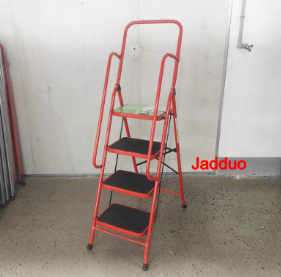
Hinge locks deserve their own line on a sample approval sheet. A multi-position ladder can look ready to climb while one joint has not engaged.
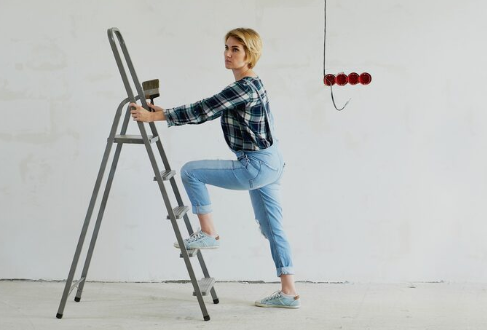
Establish which positions the model actually supports
Lock indication is what the manual says you should see or feel when the joint engages. If a position is missing from that model’s manual, its name on a catalogue page does not make it usable.
Position map is the drawing kept with the sample, with allowed modes ticked off by hand. Joint check is two separate notes: left pin seated, right pin seated.
Make a position map, not a list of marketing names
The HSE guide to combination ladders calls for a lock check after changing setup. Record the allowed modes from the manual on one sheet:
| Mode on the approved sample | Joint and accessory evidence |
| A-frame | Both joints at the documented stop; all feet down |
| Straight | Both joints aligned; correct support and base |
| Double-A, where permitted | Each section at its own specified stop |
| Platform, where permitted | Locks seated before fitting the dedicated plate |
Jadduo gives indoor painting and light replacement as A-frame uses, exterior wall work or pruning as straight-ladder uses, and a separate steel plate for its platform arrangement. Applicable multi-purpose models can also form a double-A. The sample manual determines which of these arrangements the ordered model permits.
Treat a platform arrangement as a complete kit
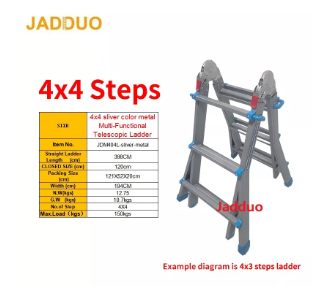
Jadduo makes multi-purpose ladders that can be arranged as an A-frame or straight ladder. Applicable models also offer a double-A shape and a platform arrangement with a separate plate. The metal multi-functional telescopic ladder page lists straight and A-frame uses across 4×3 to 4×6 step variants. It gives a maximum load of 150 kg for those variants, but does not list a platform plate. Confirm the figure and permitted arrangements on the exact variant’s label and manual before quoting them to customers.
If the platform is part of your order, unpack and fit the dedicated plate on the sample. Which rungs support it? What keeps it in place? Does the manual change the standing area in this mode? Count every fitting that goes into the carton. The site’s platform versus multi-position ladder guide addresses the choice of equipment; a sample review answers whether the selected kit is complete.
Inspect the hinge as a working joint
Look at the joint, pins and stops
Compare the two joints while the sample is unloaded. Photograph both from the same angle. For example, a damaged casting or an absent fastener ends the review before any climbing check.
| Joint detail | What to record |
| Housing and stops | Cracks, deformation or a stop that misses its mating surface |
| Pins and retainers | Pin seated at the position named in the manual |
| Rail connection | Fastener present; no unexplained movement at the attachment |
| Motion | Binding or unequal travel between left and right joints |
Check the locked indication on both sides
On the sample sheet, photograph the engaged pin on each side. The picture should show the position mark and the adjoining rail; a close crop of the pin alone loses the context.
An uncertain lock fails the sample review. OSHA’s portable-ladder card calls for pre-use inspection and removal of damaged ladders from service. Leave the ladder unloaded until the maker explains the joint.
Repeat the check after every configuration change
Follow the whole change sequence
Use this sequence for each permitted setup:
| At the sample | Record |
| Release the joint as instructed | Where the user holds the frame and how hands avoid the moving gap |
| Move both halves into position | Whether each side reaches its intended stop without force |
| Engage and check both locks | The visible or tactile confirmation named in the manual |
| Set the ladder on its base | Foot contact, level steps and any accessory required for this mode |
Jadduo’s A-frame, straight, double-A and plate-equipped platform arrangements are distinct setups for applicable models. Do not use a photo of one model to authorize a mode on another. The order should state the exact position map agreed on the sample.
Check the complete base in the new position
Hinge position changes the footprint. After each conversion, check the feet and any spreader or balance bar. Jadduo’s multi-purpose range uses anti-slip foot caps and, on relevant models, a balance bar for the base. Those components must be present in the quote and sample if the configuration requires them. For example, a bar cannot turn uneven ground into a suitable work surface.
The balance bar is detachable on relevant Jadduo models; transport wheels may be purchased separately. Ask whether the signed sample includes the bar, its feet and any wheel before photographing each approved configuration. Multi-purpose ladders fold for storage, so the sample check should also include the return to its closed form. Larger frames may need garage or tool-room space even when the hinged sections fold compactly.
Turn the sample findings into an order specification
A close photograph of a hinge can hide the position of the whole ladder. Step back for one frame that shows both rail sections, then take separate close-ups of the left and right locks. Number those pictures in the order the sample was converted. If a question comes up after shipment, the buyer can tell whether a lock image was taken before or after the joint reached its stop. Keep photos of a rejected setup out of the approved sample set.
Put the signed sample beside the order specification.
| Entry on the sample sheet | Evidence worth keeping |
| Model code and instruction revision | Photograph of the product label beside the manual cover |
| Allowed positions | The maker’s position drawing with unsupported angles crossed out |
| Left and right joints | One close photograph per joint in each approved position |
| Platform kit, if ordered | Plate, fittings and the assembled platform on the same sheet |
| Feet and balance bar | Photograph of the full base in each configuration |
| Factory check | The inspection step and record the maker uses before packing |
| Lot reference | Marking that connects the approved sample to the shipment |
Record function and visible condition
Keep the sample review record specific:
- Did both joints engage without forcing them?
- Did the ladder open and fold as instructed several times?
- Were the pins, stops and fasteners present and aligned?
- Was any movement outside the factory’s stated acceptance range?
Note a concern even if it disappears on the next try; an intermittent lock deserves an explanation.
Jadduo processes tubes before assembly, then labels and packs the finished ladder. Its workshop has cutting, punching, riveting and tube-expanding equipment. These stages identify where to ask for records; they do not establish a hinge tolerance or prove that a particular lot was tested.
| Process point | Record to request for the chosen hinge |
| Cut and drilled rail | Current drawing and model identification |
| Stamped or riveted joint | Fastener and alignment inspection criteria |
| Assembly | Evidence that both locks engage at permitted positions |
| Labeling and packing | Manual revision and lot identification |
Agree what happens if a joint fails
Ask Jadduo whether the joint is supplied as a model-specific service part, whether the ladder is replaced, and who approves a repair. Record the model and lot of any rejected unit.
For an OEM order, attach the position map, manual revision and joint photographs to the signed sample. If the hinge, plate, balance bar or label changes, review the new sample before the next lot. This is easier than arguing from a catalogue image after shipment.
Use the Jadduo sample to ask the right questions
Send Jadduo the intended tasks and permitted positions through its contact page. The About Us page identifies the supplier, while the model manual and signed sample establish the permitted positions. State whether you need the plate, balance bar or other loose parts in every carton. Ask for an instruction sheet, opened-position photos and a physical sample. Then carry out the checks with that sample. A hinge is approved when the two sides, the written directions and the packed kit agree.
FAQ
Can the same hinge be used in every ladder arrangement?
Use only modes shown for the actual model. If the instruction sheet omits a platform position, hold the order and ask which manual revision applies. After each change, check both locks.
Is a larger hinge automatically safer?
No. A wider housing tells you little about pin engagement. Put the models side by side and compare their drawings, stops, fasteners and allowed positions.
Should buyers order spare hinge kits with a wholesale lot?
Get a service part number tied to the model first. Otherwise the spare bag may be unusable when it arrives.