Most people think using a ladder is straightforward. You lean it, climb, and start working. But anyone who has painted a tall wall, fixed a roof, or worked on a busy site knows the angle of the ladder is not a small detail. It’s the difference between a safe climb and a dangerous slip. In this article, we’ll walk through how to set the right angle for an extension ladder. We’ll also look at how Jadduo’s ladders—like the 2 Section Ladder With Pulley and Rope and the Red Insulated Multi Functional Ladder Big Hinge—fit into real work situations.
Ladder Angle Importance for Safety
Correct Angle Gives Stability and Stops Slipping
The right angle is not just a tip. It’s what keeps the ladder from sliding at the bottom or tipping back. Too steep feels like climbing a wall. Too flat feels like walking up a slippery hill. Both are risky.
Lower Risk of Falls in Work and Home Tasks
Falls from ladders are common. In fact, thousands of people get hurt every year. On a job site, one fall can stop the whole project. At home, it can mean a broken arm or worse. A steady angle cuts down the chance of accidents.
Meeting EN131 and ANSI Safety Rules
For companies, safety is also about following standards. EN131 in Europe and ANSI in the U.S. both set clear rules for ladders. Using the right angle is part of meeting those rules.
Measuring the Right Extension Ladder Angle
The 4 to 1 Rule for Ladder Setup
The most common guide is the 4-to-1 rule. For every 4 feet of ladder height, the base should be 1 foot away from the wall. If your ladder reaches 16 feet, the bottom should be 4 feet out. It’s simple math, but easy to forget when you’re rushing.
Using Ground and Wall Distance as a Quick Check
You may not always have a tape measure. A quick trick: stand with your toes at the ladder’s base, stretch your arms forward, and your palms should touch the rung at shoulder height. If you can’t reach, the ladder is too steep. If you lean too far, it’s too flat.
Looking at Body and Ladder Position
Sometimes you can just see it. If the ladder leans like it’s about to fall, it’s wrong. Workers often say, “If it looks off, it probably is.” Trust your eyes and your balance.
Features That Help Keep the Right Ladder Position
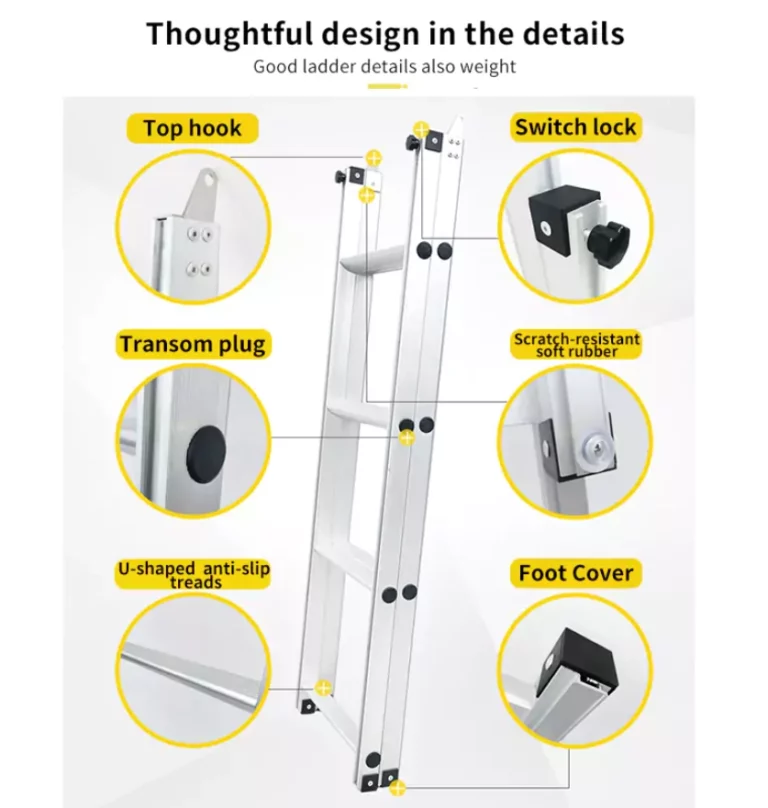
Non Slip Steps and Strong Foot Covers
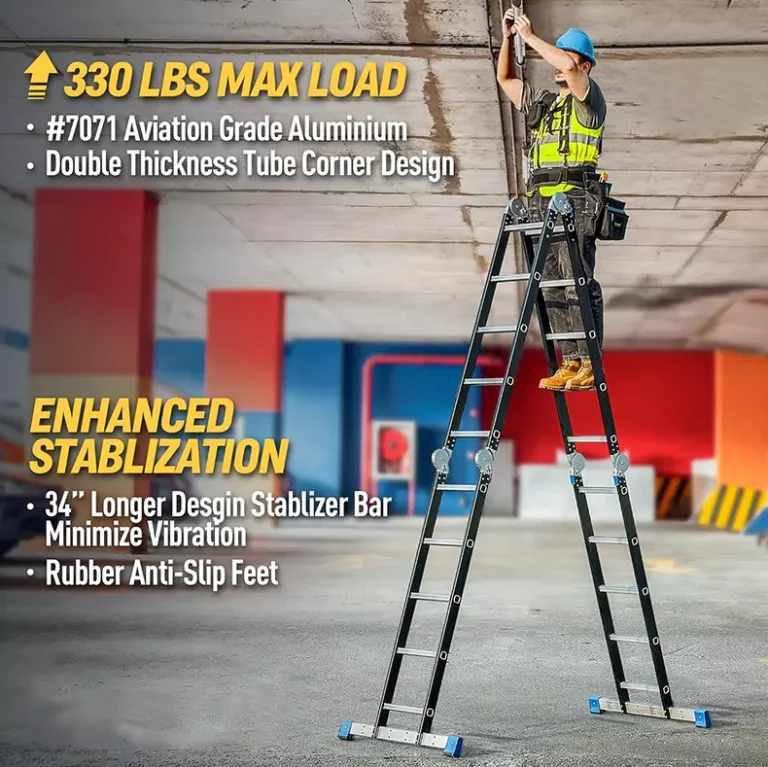
Even with the right angle, the ground matters. Mud, gravel, or smooth concrete can all cause slipping. Ladders with non slip feet and textured steps, like those from Jadduo, add extra safety.
Pulley and Rope System for Easy Adjustment
The 2 Section Ladder With Pulley and Rope makes changing height easier. Instead of lifting heavy sections, the rope system lets you extend or pull back smoothly. This keeps the ladder steady while you work.
Big Hinge Design for Different Positions
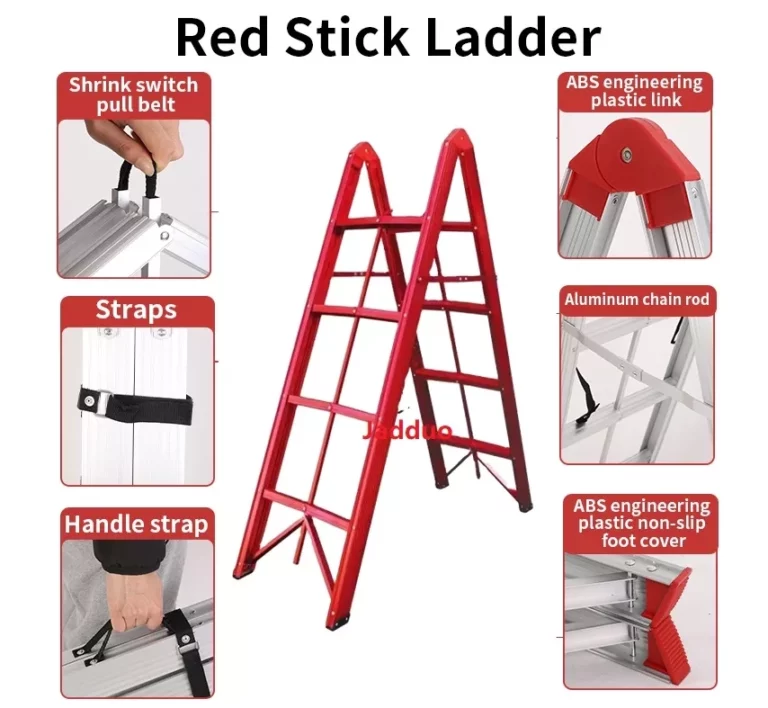
The Red Insulated Multi Functional Ladder Big Hinge has a strong hinge system. This hinge locks the ladder in different shapes, whether you use it as a straight ladder or an A-frame.
Choosing a 2 Section Ladder With Pulley and Rope
Height Options for Many Jobs
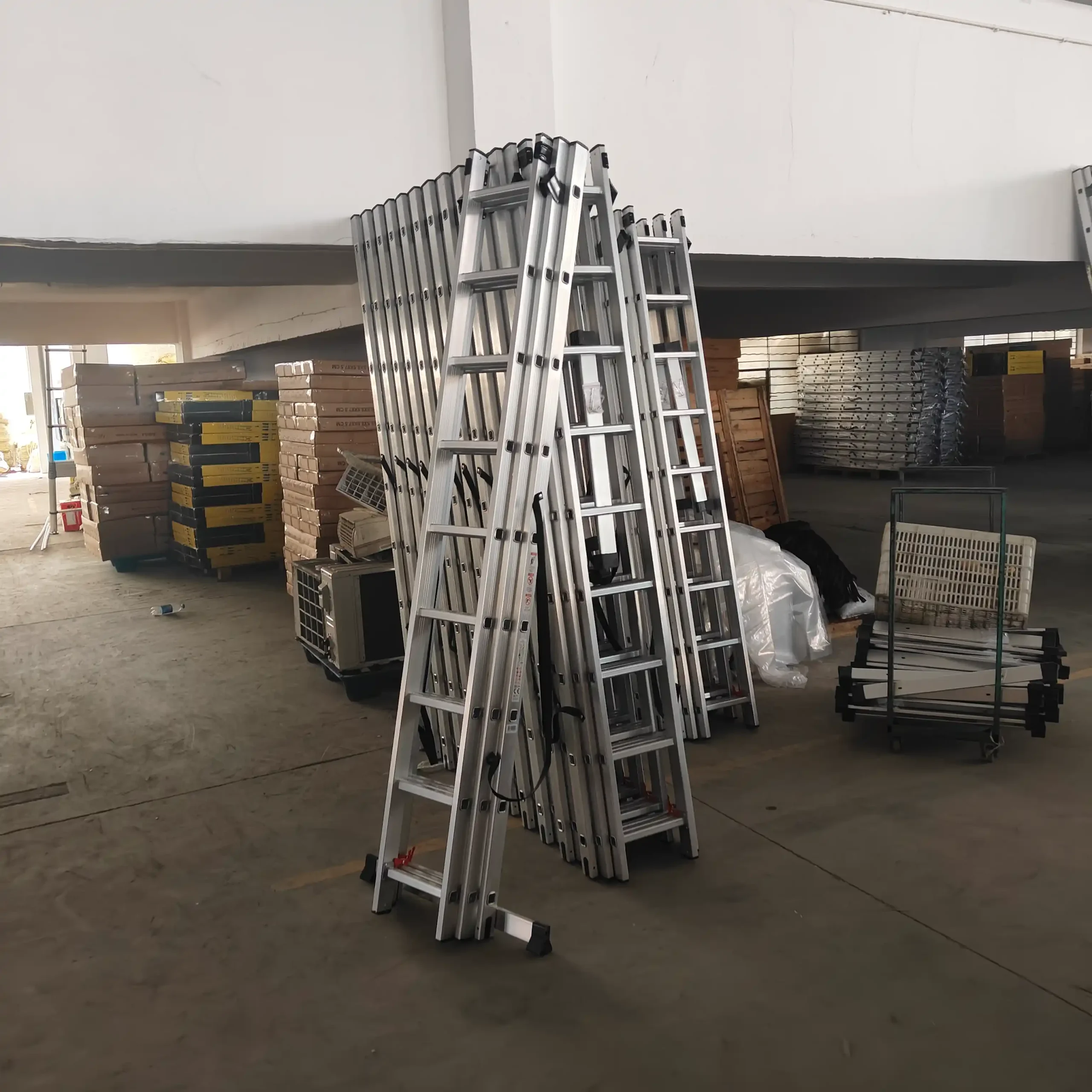
On a building site, one day you may paint a 3-meter wall. The next day you may need to reach 6 meters. A two-section ladder can do both without needing two ladders.
Rope System for Easier Use
The pulley system is not just about comfort. It lowers the strain on workers, especially when the ladder is tall. Less strain means fewer mistakes.
Light Weight for Carrying Indoors and Outdoors
Aluminum makes the ladder light to carry but still strong. For workers who move from site to site, this balance is very useful.
Benefits of the Red Insulated Multi Functional Ladder
Insulation for Electrical and Telecom Work
If you work near power lines or panels, the red insulated ladder is the right choice. Fiberglass insulation lowers the risk of electric shock. Electricians and telecom workers often need this type.
Two Modes as Straight Ladder or A Frame
Sometimes there is no wall to lean on. The A-frame setup solves this. It is also good for indoor jobs, like changing lights in a warehouse.
Strong Hinge for Long Use
The big hinge is built to handle folding and unfolding many times. It does not loosen easily. This means fewer shakes and longer life.
Workplace Efficiency With Jadduo Ladders
Quick Setup With Simple Design
Time is money. A ladder that sets up fast saves minutes on every task. Over weeks, that adds up.
Less Downtime From Safer Features
Accidents hurt people and stop work. Reliable ladders cut downtime. That is why many contractors choose Jadduo.
Many Uses Across Jobs
From painters to telecom crews, Jadduo ladders fit many roles. One ladder can do many tasks, so you do not need extra tools.
Key Considerations Before Buying an Extension Ladder
Load Capacity and Step Design
Always check the weight rating. A ladder rated for 150 kg is fine for most jobs. Heavy-duty work may need more.
Storage and Portability
If you run a small shop, storage space matters. A foldable or two-section ladder saves room.
Certification and Safety Standards
Look for EN131 or ANSI marks. These show the ladder has been tested in real conditions.
Final Thoughts
Finding the right angle for your extension ladder is not hard. But it does need care. The 4-to-1 rule, solid footing, and the right ladder all matter. With products like Jadduo’s 2 Section Ladder With Pulley and Rope and the Red Insulated Multi Functional Ladder, you get more than tools. You get peace of mind. Once you climb a ladder that feels steady, you will not want to go back to a shaky one.
FAQs
Q1: What is the safest angle for an extension ladder?
The safest angle is about 75 degrees. This follows the 4-to-1 rule: for every 4 feet of height, place the base 1 foot away from the wall.
Q2: Can I use an extension ladder on uneven ground?
Yes, but only with stabilizers or levelers. Never balance it on bricks or random supports. Jadduo ladders with wide foot covers help in these cases.
Q3: Why choose an insulated ladder for electrical work?
Insulated ladders, like Jadduo’s red fiberglass model, lower the risk of electric shock when working near wires. They are a must for electricians and telecom teams.