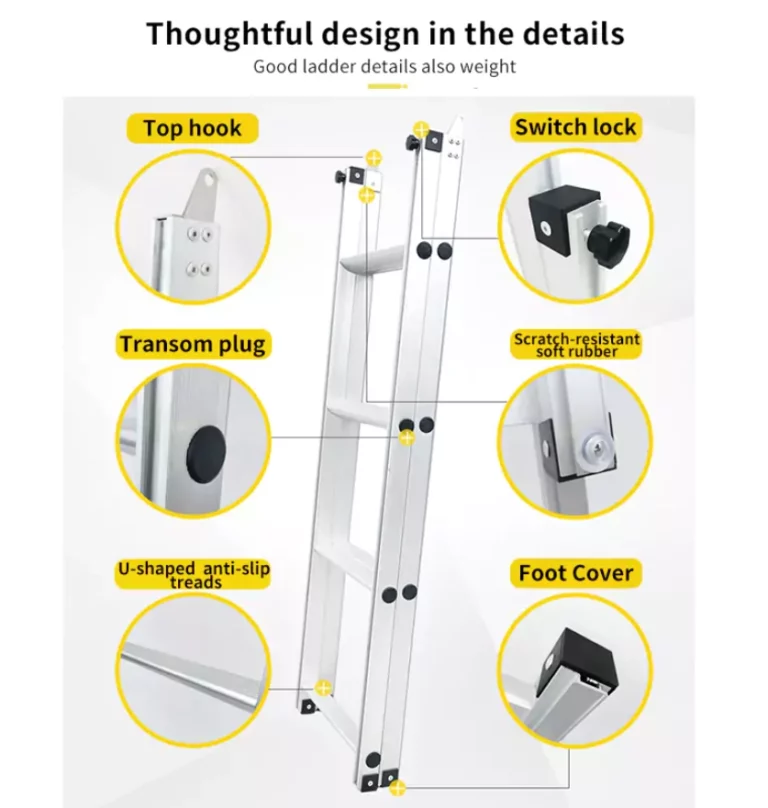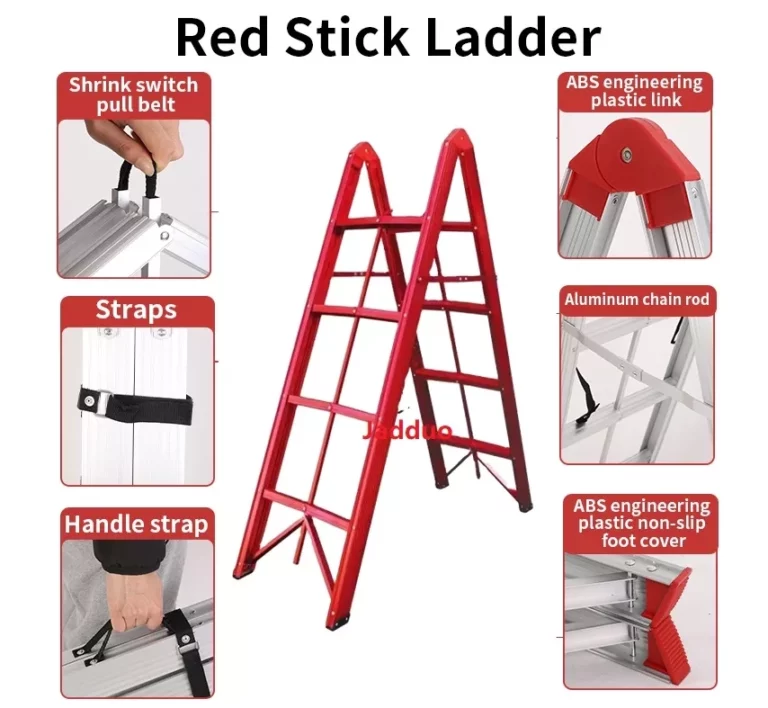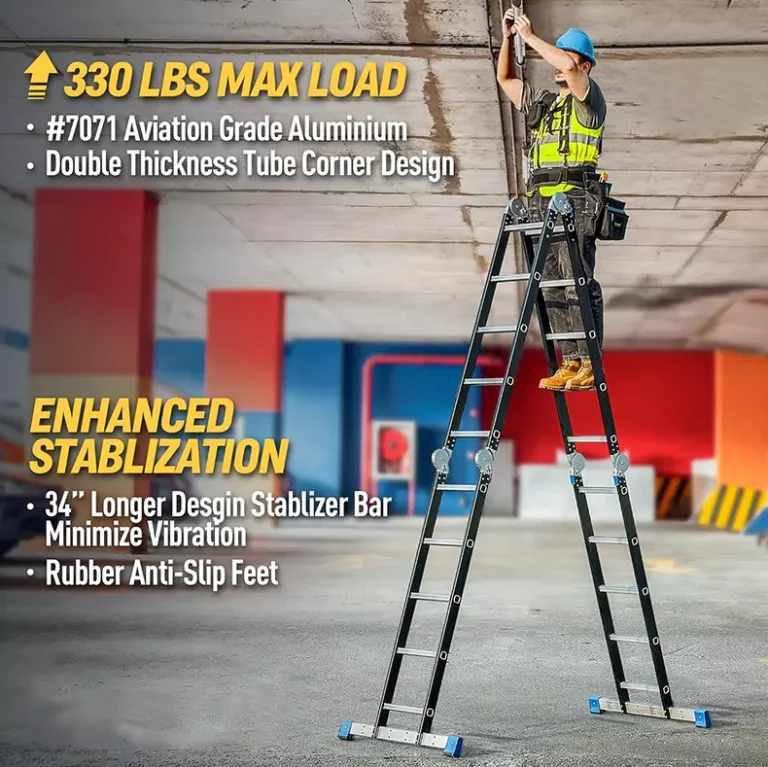
People use aluminum ladders for everything: cleaning gutters, changing light bulbs in a shop, reaching high shelves in a garage, or trimming trees. They’re light enough to carry with one hand, strong enough to trust your weight, and most folks just want to know one thing — can I leave it leaning against the house or in the yard all year long? The honest answer is: yes, you can, and it won’t suddenly break, but the weather will slowly leave its fingerprints on it. How much it matters depends on where you live and how picky you are about looks and smooth operation.
Before we get into rain, sun, and dust, it’s worth knowing that modern ladders aren’t the flimsy ones from twenty years ago. Factories like Jadduo in Yongkang, China, now use thicker, higher-grade aluminum, stronger rivets, and they test every design to the tough European EN131 standard. That extra effort gives their ladders a real fighting chance against the outdoors, even though no ladder is truly made to live outside forever.
What Happens to an Aluminum Ladder When Left Outdoors?
The changes don’t slap you in the face after one rainy week. They sneak up over months and years.
Material Oxidation and Surface Aging
The moment aluminum meets air, it grows a super-thin shield of oxide — that’s actually what keeps it from rusting away like steel. Leave it outside for a long time and that shield gets a little thicker and rougher. The ladder loses its bright shine and turns a flat gray or slightly powdery. Most folks don’t care, and it does zero harm to strength, but it no longer looks brand-new sitting in your driveway.
Structural Stability Under Temperature Changes
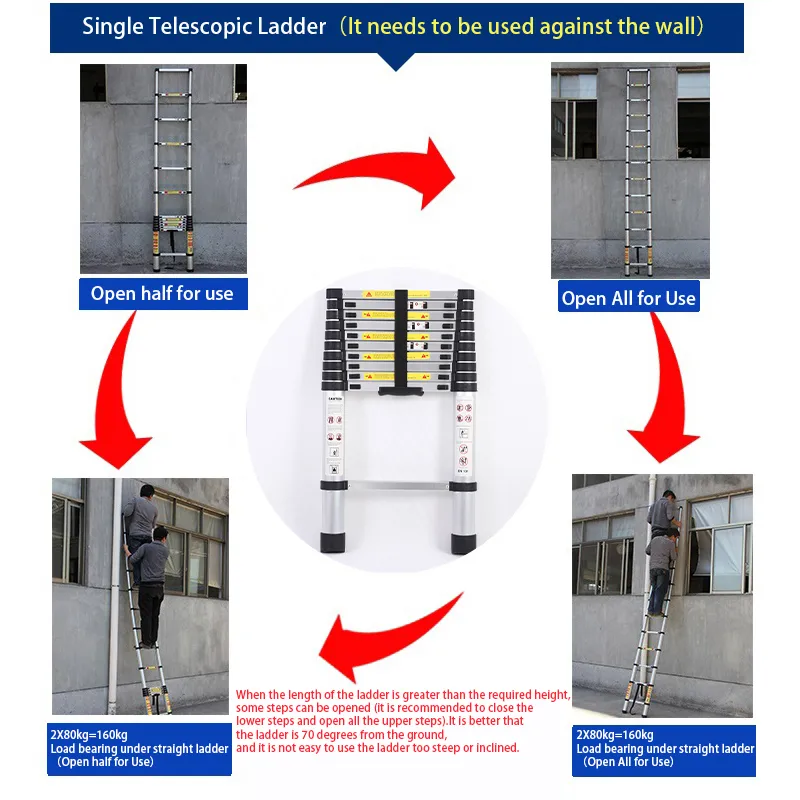
Hot days make metal swell a tiny bit; freezing nights make it shrink again. You won’t notice one hot afternoon, but after a couple hundred cycles some joints can feel a hair looser or stiffer than day one. Telescopic ladders notice this more because they have so many moving sections. Good brands beef up the critical spots so nothing unsafe ever happens.
Joint and Locking Mechanism Wear
Leaves, pollen, road dust, and sandbox sand all find their way into the buttons and sliding tubes. After a while the clicks aren’t as sharp, and the sections might drag instead of gliding. It’s more annoying than dangerous. A rag and five minutes usually brings everything back to normal, but if the ladder never comes inside, you’ll be doing that little chore pretty often.
How Do Rain, Sun, and Humidity Impact Aluminum Ladder Performance?
Every kind of weather leaves its own kind of mark.
Moisture-Driven Corrosion Resistance
Rain itself is no big deal for the aluminum — no rust, period. The only places to watch are the steel rivets, bolts, and springs hidden in the locks and hinges. Decent makers coat or stainless-steel those parts, but if water sits there week after week, those spots can get little rust freckles or stiffen up. On telescopic models, water trapped inside the tubes can make them stick until you dry the rails.
UV Exposure and Surface Discoloration
Direct sunlight beats up plastic and rubber way faster than metal. The black foot pads, red or blue locking buttons, and plastic end caps fade, harden, and sometimes get tiny cracks after a year or two. The aluminum might lighten half a shade, but you’d never notice any loss of strength.
Humidity Effects on Telescopic Sections
In humid places — think Houston, Miami, or anywhere near the ocean — the air is always damp. That moisture teams up with fine dust and turns into a sticky paste inside the tubes. You can still force the ladder open and closed, but it feels gritty and heavy. Models with tight nylon guides or slight grease from the factory fight this problem better.
Can Telescopic Ladders Withstand Daily Outdoor Storage?
They can, and plenty of contractors do exactly that. Just don’t expect it to stay pretty and buttery-smooth forever without a little help from you.
Durability of Premium Aluminum Alloy
Today’s good aluminum laughs at normal rain, summer heat, and winter cold. Lots of people keep their ladder under the porch, in the carport, or chained to the shed wall for years with no real trouble. Thicker tube walls (the kind Jadduo puts in all their serious models) also mean it’s harder to dent if the wind blows it over.
Sealed Mechanisms and Anti-Slip Components
Newer designs have rubber feet that stay soft and grippy even when they’re wet, and some of the locking parts are half-covered so less junk blows in. Those small upgrades add up when the ladder never sees a garage.
Long-Term Strength of Telescopic Slide Rails
Rails that start out thick and straight keep sliding nicely for thousands of uses, even when a little dirt sneaks past. Cheap thin rails bend or gall; good ones just keep going.
Why Do Jadduo’s Aluminum Ladders Perform Better in Outdoor Conditions?
They didn’t get big by cutting corners. Their 10,000㎡ factory has real test machines that bend, twist, and overload every new design until it passes the same EN131 tests used all over Europe.
EN131-Certified Structural Safety
That certificate isn’t just a sticker — it means the ladder held 300+ kg in the middle of a rung, survived side-twist tests, and kept working after thousands of open-close cycles. On a lumpy lawn or gravel driveway it still feels planted.
High-Quality Aluminum and Reinforced Tubes
Jadduo uses proper 6063-series alloy with generous wall thickness. Drop a cheap ladder on concrete and you’ll see dents; drop one of theirs and you’ll probably just hear a loud clang.
Stable Feet and Anti-Slip Designs for Uneven Ground
Real-world ground is never perfectly flat. Their wide or full-contact feet spread your weight and grab on to dirt, wet wood decks, or uneven pavers so the ladder doesn’t dance around.
Which Jadduo Telescopic Ladders Are Most Suitable for Outdoor Use?
Here are three that outdoor workers and homeowners keep ordering over and over:
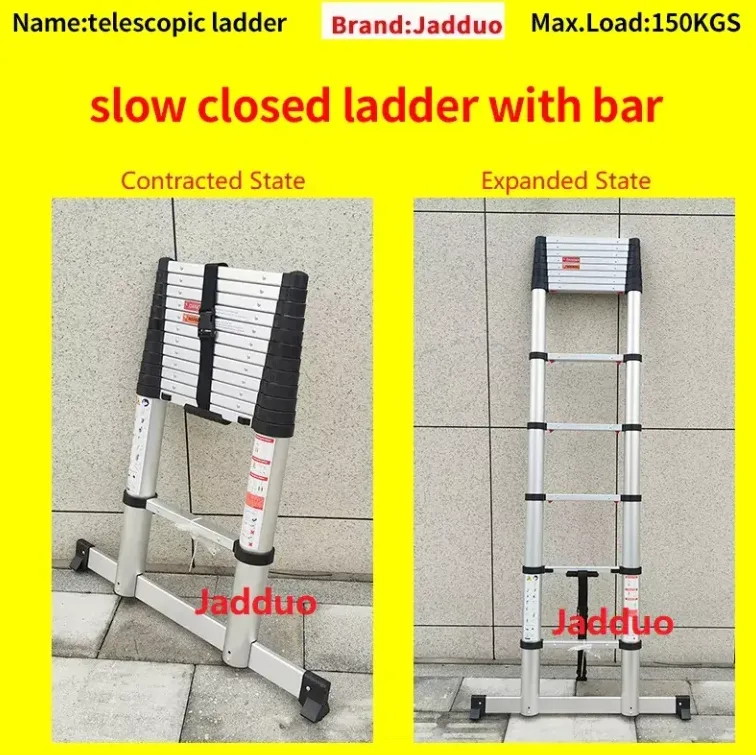
Aluminum Alloy One Time Folding Telescopic Slow Down Ladder
The soft-close mechanism means it lowers itself gently instead of crashing down. Roofers and gutter cleaners love it because they’re up and down all day and don’t want smashed fingers. Extra wall thickness makes it shrug off wind gusts.
Black Telescopic Ladder With Stable Foot 100% Fit Floor
Those big stable feet are the whole reason people buy this one. They mold to whatever you’re standing on — cracked concrete, wet grass, even loose gravel — and keep the ladder from tipping.
Step Space 30cm Black Telescopic Ladder Red Switches
The 30 cm rung spacing feels almost like a regular step ladder, so your knees don’t hate you after twenty trips up and down. Big red buttons are glove-friendly and easy to see when you’re tired.
FAQs
Q1: Can an aluminum ladder rust if left outdoors?
A: Never rusts like steel. You’ll just get a dull, chalky look after a year or three. Strength stays the same.
Q2: Is it safe to store a telescopic ladder in a backyard?
A: Completely safe, just not perfect. A cheap tarp or a spot under the eaves keeps the sliding parts happier longer.
Q3: How often should an outdoor ladder be cleaned?
A: Normal areas: once a month is fine. Dusty desert or beach house: once a week with a rag and maybe a shot of silicone spray keeps it silky.