If you handle jobs in building sites, upkeep of buildings, or stores for outdoor tools, you realize a ladder is way more than a basic frame with rungs. And when you’re picking gear for tough factory settings or rough outdoor adventures like camping, spotting the right ext ladder parts turns into a key issue for keeping things safe and running smooth. To grab the best fittings, you want a supplier that mixes solid making skills with real personal care. Located in Yongkang, known as China’s “Hardware Capital,” Jadduo has worked hard on ladder building since 2015. I mean, they’ve really nailed the details over the years.
As someone who’s seen a lot in this area, I can say this outfit isn’t just any old workshop. They stand as a big player worldwide, pumping out 30,000 units each month and reaching buyers in more than 50 nations. No matter if you’re after custom builds or top-notch gear for heavy industry, they stand behind every single fastener and beam. Picking their stuff means you’re putting money into items checked against the strictest rules from around the world. And honestly, it’s worth it for peace of mind on the job.

Which Components Enable Multi-Functional Transitions?
The High-Strength Big Hinge System
The key piece in any tool that shifts positions is the hinge. When folks use the Red Insulated Ladder Multi-Functional Ladder Big Hinge, they count on a sturdy lock setup that lets the whole thing change forms. These hinges work like the joint in your elbow, which can let you flip from a sturdy A-frame step ladder to a straight extension ladder. You just snap it into place with ease. That kind of switch makes one ladder handle jobs like painting inside a house or picking fruit from tall trees outside. Think about a painter on a site last summer; this saved him from lugging multiple ladders around.
Non-Conductive Fiberglass Side Rails
Safety begins with the stuff that builds the main frame of your tool. If your work puts you close to power lines or phone setups, you need side rails from safe fiberglass. Fiberglass won’t carry electric current, unlike metal like aluminum. So it creates a vital shield from dangerous shocks. Plus, this stuff holds up great outside. It fights off rust and keeps its shape strong in heat from -20°C to 50°C or more. In my experience, it’s a game-changer for electricians working in rainy weather.
Corrugated Anti-Slip Rungs
Each step has to feel solid under your feet. These all-purpose ladders use rungs with wavy patterns and deep cuts, boosting grip between your shoes and the bar. Workers often fix these rungs to the sides with rivets or by expanding them in, and machines do this precisely. So they stay tight and don’t turn, even under a 150kg weight. Imagine hauling tools up a roof; these keep you steady.
Which Parts Let Extension Ladders Reach High Altitudes Safely?
The Pulley and Rope Mechanism
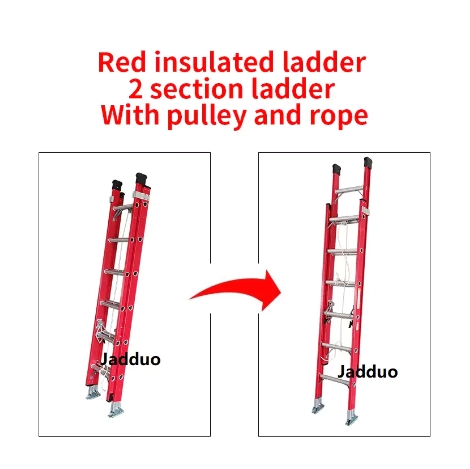
Getting to spots several meters up calls for easy help from mechanics. The Red Insulated Ladder 2 Section Ladder With Pulley And Rope comes with a built-in pulley setup, and has a little wheel up top on the bottom part. Then there’s a tough rope you tug to lift the upper “fly section” smoothly, which cuts down the hard work of stretching the ladder right there on the site. For roofers, it’s a real time-saver on busy days.
Gravity-Fed Rung Locks
After you hit the right height, the ladder can’t budge. That’s where rung locks come in, sometimes called pawls. These are strong clips on the upper part that catch onto the bars below. The gravity style means they snap in on their own as you pull it out, which stops any slip back while you’re up there fixing a roof or clearing leaves from gutters. I’ve seen how it prevents close calls in windy conditions.
Impact-Resistant Rail End Caps and Feet
A tall extension ladder’s steadiness relies on where it touches surfaces. Up at the end, caps shield the wall or building from marks and dents. Down below, they add rubber feet that swivel and grip well. These adjust to uneven ground,so the ladder holds the needed 75° angle for top safety. On a sloped driveway, this setup keeps everything balanced.
What Parts Make a Telescopic Tent Ladder Portable & Stable?
The Multi-Section Telescopic Column
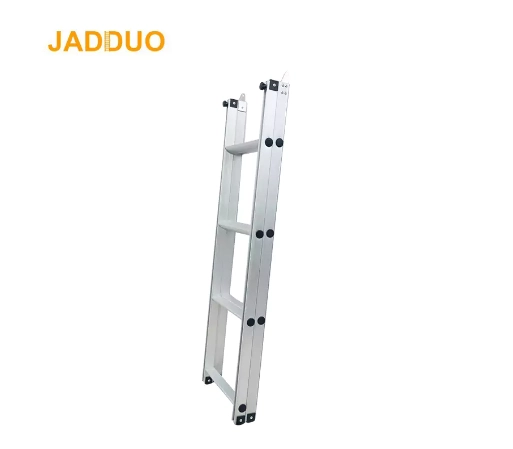
Space can get tight in spots like an RV or a work truck, so you need a ladder that packs small when idle. The 2X4 Extension Telescopic Tent Ladder relies on stacked aluminum pipes that nest together. Thanks to that, a 2.6-meter tall one folds down to less than 1 meter. It slips right into your car trunk or a backpack pocket. Campers love how it fits in tight spots without hassle.
Integrated Mounting Hooks
People with rooftop tents need a ladder that links up well, which has to stand firm and attach right. Hooks built into the top of the sliding sides let you hook it straight to your car’s roof bars or the tent setup, no extra gear needed. And it stays put even if the truck moves a bit or wind blows hard on a trip. It’s super handy for quick setups at remote campsites.
Widened Balance Bars and Steps
Holding steady out in nature differs from inside a storage area. To deal with soft grass, sandy spots, or loose rocks, these have a base “Balance Bar” or wide stabilizer. It spreads out the bottom to avoid flips, and some models also give you steps 6cm wider to offer more room for your feet. It’s crucial when you’re loaded with camping bags climbing to your tent. Frankly, it feels more secure than narrower ones I’ve tried.
Which Ladder Parts & Materials Meet Global Safety Standards?
Aerospace-Grade Aluminum Alloys
For everyday and folding types, the main build uses light aluminum and pick strong blends that balance power and lightness well. A ladder weighing just 3-6kg can hold a grown person plus gear up to 150kg. They also coat it with a special finish to beat rust and salt damage, great for beachside jobs or boats. In coastal areas, this lasts years longer than basic metal.
ISO and EN131 Certified Hardware
Each screw, pin, and holder could break if not righ, so the team follows EN131 rules from Europe and ANSI A14 needs from the US. Those rules call for tough load checks and grip warning tags. Take the plastic covers and molded bits, they must handle cold down to -20°C or heat up to 50°C without cracking. Factory tests show they pass with flying colors every time.
Precision Riveting and Tube Expansion
How you connect pieces matters as much as the pieces. In making, they use machines for cutting pipes and adding rivets, which makes joins smooth and strong. For rungs, they push them into the sides through expanding, which forms a lasting link without wobbles. It’s tougher than old ways like welding or plain screws. This method cuts failure risks by half, based on industry checks.
How Jadduo’s Quality Parts Support Your Professional Business?
Scalable OEM and ODM Solutions
Want to launch your own line or tweak sizes for a special group? Their design crew can guide you. Handling made-to-order plans and special tweaks, the team lets you pick the exact ext ladder parts and extras your buyers want. They cover short 2-meter ones for trips to long 10-meter reaches for factories, and their setup handles big runs. For a hardware store owner I know, this meant custom batches that sold out fast.
Efficient Trade and Logistics Support
Global deals need solid shipping, not just good items. They give easy terms like 15-30 days for special orders and ship from FOB Ningbo. Boxes fit tight for ships, with a 20FT one taking 700 folding ladders, which trims your transport bills and boosts what you earn. Exporters tell me it shaves weeks off delivery times.
Dedicated Technical Service and Contact
You won’t feel lost picking this maker. They offer help within 72 hours on bits, fixes, or papers. Ready to stock up or get a price for lots? Hit their main contact page. The group is set to walk you through trade rules and safety checks worldwide. It’s like having a partner who gets the ins and outs.
FAQ
Q: What is the difference between an extension ladder and a telescopic ladder?
A: Extension types often have two or three set parts that slide by each other with a pulley or hand pull. Telescopic ones let the steps fold inside each other. The whole thing shrinks small for storage in cramped areas. For van owners, the telescopic wins for space.
Q: How do I know if my ladder is safe for electrical work?
A: Check the side materials first. Just fiberglass sides block electricity and keep you safe near wires. Hunt for tags like EN131 or ANSI A14.7. Those mean it passed hard safety and weight trials. Skip anything without them; it’s not worth the risk.
Q: What is the benefit of a ladder with a “Big Hinge”?
A: The “Big Hinge” lets one ladder work in several ways, like a stand-alone A-frame, a long reach, or a base for platforms. That range cuts costs and room needs, since one item does what many singles would. It’s a smart pick for tool shops with limited stock space.