Setting up a ladder may appear straightforward, but the underlying physics of a secure climb often trips people up. Whether you are a homeowner tackling blocked gutters or a technician handling high-voltage power lines, the precise angle where your ladder contacts the wall decides if you remain steady or fall down. At Jadduo, a prominent ladder producer located in China’s “Hardware Capital,” we craft gear that addresses these practical dangers by adhering to rigorous EN131 and ANSI safety standards.
Why Is the 75-Degree Angle Critical for Stability?
In ladder safety practices, one key guideline stands out: the 75-degree angle. This figure arises from careful analysis, serving as the ideal position where gravity supports your efforts rather than hindering them. If the ladder leans too upright, it risks tipping back; moreover, if it slants excessively, the base might slip outward beneath you.
Prevention of Bottom Slide-Out and Top Tipping
When a ladder positions itself at about 75 degrees, the vertical force from your body weight presses the base solidly against soil or pavement. However, if the angle becomes too flat, this same force shifts to a horizontal push, which leads to the bottom sliding away. Our telescopic ladders incorporate this principle in their design, so the rungs remain even and the balance point stays centered within the side rails.
Optimization of Structural Load Distribution
Each ladder carries a specific load capacity, typically near 150kg for professional models. By achieving that 75-degree position, you distribute your weight uniformly across the side rails and locking parts. Consequently, this approach avoids bending in the metal or excessive strain on the connections, especially during extended shifts.
Enhanced Grip for Anti-Slip Foot Components
Contemporary ladders depend greatly on their base components, often called “shoes.” Jadduo ladders feature custom rubber bases and stabilizing bars that secure the ground most effectively at a 70-75 degree incline. This aspect proves vital on challenging surfaces, such as damp grass, shifting gravel, or smooth warehouse floors.
Understanding the principles is helpful, yet selecting appropriate equipment simplifies the task considerably. For roles in areas like telecommunications or major construction, a simple step stool falls short. Instead, you require tools engineered for elevation and particular site conditions.
Which Jadduo Solutions Are Best for High-Reach Tasks?
Jadduo’s product lineup emphasizes diversity. From our expansive 10,000㎡ facility, we produce a wide range, including lightweight aluminum options for casual users and robust fiberglass versions for experts who demand reliability.
Red Insulated 2 Section Ladder for Electrical Safety
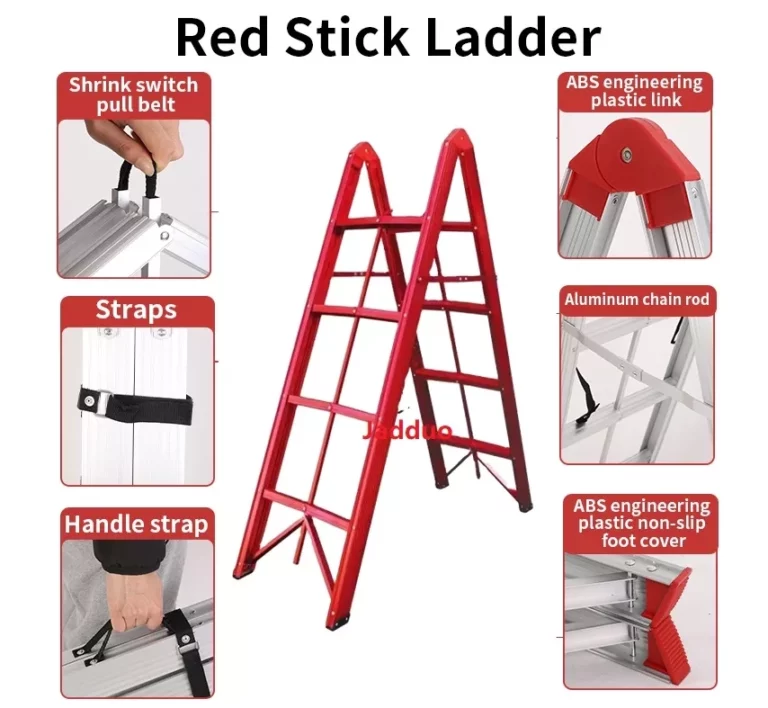
For those operating near energized cables, the Red Insulated Ladder With Pulley and Rope stands as the preferred option. Since fiberglass resists electrical conduction, it offers critical protection in power and telecom sectors. Additionally, its height, vivid color for easy spotting, and pulley mechanism ensure you extend it without undue effort.
Heavy-Duty 2 Section Aluminum Ladder With Pulley
When electrical hazards are absent, our 2 Section Ladder With Pulley and Rope constructed from premium aluminum serves as a dependable tool. It suits outdoor building projects or accessing elevated storage in warehouses. Furthermore, it weighs far less than traditional wooden types, yet it endures 150kg loads consistently over time.
Compact 2X4 Extension Telescopic Tent Ladder
For occasional users, the 2X4 Extension Telescopic Tent Ladder transforms rooftop tent camping. It folds to less than a meter long, saving space in your vehicle, but it provides enough strength to inspire confidence during nighttime ascents.
Selecting a ladder involves more than choice; verifying its performance under stress is essential. Therefore, the production methods we employ at Jadduo prioritize endurance and global standards.
How Does Jadduo Ensure Product Durability and Safety?
A ladder’s value depends on its origin in the factory. We combine advanced tools—such as punches, riveters, and tube expanders—to guarantee that all joints fit securely and every rung holds firm.
Rigorous Manufacturing and Quality Testing
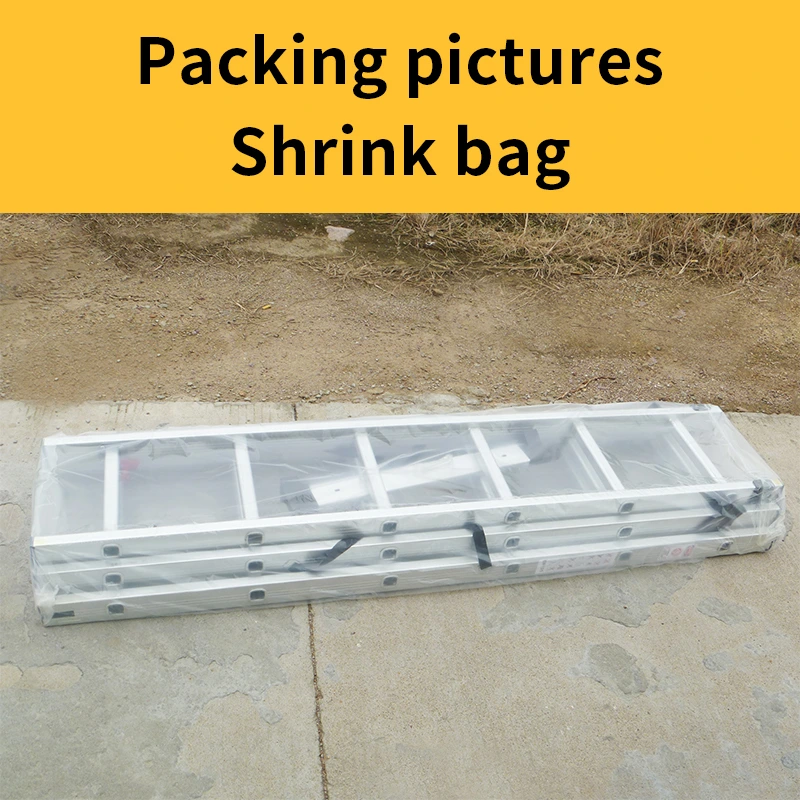
Jadduo’s assembly process runs with high intensity. We begin by slicing the tubes, then proceed to boring holes, pressing shapes, and inserting sleeves. After that, each group undergoes thorough quality inspections to confirm compliance with standards like GS, CE, and RoHS. We also offer 72-hour assistance to support clients after delivery.
Specialized Materials for Extreme Environments
Our anodized aluminum and strengthened fiberglass withstand low temperatures down to -20°C and high ones up to 50°C. As a result, whether you work in arid deserts or snowy peaks, the ladder resists becoming fragile or corroding from moisture and salinity. It functions reliably in outdoor settings.
User-Centric Safety and Stability Features
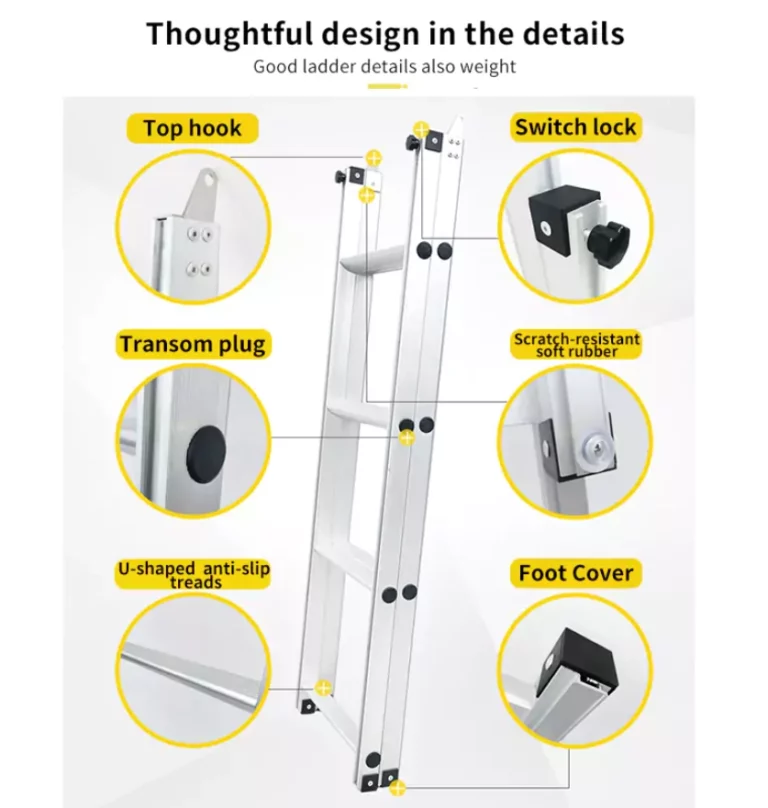
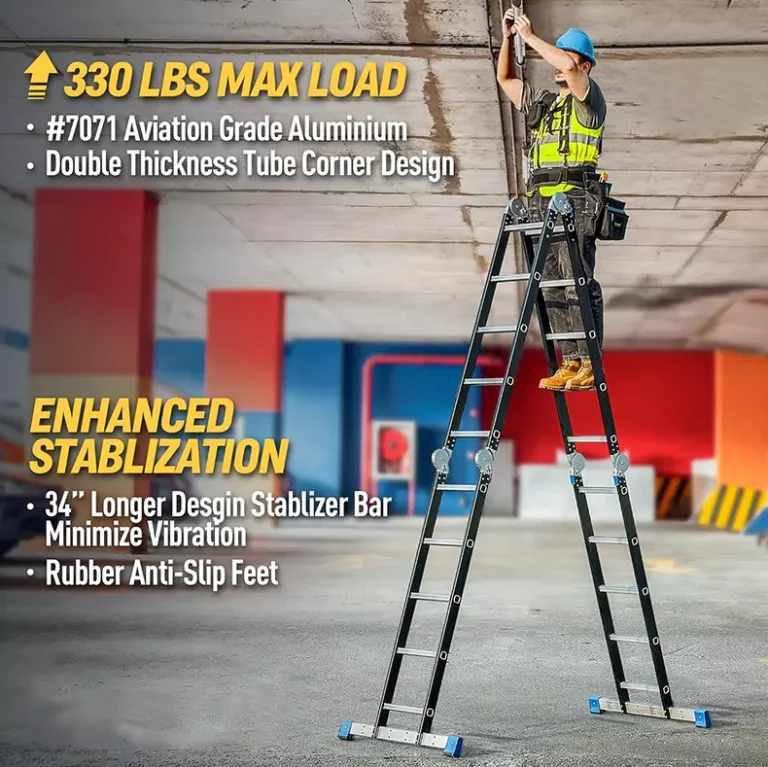
Safety extends beyond the main structure; it includes thoughtful details as well. For instance, we incorporate 6cm broader steps in our black oxidation lines to reduce foot fatigue. Moreover, corrugated treads improve traction during wet conditions, and removable balance bars prevent swaying at heights.
With a durable ladder in hand, you discover numerous applications for it, both at home and in professional environments.
Where Can You Apply These Professional Ladders?
A reliable ladder becomes indispensable once you face a situation requiring it. Our clients employ them for routine tasks up to critical rescue operations.
Outdoor Camping and RV Adventures
Enthusiasts in overlanding favor our telescopic tent ladders due to their portability. They attach directly to roof racks or tent structures, and the rubber bases maintain steadiness on uneven terrain. Thus, entering or exiting a rooftop tent feels far more secure.
Residential Maintenance and Holiday Decoration
Homeowners find these ladders ideal for everyday maintenance. Tasks like installing holiday lights, trimming branches from trees, or removing roof buildup all benefit from such versatile equipment. You can even configure them into a basic scaffold for interior painting jobs.
Industrial and Emergency Response Services
Professionals in firefighting and rescue rely on trustworthy devices during urgent moments. Since our ladders transport easily and set up rapidly, they serve as temporary fire escapes or provide swift entry in public service initiatives.
FAQ
Q1: How do I know if I’m at exactly 75 degrees?
A: A simple method is the “L-shape” check. Position your toes at the ladder’s base and extend your arms forward. If your fingertips reach the rungs at shoulder level, you have achieved a safe 75-degree angle.
Q2: Can I use an aluminum ladder for electrical work?
A: Absolutely not. Aluminum transmits electricity, posing severe risks near power lines. Opt for a fiberglass model, such as our red insulated ones, whenever performing electrical or telecom duties.
Q3: How should I store my telescopic ladder to make it last?
A: Telescopic designs excel in compact storage, fitting beneath beds, inside closets, or along walls. Place it in a dry area to avoid debris entering the extension parts, ensuring smooth operation for years.