Using an extension ladder seems straightforward, yet the angle plays a crucial role. If it is too upright, the ladder might tip back. If it is too flat, the bottom could slip away. Numerous incidents occur not due to low-quality ladders, but because they were positioned incorrectly.
For builders, storage workers, wire experts, and ordinary homeowners, grasping how to position the proper ladder angle counts as essential safety info. When paired with a sturdy item like Jadduo’s protected and winch-equipped extension ladders, the ideal arrangement can sharply cut down dangers and boost task speed.
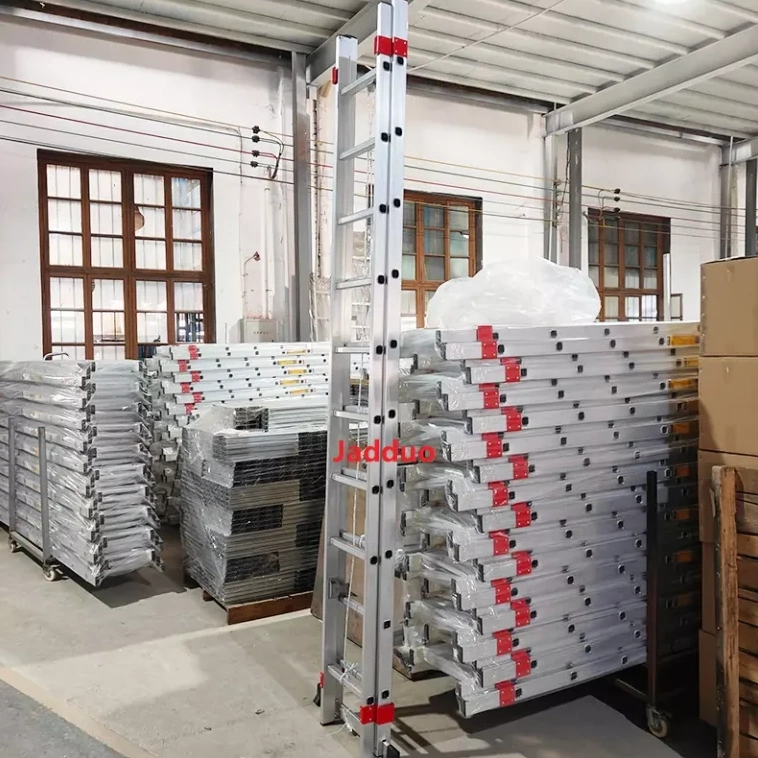
Jadduo, established in 2015 in Yongkang—the famous Hardware Capital of China—builds EN131-approved ladders shipped to over 50 nations. With ISO9001-verified output and tight quality checks, the firm creates about 30,000 pieces each month. That history is key, since angle safety involves not just methods, but also the ladder’s build and material toughness.

How Do You Know If Your Extension Ladder Is At The Right Angle?
Before diving into guidelines and figures, it pays to grasp what a “right” angle truly appears like on the job. Plenty of laborers just estimate. Others tilt it until it seems okay. Such estimation often sparks trouble.
Correct Ladder Angle Basics
A correctly placed extension ladder creates about a 75-degree slant with the ground. When viewed from the side, it ought not to look overly straight or overly low.
A basic on-site trick: position yourself at the ladder’s bottom with your toes against the base. Reach your arms out. If your hands lie easily on the steps at shoulder level, the slant is nearly spot on.
This trick suits everyday outdoor chores, like clearing roofs and drains, trimming trees, and reaching storage areas—typical situations for extension ladders.
Safety Risks Of Incorrect Angle
When the ladder stands too upright, the weight center moves rearward. Thus, the ladder might lean toward the climber, particularly on upper parts.
When it lies too low, the push outward grows at the bottom. The base might glide, even on spots that appear firm. This danger rises further with carried gear or in breezy weather.
Wrong slants also strain the ladder’s links and secure systems, which may cut short its service life.
Role Of Ladder Design In Angle Stability
A thoughtfully crafted ladder aids safer placement. Jadduo’s protected fiberglass types and metal extension ladders feature robust secure devices and non-slide bases.
Elements like broad steady bases and firm step ties help sustain poise after the slant is fixed. Such build aspects count. A firm ladder keeps its form under pressure, especially with the usual 150kg limit set by EN131 rules.
Why Is The 4:1 Rule Important For Ladder Setup?
Experts frequently cite the “4:1 rule,” but many folks do not fully get its value. It goes beyond mere building advice; rather, it stems from science and equilibrium.
Explanation Of The 4:1 Rule
For each four units of upward reach, the ladder’s bottom must rest one unit distant from the barrier.
Take this case: if the ladder climbs 4 meters up, the bottom should rest roughly 1 meter from the barrier. This proportion yields a slant near 75 degrees.
How It Improves Stability
The 4:1 rule evens out the pull downward and the shove outward. As one ascends, personal weight travels down the sides instead of forcing the bottom away.
This point holds extra weight when handling longer versions such as the Red Insulated Ladder 2 Section Ladder With Pulley And Rope, which stretches to touch tall barriers or roof edges. Right spacing eases load on the winch stretch setup and secure clasps.
Common Mistakes When Ignoring The Rule
A frequent error is setting the ladder too near the barrier since it “seems safer.” Actually, this builds a risk of rearward lean.
Another error involves stretching the ladder excessively without shifting the bottom. Reach and bottom gap must pair up.
In storage or tree-trimming settings—both noted as common ladder tasks—poor arrangement often causes wobble on rough surfaces.
What Tools Or Features Help Set The Perfect Ladder Angle?
Slant safety goes beyond just gauging gaps. Ladder parts can simplify setup and offer better command.
Pulley And Rope Systems For Adjustment
Winch and cord setups enable even stretching while the ladder stays at the proper bottom gap.
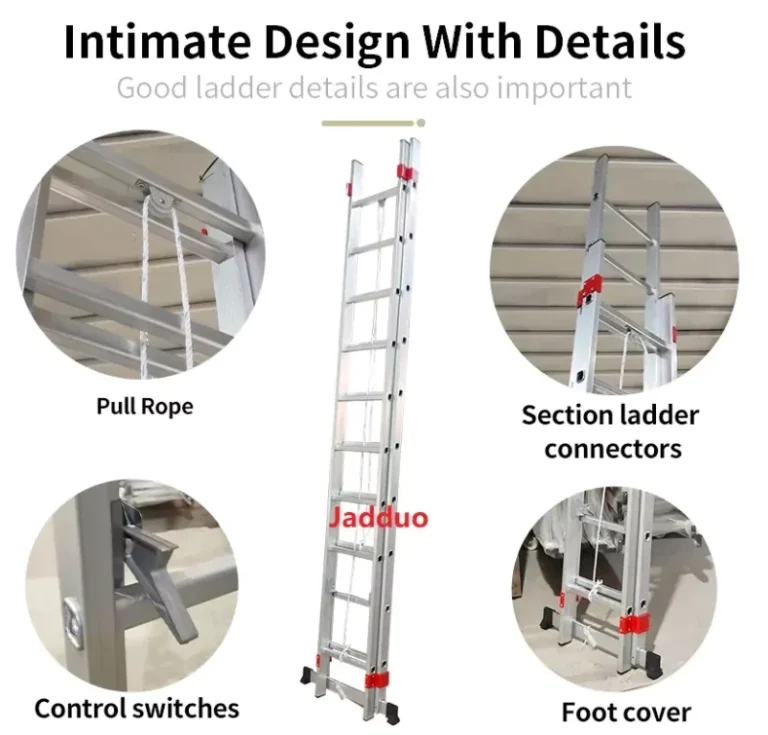
The 2 Section Ladder With Pulley And Rope from Jadduo delivers managed height changes. The cord setup permits slow stretching over abrupt shifts, and thus it aids in keeping the bottom steady during arrangement.
Multi-Functional Hinge Mechanisms
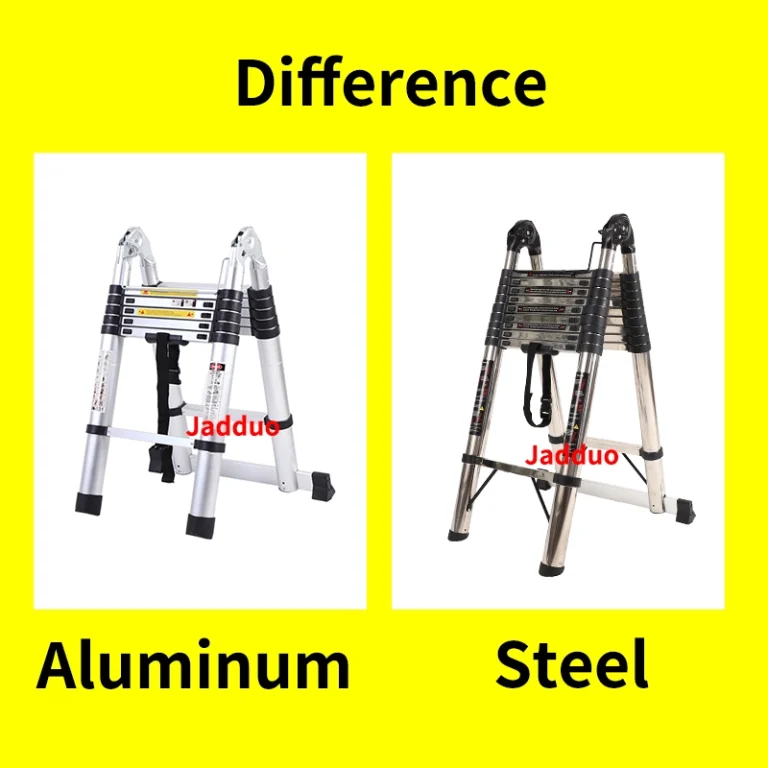
For jobs needing varied ladder shapes, joint setups add adaptability. The Red Insulated Ladder Multi-Functional Ladder Big Hinge shifts between A-frame and stretch forms. The wide joint tie secures tightly, granting steady placement across various work styles.
Insulated Ladder Safety Features
For wire or signal jobs, fiberglass protection lowers shock hazards. Jadduo’s red protected models see broad use in energy upkeep and tree work where high wires might exist. Protection does not stand in for right slant arrangement, yet it layers on safeguard in risky spots.
How To Set Ladder Angle With Red Insulated Ladder Multi-Functional Ladder Big Hinge
This type gains favor for home and minor factory duties thanks to its adaptability.
Hinge Feature For Flexible Positioning
The wide joint permits fast change between A-frame and direct ladder shape. In stretch mode, the joint ties solidly to form a stiff build. A firm joint link ensures the ladder acts like a usual stretch ladder once placed.
Step-By-Step Angle Setup
Start by stretching the ladder to the needed height with careful motion.
Next, gauge bottom gap via the 4:1 measure.
Then, verify ground firmness. Non-slide bases must lie level, not sloped.
At last, trial by softly adding personal weight prior to full climb. Even a minor move here signals caution.
Ideal Scenarios For This Model
This ladder fits well for house coating, roof care, and seasonal trim setup. In A-frame shape, it handles inside light tasks. In stretch shape, it manages outer wall fixes. For builders handling diverse sites, that adaptability cuts time and storage needs.
How To Achieve Perfect Angle With Red Insulated Ladder 2 Section Ladder With Pulley And Rope
For taller outer jobs, a focused two-part ladder gives firmer upward span.
Using Pulley And Rope To Adjust Height And Angle
Place the bottom first per the 4:1 measure. Afterward, stretch the top part via the winch setup.
Since height change occurs post-bottom placement, slant command grows simpler. The cord setup cuts abrupt changes during stretch.
Tips For Smooth Operation
Ensure the cord stays straight and clear of blocks. Always verify that secure clasps engage completely before ascent. A fast sight check can avert a grave tumble.
Best Uses For This Design
This type suits build sites, storage reach, and outer structure fixes. With EN131 and further approvals on demand, Jadduo’s goods fulfill global safety hopes, fitting them for ship markets in Europe and North America.
What Common Mistakes Should You Avoid When Setting Ladder Angles?
Even seasoned hands at times hurry the arrangement. Tiny slips build up.
Too Steep Or Too Shallow Setups
Overlooking the 4:1 measure stays the top frequent problem. Too upright sparks rear lean. Too low boosts glide chance. Both cases trim ladder durability.
Uneven Ground Placement
Setting one base on loose dirt and the other on hard stone breeds unevenness. In tree or open-air use, surface evening must precede ascent. Certain users bring minor prop planks for bumpy land.
Ignoring Ladder Specific Features
Winch setups, joint ties, and non-slide bases exist for purpose. Bypassing tie steps or missing joint checks strips away inbuilt safeguards. Given Jadduo’s emphasis on fine materials and exact making, those parts aim to back safe handling—provided they are applied right.
Right ladder slant lacks complexity, but it demands focus. When joined with dependable build, approved norms, and careful part designs, proper placement markedly drops mishap odds.
For sellers and builders seeking rule-following, ship-ready ladders, Jadduo supplies growing options with custom and design aid. Supported by ISO9001 output, a 10,000㎡ site, and a focused research group, the firm keeps providing safe ladder setups to world markets.
Right slant. Firm bottom. Tough build. That mix renders height work safer, task by task.
FAQ
Q1: What is the safest angle for an extension ladder?
A: The safest angle is about 75 degrees, following the 4:1 rule. For every four meters of height, place the base one meter away from the wall.
Q2: Can insulated ladders replace proper angle setup?
A: No. Insulation protects against electrical risk, but correct angle placement is still required for balance and stability.
Q3: Is a pulley ladder safer than a standard extension ladder?
A: A pulley system makes height adjustment smoother and more controlled. However, safety still depends on correct base distance, locking engagement, and stable ground placement.