Safety isn’t just about having a sturdy piece of equipment; it’s about what happens in those five minutes before your feet leave the ground. Even the most expensive gear can’t save a user who skips the setup basics. In the world of professional contracting and DIY home maintenance, the “installation” of a ladder—positioning it, locking it, and securing the base—is the thin line between a productive afternoon and a trip to the emergency room.
Jadduo has been manufacturing premium ladders since 2015. With a massive production base in Yongkang, China’s hardware capital, the company sees firsthand how structural design meets real-world use. If you want to stay safe, you need to understand why things go south during the setup phase.
What Is the Most Common Cause of Ladder Sliding?
Most people think a ladder falls because it breaks. In reality, it usually falls because the base or the top loses its grip. If the ground isn’t right or the angle is off, gravity does the rest of the work for you.
Unstable Base and Incorrect Ground Leveling
A ladder is only as good as the dirt, grass, or tile it stands on. Setting up on soft mud or a loose rug is asking for trouble. Many accidents happen because the user didn’t clear the debris or check if the ground was level before climbing. Even a slight tilt at the bottom translates to a massive wobble at the top.
Wrong Leaning Angle Without Secure Top Support
There is a “sweet spot” for leaning ladders—the 4:1 rule, or roughly a 75° angle. If it’s too steep, it tips backward; too shallow, and the base slides out from under you. Most users just “eyeball” it, which is where the danger starts. Without a solid point of contact at the top, the whole setup is a gamble.
Advantage of Using Jadduo Hooked Iron Ladders
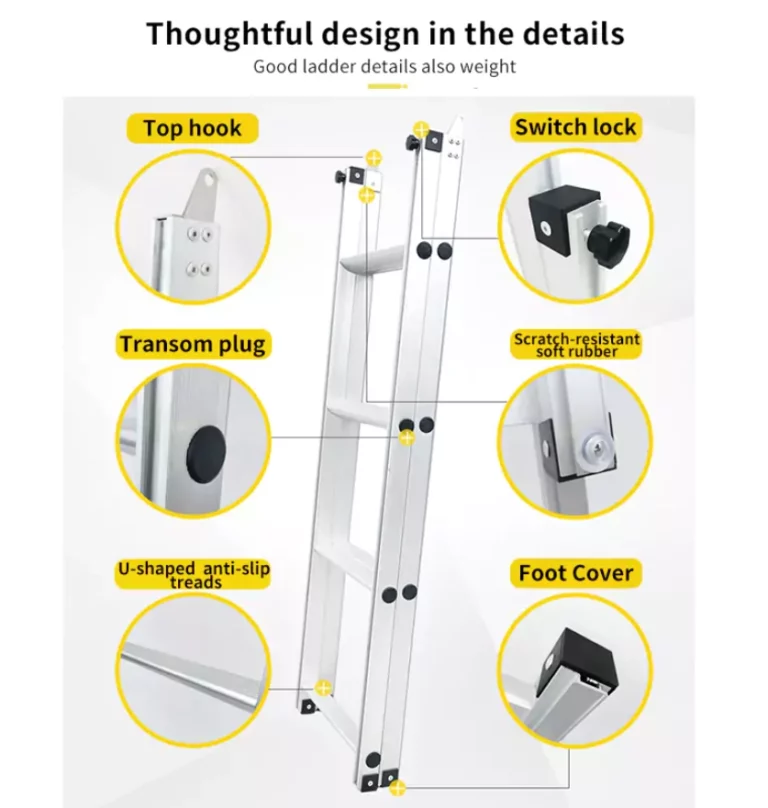
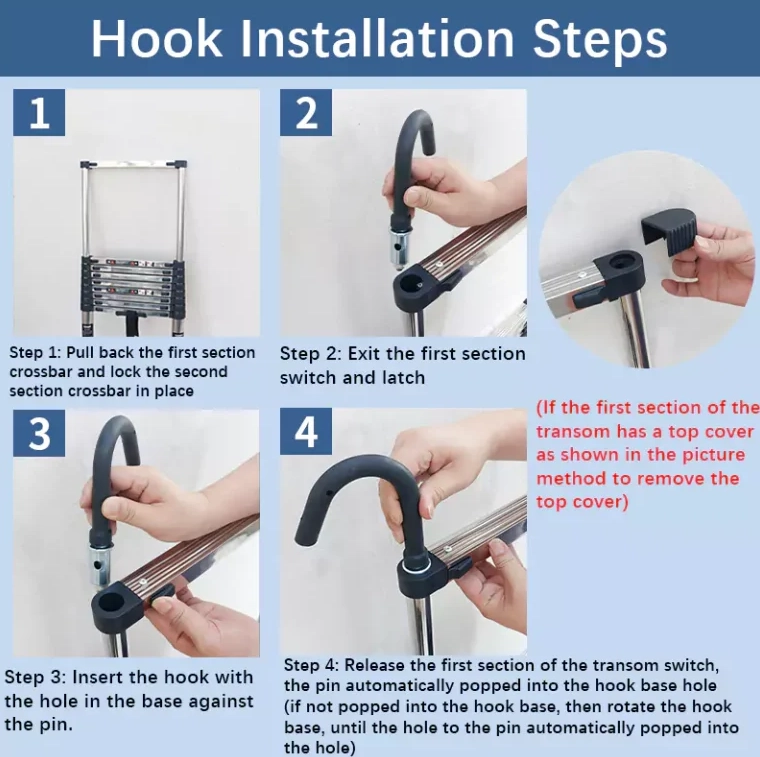
For tasks that require a bit more “bite,” the Anti-slip Cushion Iron Ladder with hook Step 30cm is a game-changer. Those top hooks aren’t just for show; they physically latch onto a bar or ledge, meaning the ladder simply cannot slide backward or sideways once engaged. Combined with the anti-slip cushions on the feet, it fixes the “sliding base” problem before you even take your first step.
Why Do Telescoping Ladders Suddenly Collapse?
Telescoping ladders are a marvel of engineering—compact enough to fit in a car trunk but tall enough to reach a roof. However, because they have moving parts, the biggest risk is the “false lock.”
Failure to Engagement of Locking Mechanisms
The most dangerous mistake is assuming a rung is locked because it looks straight. If the internal pins aren’t fully clicked into place, the ladder might hold your weight for three steps and then give way on the fourth. It’s a classic setup error that happens when people are in a hurry.
Debris Interference in Telescopic Sections
Because these ladders slide in and out, they can pick up gunk, sand, or sawdust from a job site. If that dirt gets into the locking housing, it can prevent the pin from sliding home. Regular cleaning is part of the “installation” process that most folks ignore.
Safety of One Time Folding Slow Down Technology
This is where the Aluminum Alloy One Time Folding Telescopic Slow Down Ladder shines. Unlike cheap versions that snap shut like a mouse trap, this model uses a slow-down mechanism. It gives the user a clear, tactile feel of the sections moving and locking. It’s built with the user’s fingers and safety in mind, making it much harder to “mess up” the locking sequence during a quick setup.
How Does Improper Step Depth Lead to Overbalancing?
Balance is a tricky thing. You can have a perfectly placed ladder, but if your feet are hurting or slipping, you’re going to move in ways that shift your center of gravity too far to one side.
Insufficient Foot Support on Narrow Rungs
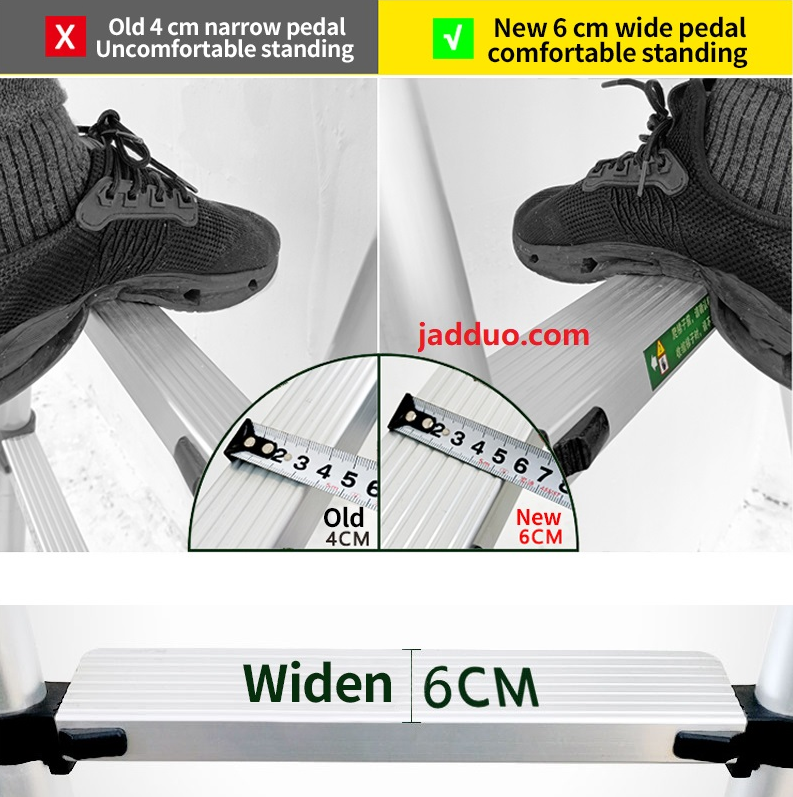
Standard rungs are often thin, which puts all your weight on the arch of your foot. After ten minutes of painting or fixing a gutter, your feet start to ache. When your feet hurt, you start shifting your weight around to get comfortable, and that’s usually when the ladder starts to shake.
Center of Gravity Shift During Overreaching
We’ve all done it—trying to reach that last bit of the window without moving the ladder. If your feet aren’t planted on a wide, stable surface, that slight reach becomes a tipping force. Proper installation means placing the ladder exactly where you need it, not “close enough.”
Comfort of Jadduo 6 cm Wide Step Iron Ladders
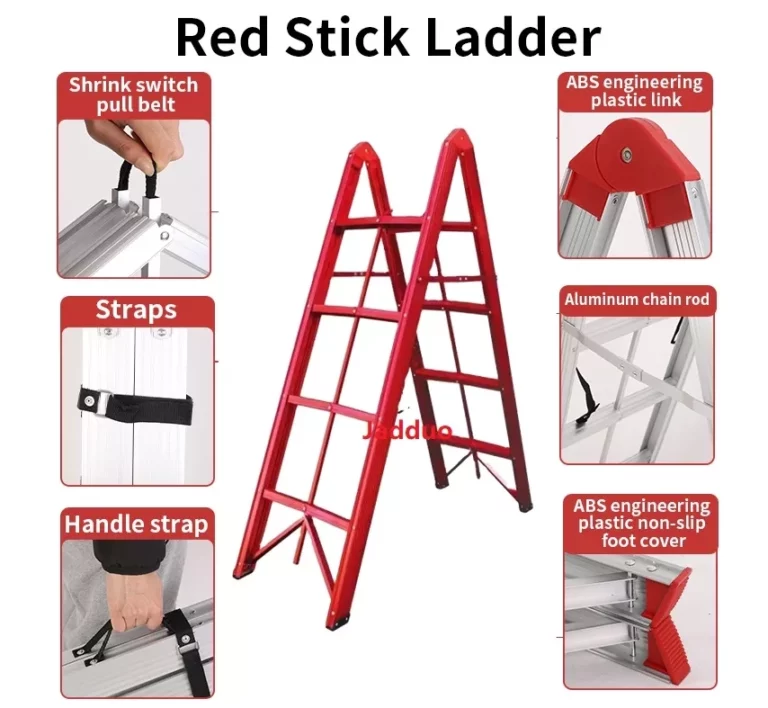
The Step 40cm Hook Iron Ladder with Anti-slip Cushion solves the fatigue problem. With a massive 6 cm wide step, it feels more like standing on a platform than a wire. It gives you room to find a stable stance, which naturally keeps your center of gravity between the side rails where it belongs.
Is Environmental Corrosion a Hidden Threat to Stability?
A ladder that sat in a damp garage for three years isn’t the same tool it was when it was new. Corrosion eats away at the very parts that keep you upright.
Structural Integrity Compromised by Rust
Iron ladders that aren’t treated properly will rust from the inside out. You might not see it until a joint snaps. Aluminum is better for rust, but even then, cheap alloys can corrode and become brittle in salty or wet environments.
Fastener Failure in Extreme Weather Conditions
Ladders are often left in the back of a truck or in a shed. The constant change from hot to cold can make screws and rivets loosen over time. If the frame is “wobbly” before you climb, it’s because the hardware has been compromised by the elements.
Durability of Jadduo Aviation Grade Aluminum and Iron
Jadduo uses high-quality materials, including 6063 aluminum and treated iron, to fight off the weather. Their ladders are designed to handle temperatures from -20°C up to 50°C. Whether you’re in a humid coastal town or a freezing mountain area, the material stays reliable so the structure doesn’t flex when you’re halfway up.
Can Wrong Ladder Selection Be Considered an Installation Error?
Sometimes the “accident” starts at the warehouse or the store. If you pick a ladder that isn’t rated for the job, no amount of careful setup is going to make it safe.
Using Indoor Ladders for Unstable Outdoor Terrain
A small step stool meant for reaching a kitchen shelf has no business being used in a garden. Indoor ladders often lack the deep-tread feet or the “A-frame” stability needed for uneven grass or soil.
Exceeding the Rated Load Capacity During Setup
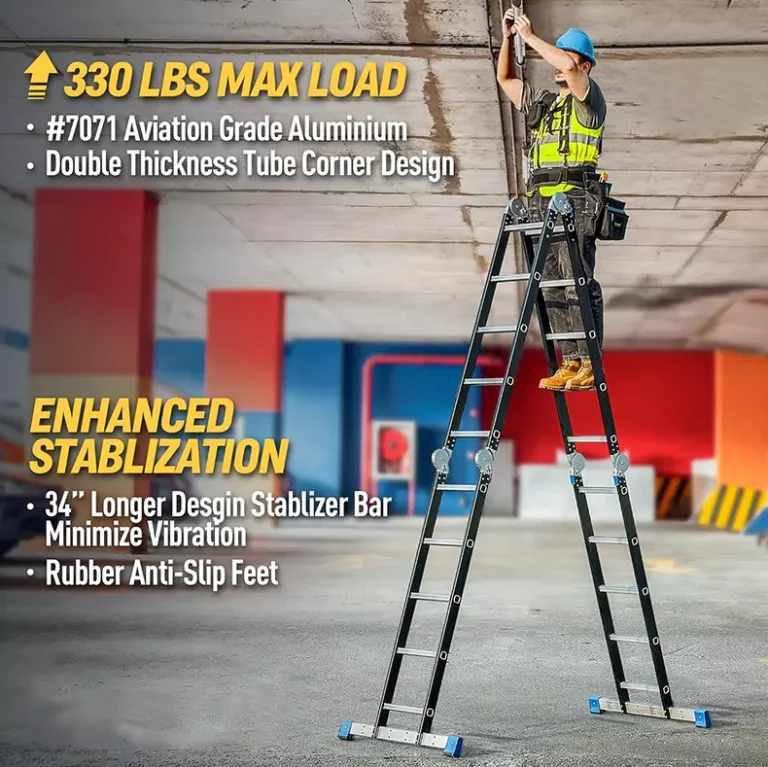
Most professional-grade ladders, like those from Jadduo, are rated for 150kg. This includes the person plus their tools and materials. If you’re hauling heavy shingles or a massive bucket of paint, you might be pushing the limits of a standard household ladder.
Versatility of Jadduo Professional Series for Multiple Scenarios
The beauty of the Jadduo catalog is that there’s a tool for every specific niche—from insulated fiberglass ladders for electrical work to heavy-duty telescopic models for roof maintenance. Picking the right tool for the specific environment is the first step of a safe installation.
Does Lack of Professional Certification Increase Risk?
In the B2B world, certifications aren’t just pieces of paper; they are proof that the ladder won’t buckle under pressure.
Absence of EN131 or ANSI Safety Standards
If a ladder doesn’t have an EN131 (European) or ANSI (American) sticker, you’re essentially a test pilot. These standards require the ladder to pass dynamic load tests and anti-slip checks. Without them, you have no guarantee the product can actually do what the box says.
Inferior Materials Leading to Unexpected Flexing
Cheap ladders use thin-walled pipes to save on shipping costs. When you climb them, they “bounce.” That bouncing effect is terrifying and is a leading cause of users losing their balance and falling.
Peace of Mind with Jadduo Certified Safety Equipment
Every product leaving the Jadduo factory is backed by ISO9001:2015 quality management and meets international standards like CE, GS, and EN131. When you set up a Jadduo ladder, you know the R&D team has already “stressed” that design to the breaking point so you don’t have to.
FAQ
Q1: How do I know if my telescoping ladder is actually locked?
A: Always look for the visual indicators or listen for the “click” on every single rung. After extending it, give the ladder a firm downward push before climbing. If it’s going to fail, you want it to fail while your feet are still on the ground.
Q2: Can I use a hooked ladder on a flat wall?
A: It can be used, as long as the hook can rotate 360 degrees, so you can place the hook flat against the wall. It won’t have any impact. Just remember to place the ladder at a 75-degree Angle to the ground.
Q3: How often should I replace my ladder?
A: There’s no set expiration date, but you should inspect it every time you use it. If you see deep dents in the aluminum, cracked plastic rungs, or if the locking mechanism feels “crunchy,” it’s time to head over to Jadduo.cn and find a replacement.