Using an extension ladder looks simple on the surface, yet many ladder-related accidents come from one small mistake: the wrong angle. A ladder that is too steep can slide backward. One that is too flat may kick out at the base. For contractors, maintenance crews, and even home users, understanding ladder angle is not just a technical detail. It directly affects balance, load control, and personal safety.
This guide breaks down how ladder angle works, why it matters, and how to set it correctly in real jobsite conditions. It also looks at how Jadduo’s extension and stick ladder designs support safer setup through structure, materials, and practical features.
How Do You Determine the Best Angle for an Extension Ladder?
Before placing an extension ladder against a wall, it helps to understand what “correct angle” actually means. Many users rely on instinct or habit, which often leads to unstable setups. A proper angle follows basic geometry and tested safety standards.
To make the process easier, manufacturers design ladders with clear height markings, stable rails, and controlled extension systems. These details matter when the ladder is adjusted on site.
Optimal Ladder Angle Principles
Most safety standards agree that an extension ladder works best at about a 75-degree angle to the ground. This angle creates a balanced load path from the climber’s weight down through the rails to the base.
At this angle, friction at the feet is high enough to prevent sliding, while pressure against the wall stays within safe limits. The ladder feels firm instead of springy, which is often the first sign of correct setup.
Recommended Jadduo Ladder Placement Practices
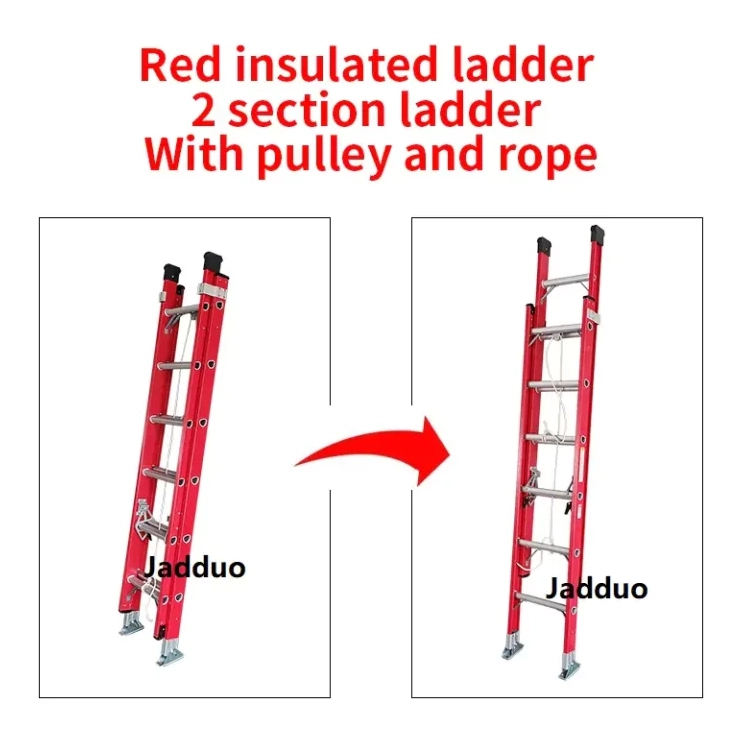
Jadduo extension ladders are built with straight, rigid aluminum rails that help keep the ladder aligned during setup. With models like the 2 Section Ladder With Pulley and Rope, smooth extension control allows height adjustment without forcing the ladder out of position.
The rope and pulley system also reduces sudden movement when raising or lowering the upper section. This makes it easier to fine-tune the angle before climbing, especially when working alone.
Safety Benefits of Correct Ladder Angles
A ladder placed at the right angle distributes weight evenly. This reduces stress on rungs, side rails, and locking points. Over time, it also slows material fatigue.
From a user’s point of view, correct angle means fewer surprises. The ladder does not shift when stepping on, and hands stay free for work instead of constant balance correction.
Why Does Ladder Angle Affect Stability and Safety?
Ladder stability is closely tied to basic physics. When the angle changes, the direction of force changes as well. Even strong ladders can become unsafe if the angle works against them.
Understanding this helps explain why safety rules focus so heavily on setup rather than just load ratings.
Physics Behind Ladder Stability
When a climber steps onto an extension ladder, body weight pushes downward and slightly outward. At the correct angle, this force travels along the rails and into the ground.
If the ladder is too steep, outward force increases near the top. This can cause the base to slide backward. If it is too shallow, outward force increases at the bottom, making the feet more likely to slip forward.
Risk Factors of Incorrect Ladder Angles
Incorrect angles increase risks even on clean, dry surfaces. On dusty concrete, soil, or tile, small angle errors are amplified.
Outdoor jobs add wind, uneven ground, and wall texture into the mix. This is why professional users prefer ladders with strong foot caps and solid rail profiles, rather than thin or flexible designs.
How Proper Angles Reduce Slips and Falls
Setting the ladder at the right angle lowers the chance of sudden movement. The ladder feels planted, not floating.
Jadduo ladders are designed with anti-slip feet and balanced rail spacing. These features do not replace correct angle, but they add a safety buffer when conditions are less than perfect.
What Is the Ideal Angle for a Standard Extension Ladder?
Most training manuals point to one simple rule for ladder angle. It is easy to remember and works across different ladder heights.
This rule becomes even more reliable when paired with ladders that have accurate section alignment and strong locking systems.
General Recommendation: 75° Rule
The 75-degree angle is widely accepted across ANSI and EN standards. It provides a practical balance between grip and wall support.
Instead of measuring degrees, most users rely on a distance check at ground level, which leads directly to the 4-to-1 rule explained later in this article.
Adjusting for Surface Conditions
Not all surfaces behave the same way. Soft soil may compress under load, while smooth tile may reduce friction.
In these cases, choosing a ladder with wide, non-marking feet helps maintain contact. Jadduo’s extension ladders use reinforced foot caps designed to stay flat even when the ground is slightly uneven.
Visual Cues to Confirm Correct Angle
A correctly angled ladder looks relaxed, not forced. The rails sit evenly against the wall, and rungs appear level when viewed from the side.
If the ladder creaks or flexes when stepped on, the angle may be off. Repositioning before climbing saves time and avoids unnecessary risk.
Which Jadduo Extension Ladders Are Best for Stable and Safe Use?
Not all extension ladders behave the same way during setup. Design choices affect how easily the correct angle can be achieved and maintained.
Jadduo focuses on structural balance, material strength, and user-friendly adjustment across its ladder range.
2 Section Ladder With Pulley and Rope — Stability Features
This model is designed for exterior maintenance, building repair, and routine access tasks. The two-section layout keeps weight manageable while still offering extended reach.
The pulley and rope system allows smooth height control, helping users stop exactly where the angle feels right. Once locked, the ladder stays firm without sudden shifts.
Red Insulated 2 Section Ladder With Pulley and Rope — Added Safety
For electrical, telecom, and utility work, insulation adds an extra layer of protection. The red insulated version uses fiberglass sections combined with controlled extension hardware.
This ladder supports safe angle setup while also reducing electrical risk, making it suitable for orchard work near power lines or service tasks in mixed environments.
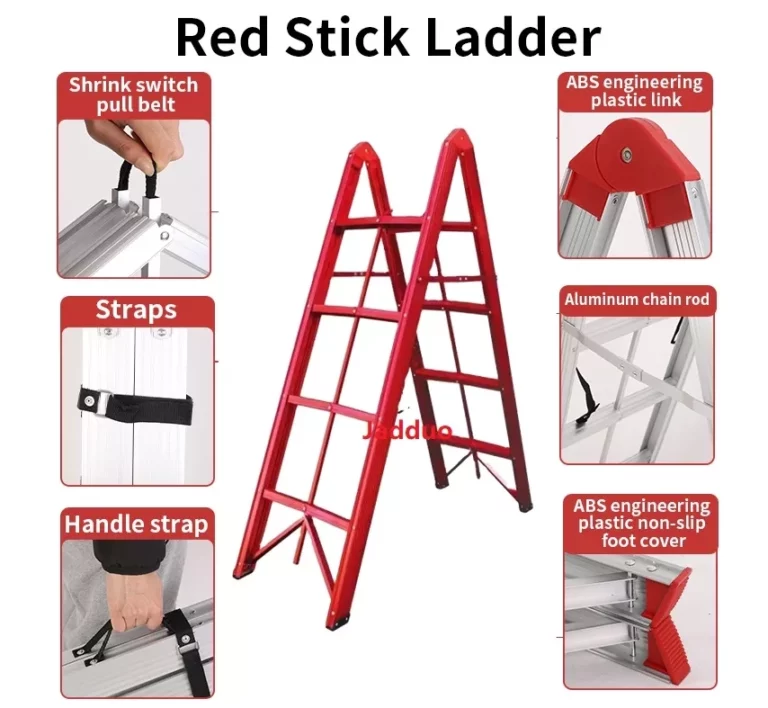
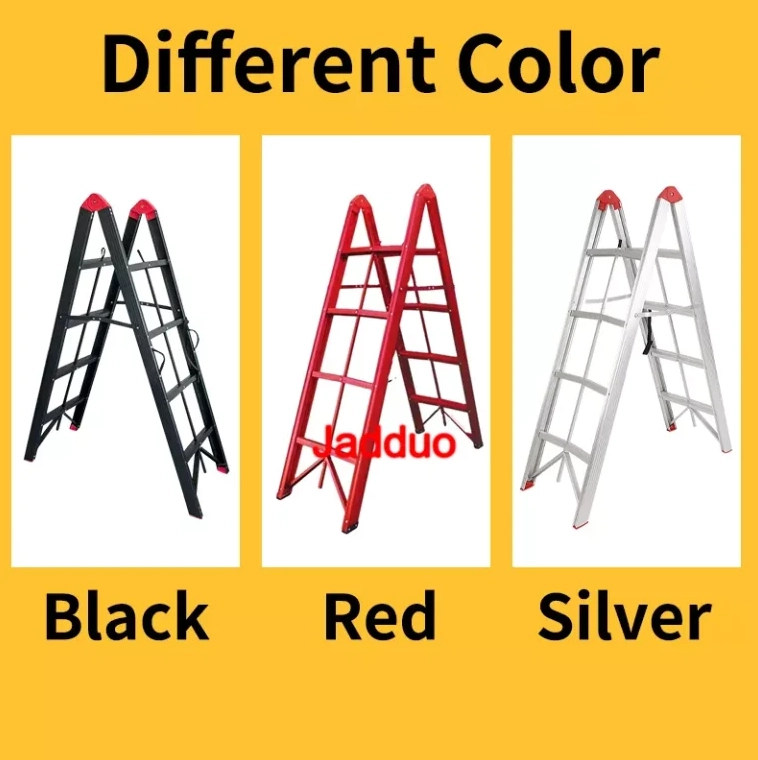
Jadduo Black Oxidized Twin-sided Stick Ladder — Durability and Grip
While not an extension ladder, this twin-sided stick ladder plays a role in angle-sensitive work. It offers stable A-frame support where wall contact is not available.
The black oxidized aluminum surface improves wear resistance and grip, especially in industrial or warehouse settings where ladders are moved frequently.
How Can You Use the 4-to-1 Rule to Set Up Your Ladder Safely?
The 4-to-1 rule is one of the most practical tools for ladder setup. It removes guesswork and works across most job types.
With clear ground spacing, it becomes easy to repeat safe setups day after day.
Explaining the 4-to-1 Setup Method
For every four units of vertical height, place the ladder base one unit away from the wall. For example, if the ladder reaches 4 meters up, the base should sit about 1 meter out.
This spacing naturally creates the recommended 75-degree angle without measuring tools.
Applying the Rule With Jadduo Ladders
Jadduo ladders include clear section lengths and extension points, making height estimation straightforward. This helps users apply the 4-to-1 rule quickly on site.
The stable rail design also means the ladder holds its angle once placed, even when climbed repeatedly during the task.
Tips for Uneven Ground and Outdoor Jobs
On slopes or soft ground, small adjustments may be needed. Using leveling accessories or placing the ladder on a firm base can restore correct angle.
In outdoor conditions, taking extra time to check foot contact and wall support prevents gradual shifting during use.
FAQ
Q1: Is a steeper ladder angle safer for short climbs?
A: No. Even short climbs need the correct angle. A steep ladder increases backward slip risk, regardless of height.
Q2: Can ladder angle replace tie-offs or stabilizers?
A: Correct angle improves stability but does not replace tie-offs when required. For higher or longer tasks, extra support is still recommended.
Q3: Do insulated ladders follow the same angle rules?
A: Yes. Insulated ladders use the same angle principles. The difference is added electrical safety, not structural geometry.