Climbing to repair a roof or swap out a tall bulb should not turn into a risky balance. Many mishaps occur not from faulty equipment, but because the setup angle was wrong. This is where the 4 to 1 Rule steps in, as a basic principle of physics that helps maintain balance and security. For each four feet of height required, position the ladder’s base one foot from the wall. Such positioning forms a 75° angle, which serves as the ideal point for steadiness.
Achieving this precise angle holds extra importance with contemporary tools like telescopic or collapsible towers. Because these ladders feature numerous adjustable sections and secure pins, they depend on that particular angle to spread your body weight evenly over the aluminum structure, and thus, they function reliably.
Why Is the 4 to 1 Rule Essential for Your Safety?
Adhering to this guideline goes beyond mere fussiness; it actually prevents the ladder from slipping away beneath you. When the angle becomes too shallow, the base could shift suddenly. Conversely, if it leans too sharply, you risk falling back while stretching for an item.
Prevention of Base Sliding and Tip-Overs
By placing the ladder at a 75° angle, your body weight presses straight downward onto the feet, so the rubber pads can grip the surface firmly. If you overlook the 4 to 1 ratio and tilt it excessively outward, the forces shift, and the bottom becomes far more prone to skidding over pavement or turf.
Optimal Load Distribution on Hardware
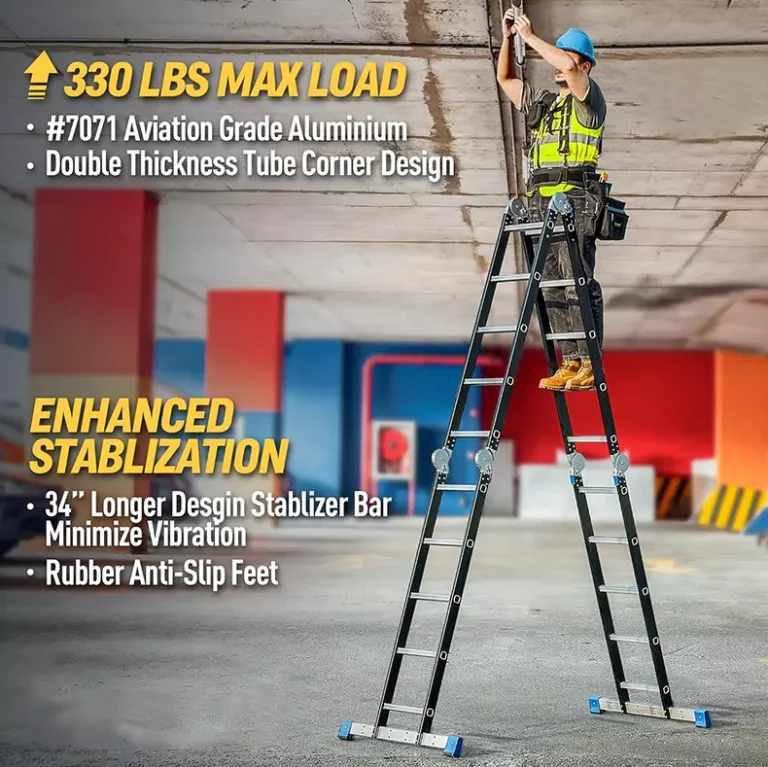
Quality ladders typically handle a 150kg load, yet that capacity presumes operation at the advised angle. When the setup is overly level, the frame begins to bend midway, which adds immense pressure to the steps and the inner locking devices that would otherwise remain minimal.
Compliance With International Safety Standards
Examine the tags on a Jadduo ladder, and you will notice certifications such as EN131 or ANSI A14. These are not mere decorations; they indicate that the ladder endured rigorous trials positioned precisely at the 4 to 1 ratio. Sticking to this rule means you operate the device just as the designers planned.
Correct ladder placement marks the initial phase, but the equipment itself must withstand those pressures. Therefore, the ladder’s build, from the base pads to the secure pins, proves equally vital as the way you position it.
How Does Jadduo Enhance Stability in Telescopic Ladders?
Jadduo has operated in this field since 2015, producing ladders in Yongkang, known as China’s “Hardware Capital.” They go beyond basic steps; instead, they incorporate elements that reduce the chances of setup errors significantly.
Integration of the Balance Bar and Non-Slip Feet
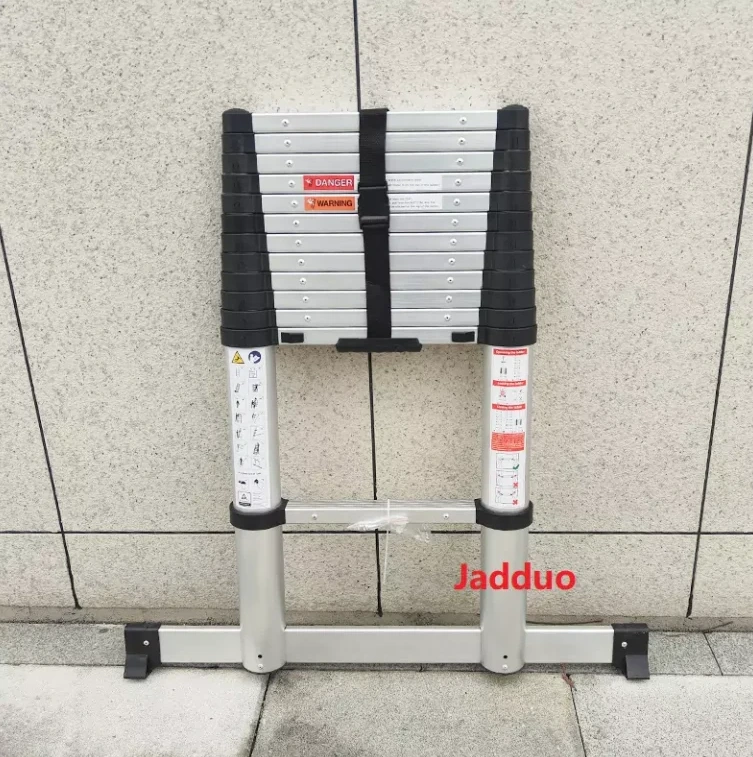
A key improvement comes from adding a Balance Bar (sometimes referred to as a stabilizer bar). This extends the ladder’s base width, which minimizes shaking on rough terrain like a yard or a stony walkway. When combined with large rubber pads, it ensures the foundation stays planted exactly as arranged.
Advanced Safety Locking and Slow-Down Systems
In telescopic versions, the securing mechanisms are crucial. Jadduo employs a “one-time folding” or “slow-down” approach that allows the ladder to retract steadily. As a result, it avoids crushing fingers during closure, and it confirms that every segment locks fully before ascent begins.
Robust Construction for Long-Term Durability
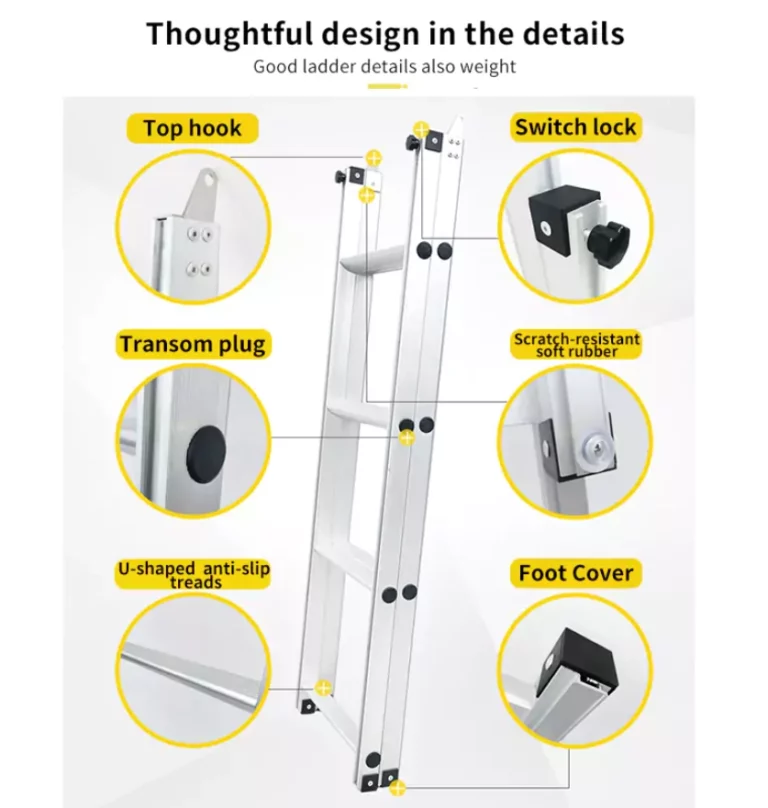
Premium aluminum construction keeps the ladder portable yet rigid, so it does not flex like a soft rod when you stand at 12 feet high. The tubes undergo careful procedures of slicing, boring, and fastening to guarantee that all connections remain secure.
Selecting a reliable ladder benefits any task, but matching it to the job at hand is key. Various activities, such as coating a corridor or mending an electrical line, demand specific support types, and thus, the right model makes all the difference.
Which Jadduo Models Are Best for Different High-Reach Tasks?
Whether you tackle home projects as an amateur or handle professional duties, avoid using one ladder for every purpose. Jadduo’s range addresses needs from simple household duties to demanding industrial jobs across more than 50 nations.
Versatility of the 2-in-1 Orange Step Ladder
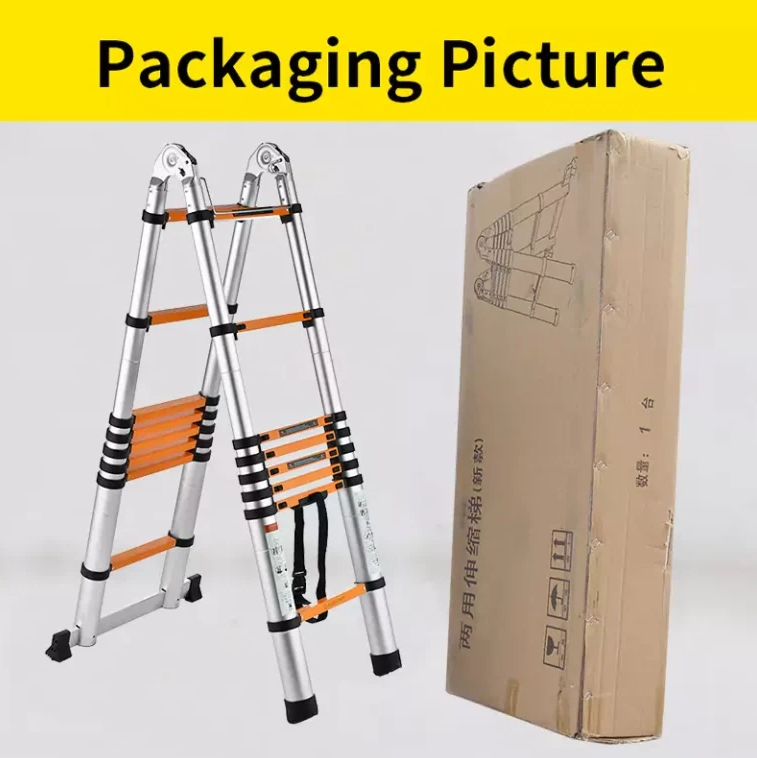
The Orange Step 2 In 1 Ladder with Finger Safety Gap proves invaluable for residents. It functions as an A-frame step ladder for indoor painting, but you can also extend it into a straight form to access eaves. The “safety gap” in the steps adds protection by safeguarding hands during adjustments.
Specialized Protection With the Red Insulated Ladder
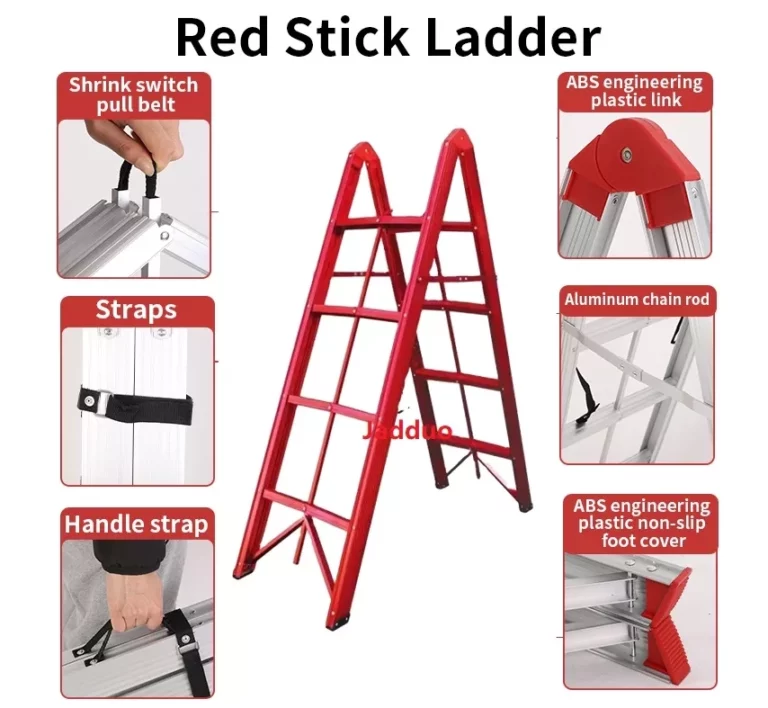
Whenever electrical hazards loom, opt for the Red insulated ladder 2 section ladder With pulley and rope. Constructed from fiberglass, it resists current flow. Moreover, the pulley and rope system simplifies raising the ladder to maximum extension without straining your back.
Efficiency of the One-Time Folding Telescopic Design
For those in compact living spaces or on road trips with an RV, storage matters greatly. The Aluminum Alloy One Time Folding Telescopic Slow Down Ladder compacts to a small form that slides under furniture or into vehicle storage. It suits fast chores, like replacing a light or inspecting a vehicle’s top.
The finest ladder will degrade if left exposed to dampness and neglect. Routine care extends its life, ensuring safety elements perform as expected during use.
What Maintenance Steps Keep Your Ladder Rule-Compliant?
Ladders function as mechanical devices, and like other tools, they require periodic reviews. This holds particularly true for telescopic types with many gliding components.
Regular Inspection of Moving Parts and Joints
Check the fasteners and areas where steps connect to the rails. If any part appears wobbly or damaged, refrain from using it. Ensure the factory “indentation” and “stamping” stay intact without distortion.
Cleaning of Debris From Locking Mechanisms
During tasks like clearing eaves, debris such as leaves, residue, or frost can enter the tubes easily. When grime affects the locking pins, they may not secure completely. Therefore, a simple cloth wipe after dirty work maintains smooth operation.
Proper Storage to Prevent Material Fatigue
Avoid abandoning your ladder outdoors in wet conditions. While aluminum endures well, ongoing exposure to water and sunlight can degrade plastic components and rubber pads. Keeping it in a sheltered spot, like a garage or storage area, preserves the integrity over years.
FAQ
Q1: Can I use the 4 to 1 rule for an A-frame step ladder?
A: Actually, no. The 4 to 1 rule applies only to “leaning” ladders, such as extension or telescopic ones. Step ladders include their own spreaders that establish the proper angle on their own. Just confirm that the spreader bars lock fully extended prior to climbing.
Q2: What happens if I can’t get exactly 1 foot out for every 4 feet up?
A: Obstacles like curbs or plants sometimes block the ideal spot. If achieving the exact 75° angle proves impossible, aim slightly steeper rather than flatter, but only with assistance holding the base steady. When close alignment fails, consider switching to a platform-style ladder instead.
Q3: How do I know if my telescopic ladder is fully locked?
A: Jadduo ladders usually include clear signs, like a colored marker or a distinct “click” noise, indicating the pin has engaged properly. Always test each step with a firm pull before applying your weight to verify security completely.