Telescopic ladders have quietly worked their way into homes, workshops, and small job sites. They fold down into a compact shape, slip into corners, and stretch out to practical heights when needed. People appreciate them because they save space and do not look complicated. But even a neat-looking ladder can be risky if the inside parts are weak or if the locks fail at the wrong moment. Since climbing always puts a person above ground, even a tiny shake may lead to trouble.
Jadduo, a manufacturer from Yongkang, has spent years designing ladders that feel solid in daily use. Before looking at different models, it helps to understand why the safety part matters so much.
Why Should Telescopic Ladder Safety Come First?
Many ladder accidents come from very small problems. A footpad slips on a smooth tile. A lock almost clicks but not fully. A tube bends a little after repeated use. These issues are often ignored until a person steps up and feels the shift under their feet. Once the ladder wobbles, reaching out, turning around, or climbing down becomes harder and more stressful.
Because of this, the first thing worth checking is how the ladder holds pressure and how firmly it rests on the ground.
Structural Stability and Load Strength
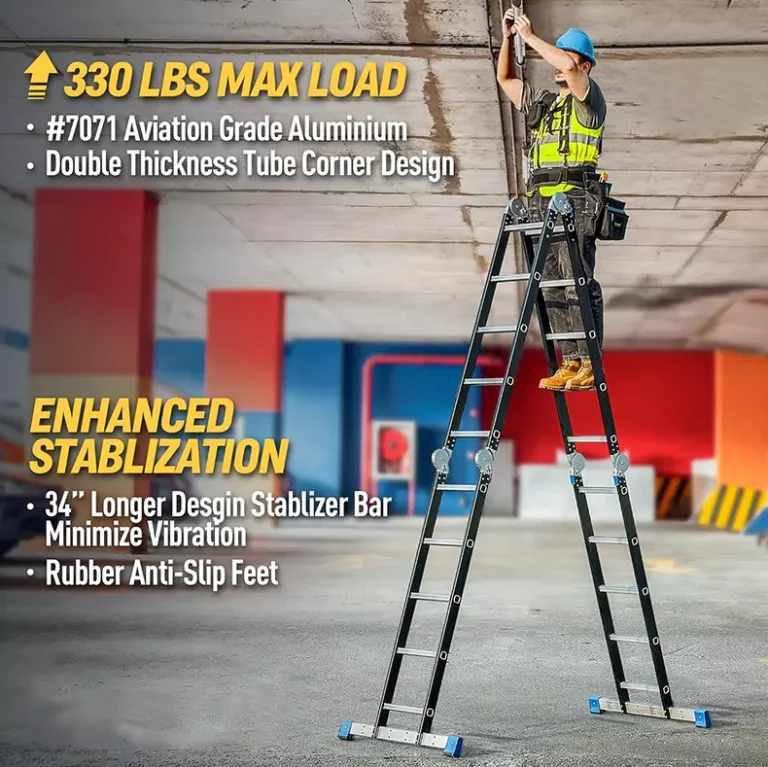
A strong frame sets the base for safe climbing. Telescopic ladders must handle weight while staying straight and firm. This depends on the tubes, joints, and the metal used.
The Aluminum Alloy One Time Folding Telescopic Slow Down Ladder is built around thick aluminum alloy tubes that help reduce bending. It also uses a slow-down system to keep the ladder from snapping shut too fast. People often appreciate this feature because it makes closing the ladder calmer and easier. This kind of structure aims to handle daily tasks without giving a shaky or soft feeling.
Anti-slip Design and Ground Contact Safety
Ground contact is one of the easiest things to overlook. Floors at home or outdoors are different from one another—tiles, wood, gravel, cement, even grass. If the feet cannot adapt, the ladder may slide.
The Black Telescopic Ladder With Stable Foot 100% Fit Floor deals with this by using wider feet that sit fully on the ground. Instead of touching the floor at a small point, the base presses down in a large, flat area. This helps it stay steady even when users lean slightly to one side or shift position during work.
Controlled Expansion and Locking System
Locks are the heart of a telescopic ladder. Good locks open smoothly and stop firmly. When this feels right, users climb with more confidence.
The Step Space 30cm Black Telescopic Ladder Red Switches highlights this idea with bright red buttons that guide each step of opening or closing. The clear controls make it easier to judge whether a section is locked. And with the 30 cm spacing, the ladder feels more natural to climb, even for longer tasks.
What Key Features Matter Most When Choosing a Safe Telescopic Ladder?
After checking the basic frame, materials and comfort features become the next things to look at. These details shape both safety and day-to-day ease of use.
Reliable Materials and Certification Standards
Good ladders come from good materials. Aluminum is popular because it is light but still strong. It does not rust easily and stands up well in places with moisture or temperature changes.
Jadduo follows safety standards like EN131, ANSI, GS, and CE. These labels show the ladder has gone through tests for strength and balance. Buyers who want dependable equipment often look for these marks.
User-friendly Locking and Release Mechanisms
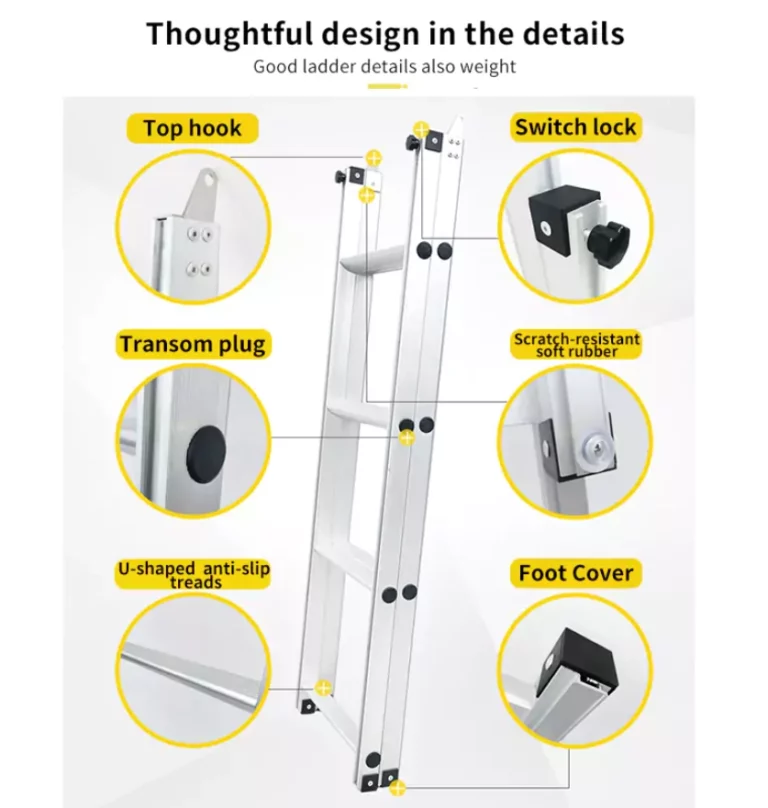
The locking system controls the whole experience. If it is hard to press or unclear, using the ladder becomes stressful. Smooth, predictable section locks help users adjust height without worrying that the ladder might drop suddenly. Designs with slow-down closing, individual buttons, or visible locking points are often easier to use.
Stability Enhancements for Different Surfaces
No home or outdoor area has perfectly flat ground. Because of that, small details like foot shape and rubber texture matter. A ladder that grips well on tile but also holds steady on cement or hard soil becomes more useful. Many users look for angled feet that naturally set the ladder at a safe climbing angle.
How Do Real-world Scenarios Reveal Safety Differences?
Ladders often look similar in pictures. Their real differences appear when they are used in daily tasks—especially tasks that involve movement, stretching, or multiple climbs.
Home Maintenance and Seasonal Decoration Safety
During gutter cleaning, lamp replacement, or holiday decorating, users may climb up and down several times. They may lean a little to the left or stretch a bit to the right. Foot stability becomes very important here. A ladder that stays still gives a calmer experience and reduces common slips that happen during simple home projects.
Outdoor Work, Gardening, and RV Travel
Outdoor tasks bring uneven soil, grass, gravel, and sometimes wind. Tree trimming, small repairs, and RV roof access need ladders that can handle these mixed conditions.
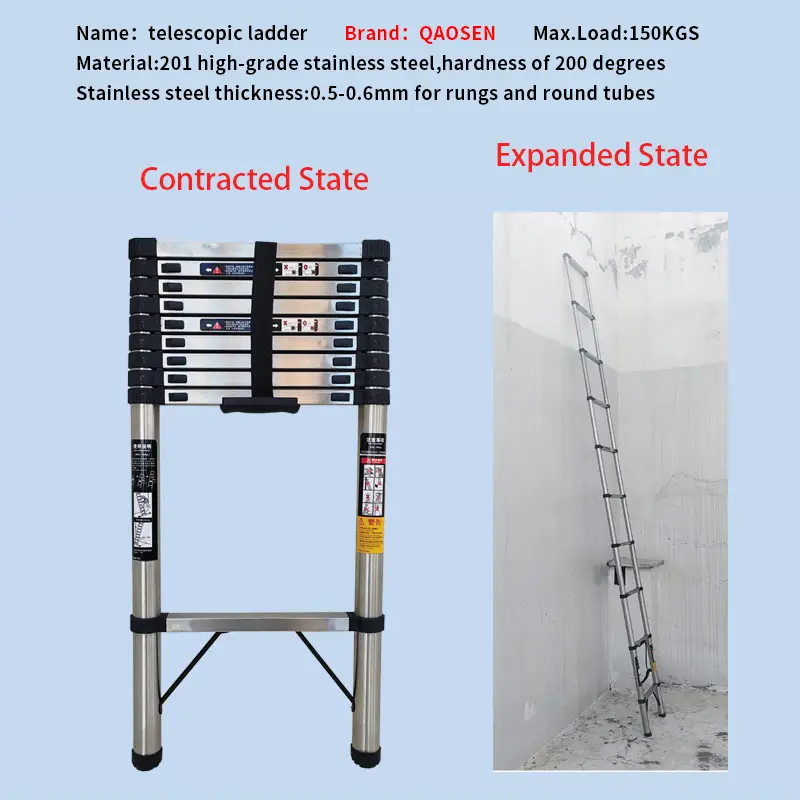
Jadduo’s telescopic ladders are made with these scenarios in mind. Since the company sells to more than 50 countries, many RV owners and outdoor workers choose models that fold small but stand tall. The lightweight aluminum frame helps with travel, while the locking system supports steady climbing.
Light-duty Industrial and Warehouse Tasks
Warehouses require ladders that can be moved often. Workers climb to reach boxes or check inventory, sometimes carrying items in one hand. A ladder with predictable steps and firm feet helps make this routine easier. Strength and balance matter because repeated use shows flaws quickly.
Which Safety-oriented Advantages Make Jadduo Stand Out?
Many suppliers sell telescopic ladders, but very few control the entire production line. This is one area where Jadduo stands apart, especially for large orders or long-term partnerships.
Full-process Quality Control From Manufacturing to Testing
Jadduo follows a complete system that includes cutting pipes, drilling, stamping, sleeving, labeling, strapping, assembling, and final packaging. Each stage follows a set order, and this helps keep tube alignment correct. Small things like straight tubes and clean drilling lines affect how well a ladder locks later on.
The company operates in a 10,000㎡ factory and can produce about 30,000 ladders a month, giving them the capacity to support wholesalers and brands reliably.
Enhanced Foot Stability and Surface-fit Engineering
The Stable Foot 100% Fit Floor feature shows how Jadduo approaches real ground conditions. Instead of round caps, the ladder uses a flatter, wider foot design. This spreads pressure across more surface area and helps prevent sliding on smooth tiles or concrete.
Customizable Safety Features for OEM/ODM Needs
Some buyers want special adjustments. These may include different colors, small changes to step spacing, or upgraded slow-down parts. Jadduo supports OEM and ODM projects while still keeping EN131 and ANSI requirements. This flexibility helps brands create their own models without losing safety quality.
What Should Buyers Check Before Choosing a Telescopic Ladder?
When comparing models, a few simple checks can help guide a good decision.
Height Requirements and Working Environment
Different jobs need different heights. Some ladders match indoor ceilings, while others reach second-story gutters or RV roofs. It helps to think about the main tasks first. Also consider where the ladder will be used—indoors, outdoors, in dry rooms, or in mixed environments.
Storage Space and Portability Considerations
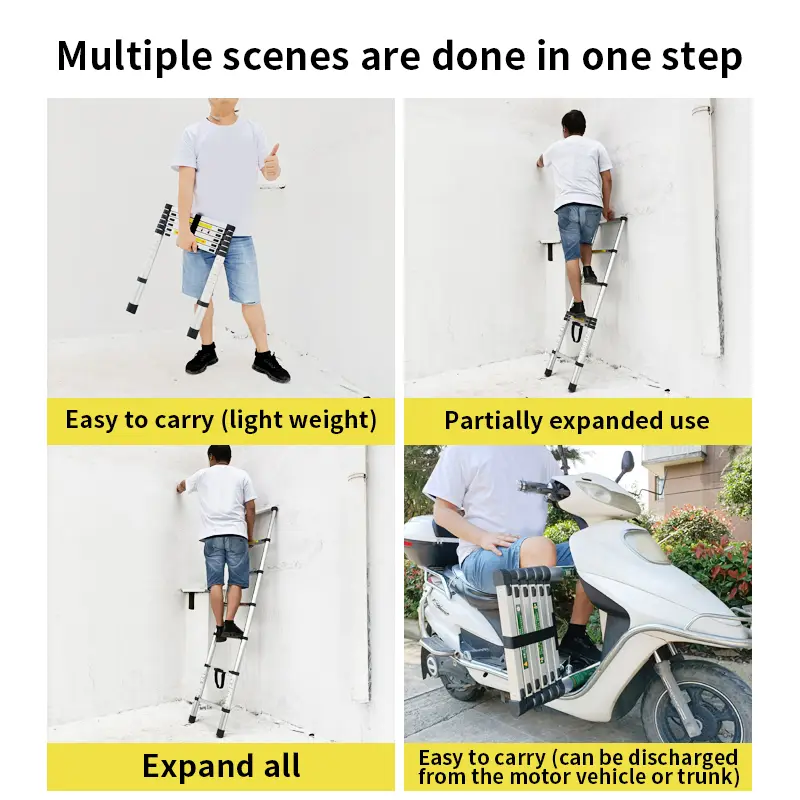
One of the biggest reasons people choose telescopic ladders is storage. They can fit behind a door, under a bed, in a closet, or inside a car trunk. For people who travel or work in several locations, this convenience makes daily work easier.
Suitability for Multi-scene Use
A ladder that works only in one situation is less useful. Good telescopic ladders can support many tasks—home repair, holiday decorating, orchard work, warehouse duties, RV travel, and sometimes emergency needs. A model that performs reliably across these scenes gives much better long-term value.
FAQs
Q1: How do telescopic ladders stay stable when fully extended?
A: They rely on strong aluminum tubes, firm locking sections, and feet that grip the ground. Wider foot bases help reduce side movement during climbing.
Q2: Are telescopic ladders suitable for outdoor or RV tasks?
A: Yes. Many telescopic ladders, including those from Jadduo, use corrosion-resistant aluminum and anti-slip feet, making them usable on different outdoor surfaces.
Q3: Which certifications show that a telescopic ladder is safe?
A: EN131, ANSI, GS, and CE are the main safety marks. These standards check strength, materials, and load performance.