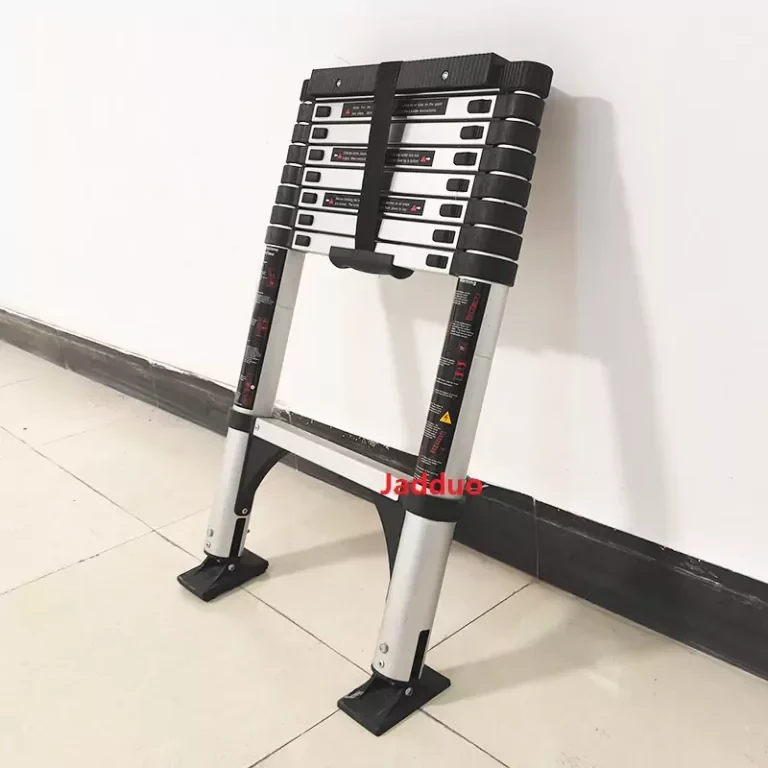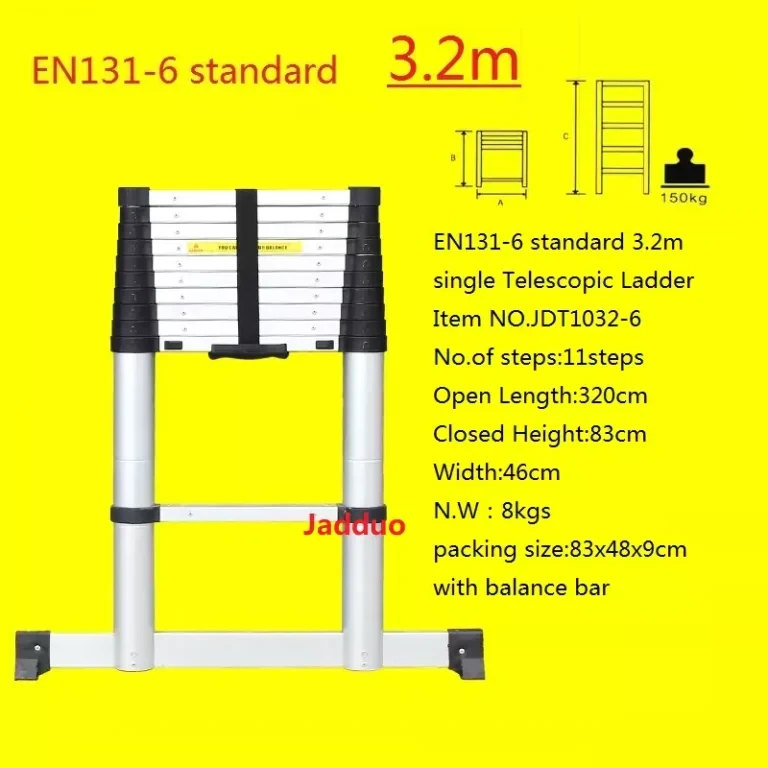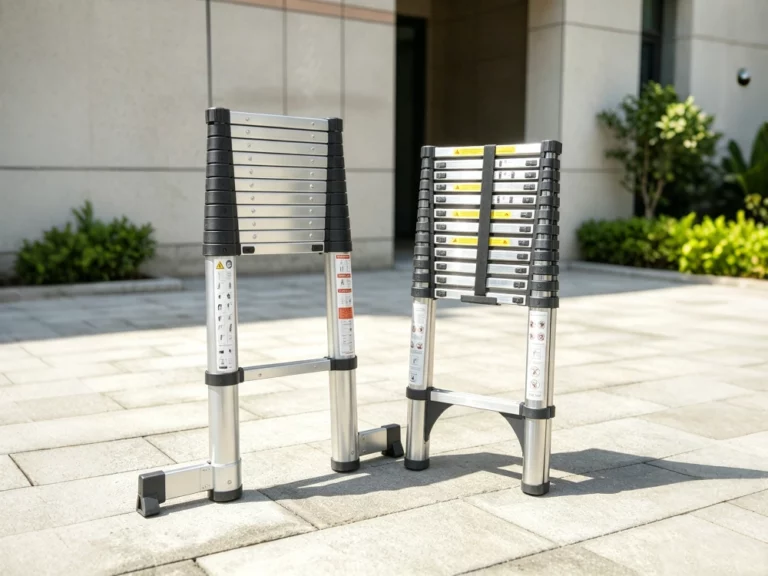
The 3 Points of Contact Rule is not a complicated safety idea. Keep two hands and one foot, or two feet and one hand, on the ladder while climbing. That is the whole rule. The hard part is doing it every time, especially when the job looks small. Replacing a lamp, checking a roof edge, cleaning a gutter, taking parts from a warehouse shelf — these jobs often make people rush.
Jadduo makes telescopic ladders, step ladders, utility scaffolds, work platforms, aluminum ladders, steel ladders, and fiberglass ladders for home users, jobsite teams, distributors, and OEM buyers. The company supports OEM & ODM, low-MOQ orders, and regular export supply. You can check the product range on the Jadduo website before matching ladder types with your working scene.

What Does the 3 Points of Contact Rule Mean in Ladder Safety?
This rule is mainly about climbing up, climbing down, and changing your body position on the ladder. It does not mean every task must be done with three limbs fixed at all times. But before you move, your body should have steady support.
Two Hands and One Foot on the Ladder
This is the most common climbing position. One foot moves, the other foot stays on the rung or step, and both hands hold the ladder. It gives the body a simple triangle of support. If the foot slips a little, the hands still help control the body.
For a buyer, this is where ladder design starts to matter. The user needs places to grip. The ladder should not shake before the next step is taken.
Two Feet and One Hand While Moving
Sometimes both feet are on the ladder, and one hand moves to a higher grip point. This still follows the 3 Points of Contact Rule. The point is not to climb fast. The point is to move one part of the body at a time.
Loose tools are a problem here. If the user climbs with a screwdriver, drill, or cleaning bottle in one hand, the rule is already broken. A tool belt, pouch, rope, or helper on the ground is safer.
Stable Body Position Before Each Step
Face the ladder. Keep the body between the side rails. Do not turn the waist too far. Do not reach to the left or right just to save a few seconds.
If the work area is out of reach, climb down and move the ladder. This sounds slow, but it is normal safe work. Many falls start from a small side reach.
Why Does the 3 Points of Contact Rule Reduce Ladder Accidents?
Most ladder problems come from simple habits. Users skip a step, climb with one hand busy, stand too high, or move before the ladder is steady. The 3 Points of Contact Rule gives the user one clear habit to follow.
Better Balance During Climbing
The body shifts weight every time one foot leaves the ladder. On the floor this is easy. On a ladder, that shift is sharper because the standing area is smaller.
With three contact points, the body does not depend on one foot alone. This is especially useful when climbing down. Many people come down faster than they climb up. That is where balance can go wrong.
Less Risk From Slipping or Overreaching
Wet shoes, dust, smooth floors, and uneven ground can all reduce grip. Anti-slip parts help, but they cannot fix poor movement.
The Black Aluminum Household Ladder with Non-slip Strip suits indoor jobs such as lamp replacement, curtain work, cabinet storage, and cleaning. Jadduo lists 4-step and 5-step options, both with 150kg max load. The non-slip strip gives the foot better contact than a plain smooth surface, which is useful for home users who may not wear work shoes.
Safer Movement When Carrying Tools
For warehouse maintenance, electrical work, and roof-related checks, the user often needs tools. But the climb should still be hands-free. Put tools in a belt or lift them after positioning.
For taller work, extension ladder safety rules should also include ground condition, ladder angle, top support, and whether the user can climb without twisting or pulling hard on one side.
How Should You Apply the Rule on Different Ladder Types?
Different ladders change how the rule feels in real use. A short household ladder is different from a fiberglass extension ladder. A multi-purpose ladder is different again because it changes shape and depends more on joints and locks.
Step Ladders for Indoor and Household Tasks
Step ladders are common for lower indoor work. Users may think the risk is small because the height is not extreme. Still, a fall from a few steps can cause injury.
For daily household or retail-channel use, the Black Aluminum Household Ladder with Non-slip Strip is a direct match. It is not for high exterior work. It is for simple access at moderate height, where the user needs a stable place to stand and climb.
Extension Ladders for Higher Outdoor Work
For exterior walls, roof edge checks, warehouse access, and electrical areas, the ladder is usually taller. The climb takes longer, so how to climb a ladder safely becomes more serious.
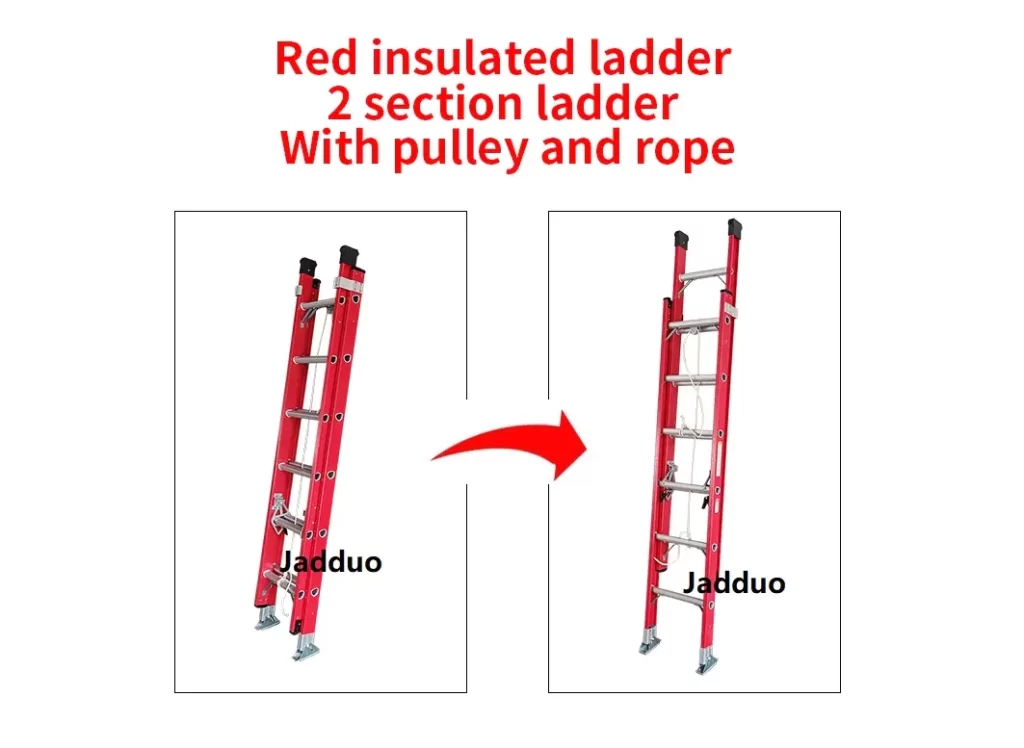
The Red insulated ladder 2 section ladder With pulley and rope is listed in the extension ladder and fiberglass ladder category. Jadduo lists 2×6, 2×8, 2×9, and 2×10 sizes, with straight ladder length from 253cm to 477cm and 150kg max load.
The pulley and rope structure helps with height adjustment. For electrical or near-electrical work, fiberglass material is also a clear buying point. The buyer still needs to check local job rules and actual site conditions before ordering.
Multi-Purpose Ladders for Flexible Work Positions
Some teams need one ladder for several jobs. Cleaning, repair, warehouse work, light renovation, temporary access — one fixed ladder type may not cover all of them.
The Strengthen Joints 2 In1 Ladder 2 Balance Bars With Black Tie Rod fits this kind of mixed use. Its product name already tells the key points: strengthen joints, 2 in 1 structure, two balance bars, and black tie rod. For buyers, these are not decoration words. They relate to how the ladder feels when the user shifts weight.
Joint and locking quality should be checked carefully on multi-purpose ladders. If the hinge area is loose, the user will feel sway while climbing. That makes the 3 Points of Contact Rule harder to keep in practice.
In production, the small processes matter. Pipe cutting, drilling, indentation or stamping, sleeving, riveting, assembly, and packaging all affect the final ladder body. Punching machines help make connection holes more consistent. Riveting machines help fasten joint areas with steadier repeatability. Sleeve installation also protects connection areas that take pressure during folding and climbing. These details cannot replace safe use, but they give the ladder a better base for repeated work.
Which Jadduo Ladder Fits Your Working Scenario Best?
Do not pick a ladder only by height. First check the job. Who will use it? Will it stay indoors or outdoors? Will the user carry tools? Will it be folded many times a day? Will it be sold to home users or maintenance teams?
| Working Scenario | More Suitable Jadduo Product | Selection Reason |
| Indoor cleaning, light fixture changes, cabinet storage | Black Aluminum Household Ladder with Non-slip Strip | 4-step and 5-step options, non-slip strip, 150kg max load |
| Electrical, warehouse, exterior, or higher access work | Red insulated ladder 2 section ladder With pulley and rope | Fiberglass ladder category, pulley and rope height adjustment, 253cm to 477cm straight ladder length |
| Maintenance teams needing one ladder for several tasks | Strengthen Joints 2 In1 Ladder 2 Balance Bars With Black Tie Rod | 2-in-1 design, strengthened joints, two balance bars |
The 3 Points of Contact Rule should guide both use and buying. If a ladder makes users stretch too far, lift too awkwardly, or climb with one hand busy, it is not a good match for frequent work.
What Should Buyers Check Before Ordering Ladders for Safer Climbing?
For B2B orders, photos are not enough. A ladder may look fine on a product page, but the real check should include ladder load capacity, step surface, base contact, folding structure, packing needs, and user habits.
Load Capacity and User Weight Planning
Jadduo lists 150kg max load for the household ladder and red insulated extension ladder above. Treat this as the total working load, including the user and carried items. If tools are often involved, plan a work method that lets the user keep both hands free while climbing.
Anti-slip Feet, Balance Bars, and Locking Mechanisms
Anti-slip contact points help on smooth floors. Balance bars increase the base contact area. Locking mechanisms should engage before climbing. These parts are not selling points only. They are the parts the user depends on when weight moves from one foot to another.
Service Support and Order Details
For distributors and project buyers, service details affect later sales. Ask about product photos, packaging, available sizes, sample plans, and OEM requirements before placing a batch order. A household ladder, an insulated extension ladder, and a multi-purpose ladder solve different problems.
The 3 Points of Contact Rule is a daily working habit. It should affect product training, product choice, and how buyers explain ladder use to end users.
Need Ladder Details for Your Project?
If your project covers household retail, warehouse maintenance, electrical work, ladder safety for roof work, or mixed ladder models, prepare the use details first: working height, user type, ground surface, storage space, and packing needs. Jadduo can review suitable ladder types and order details based on your plan. You can send requirements through the contact page.
FAQ
Q: What are the three points in the rule?
A: The three points mean two hands and one foot, or two feet and one hand, stay on the ladder while climbing or descending. This helps the user keep balance and avoid sudden loss of control.
Q: Does the rule apply to step ladders and extension ladders?
A: Yes. It applies to step ladders, extension ladders, insulated ladders, and multi-purpose ladders. The ladder type changes the setup, but the basic rule stays the same.
Q: How can buyers choose ladders that support the 3 Points of Contact Rule?
A: Buyers should check load capacity, step or rung surface, anti-slip feet, balance bars, locking structure, ladder height, and the real use scene. The ladder should help users climb with hands free and keep the body centered.