Many ladder problems do not happen during the climb. They happen after the user reaches the working height. One hand leaves the rail. A tool is taken out. The body turns a little. Then the user tries to reach another corner without moving the ladder.
That is why ladder safety should be checked again at the top, not only at the bottom.
Jadduo makes ladders for all applications: Home, RV, Rooftop Tents, Warehouse, Retail Shelving and general Light Maintenance work. The main product question for the potential buyer is: practical – how tall do you need to go? Where will the ladder be stored? Who will use it? Will they have control of their balance once they reach the top of the ladder? A beautifully illustrated catalog ladder may not translate to your work environment.
This guide focuses on how to work safely at the top of a ladder and how to match the ladder type with the task.

Why Does Ladder Safety Matter After Reaching the Top?
A ladder is not just for going up and down. Once the user starts working, it becomes a support point. The risk changes because the user may need both hands, may look upward, or may move the body to one side.
Work Position Changes the Risk
Climbing is simple. Working is not. A person may need to clean a gutter, adjust a rooftop tent, pick stock from a shelf, install a light, or hold small parts above shoulder height. These actions change balance.
Before starting, the user should stop for a moment. Feet stable? Body centered? Tools close enough? If the task already feels too far away, the ladder is not in the right place.
Overreaching Creates Side Load
Many users ask how to avoid overreaching on a ladder. The answer is not complicated: do not let the body chase the work area.
If the chest, hips, or belt line moves outside the side rails, the ladder is no longer supporting the user in a safe way. This often happens during gutter cleaning, wall decoration, warehouse shelf work, and RV accessory adjustment. Moving the ladder takes more time, but it is safer than stretching from the top.
The Top Step Is Not a Normal Work Platform
Users sometimes climb one step higher to finish faster. That habit causes trouble. The top cap or highest step is usually not meant to be a normal standing surface.
If the job needs longer standing time, choose a ladder that fits that work style. A short indoor job may need a step ladder. Rooftop tent access needs a tent ladder. Repeated height access with storage limits may need a telescopic ladder.
How Can Users Stay Stable at the Work Height?
Good ladder safety at the top comes from small habits. They are not difficult, but they must be repeated every time.
Three Points of Contact on a Ladder
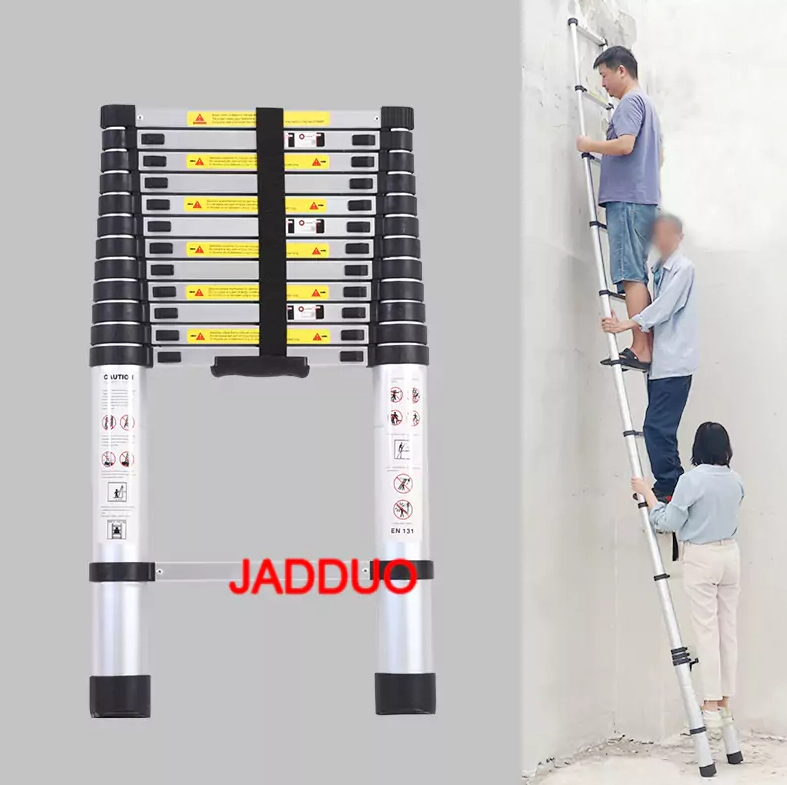
Three points of contact on a ladder means two feet and one hand, or two hands and one foot, stay connected with the ladder whenever possible. If both hands must be used for a short job, the body should already be close to the work area and well balanced.
Do not climb with loose tools in hand. Use a pouch, belt, or pass tools up separately. This matters for drills, screws, cleaning brushes, light parts, and tent accessories.
Centered Body Position
The user should stay between the side rails. If the work point is too far away, climb down and reset the ladder.
For distributors and project buyers, this is also an after-sales issue. A simple safety note on the carton, manual, or product page can reduce wrong use after delivery. End users often need clear reminders, not long technical wording.
A Short Pause Before Work Starts
Before drilling, cleaning, painting, pruning, loading, or adjusting hardware, ask one direct question: can this job be done without hard leaning?
If not, the ladder type or position is wrong. Product selection affects ladder safety because a ladder that is fine for access may not be right for working at the top.
Which Ladder Type Fits the Real Task?
Many buyers choose by height first. That is not enough. A taller ladder can still be the wrong ladder if it cannot sit at a good angle, store easily, or keep the user steady during the task.
| Use Case | More Suitable Ladder Type | Not Suitable When | Buyer Checkpoints |
|---|---|---|---|
| Home maintenance, gutter access, RV storage, warehouse shelf access | Single telescopic ladder | User needs long standing time at one height | Working height, lock structure, folded size, foot stability |
| Rooftop tent, vehicle-mounted camping, outdoor access | Telescopic tent ladder | Ladder cannot connect securely with the tent or vehicle setup | Top hooks, anti-slip treads, contact protection, locking pins |
| Indoor shelves, cabinets, lights, retail displays | Portable metal step ladder | Task requires leaning against a high exterior wall | A-frame opening, foot contact, folded size, step comfort |
Safer Height Access With a Telescopic Ladder
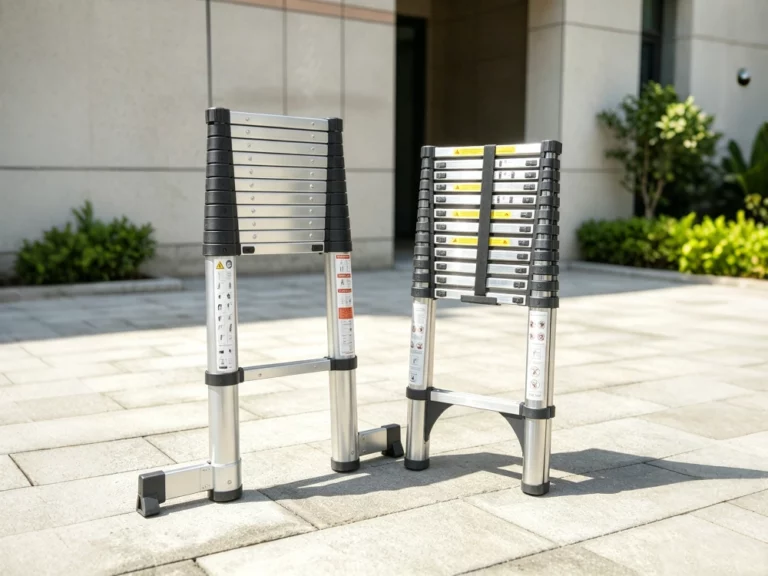
For home maintenance, RV storage, warehouse access, and light repair work, users often need height access and compact storage at the same time. A telescopic structure fits this need better than a long fixed ladder.
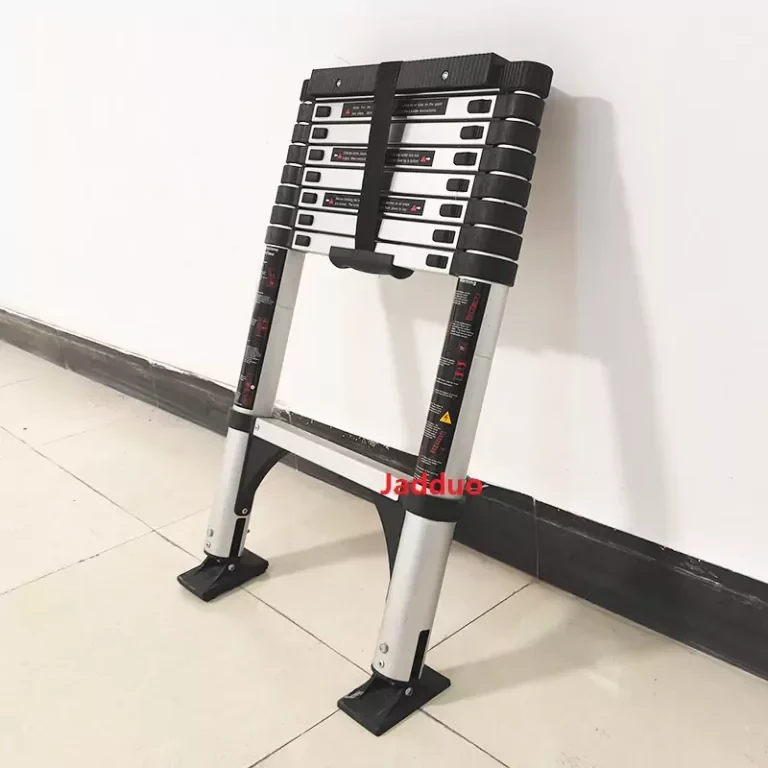
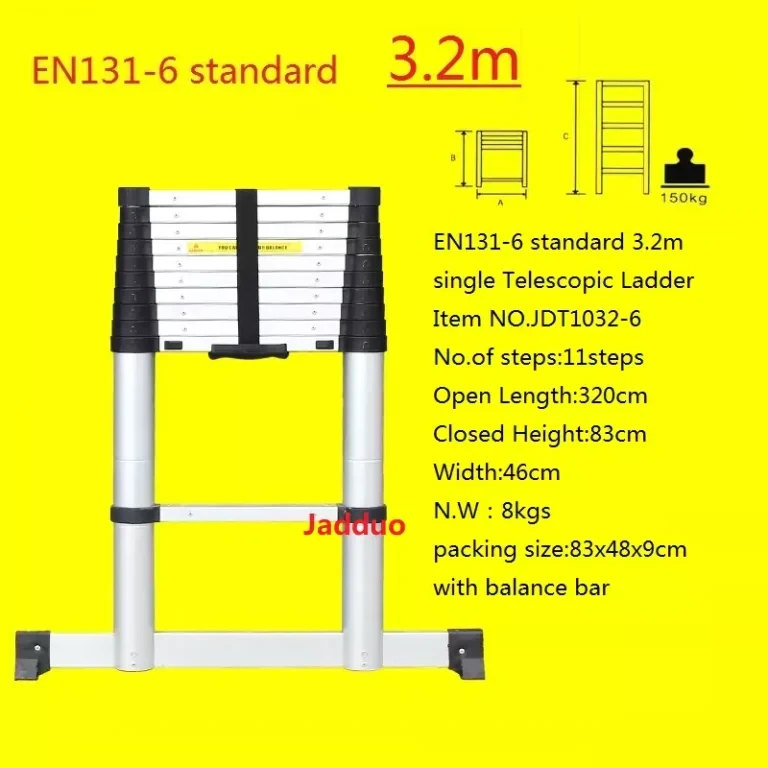
The Single Telescopic Ladder Multipurpose Tools Safety Stable Folding Ladders is suitable for buyers who care about folding size, aluminum alloy material, multiple size options, and 150kg load capacity. The main telescopic ladder safety tips are basic but useful: open the sections evenly, check every lock, place the feet on stable ground, and choose by real working height, not only by the tallest size.
Stable Access for Rooftop Tent Use
Rooftop tent access is different from wall access in that it requires the ladder to attach to the rooftop tent or vehicle and include stable steps to go up and down repeatedly. When camping outdoors, the ground is not always level so the steps must be able to accommodate this.
The 2X4 Extension Telescopic Tent Ladder would suit rooftop tent suppliers, RV accessory buyers, outdoor distributors and camping product brand sites. The page outlines key features such as U-shaped anti-slip treads, top hooks, self-locking spring-loaded pins, rubber protection and 150kg load capacity. The ladder is an integral part of the whole rooftop tent experience and is viewed as more than just a separate accessory.
Indoor Tasks That Need Freestanding Support
For indoor work, the first question is whether the user has a safe leaning surface. Many indoor jobs do not. Shops, kitchens, apartments, offices, and light warehouse areas often need freestanding support, quick opening, and compact storage.
The Sliver/Black/Golden Color Iron Stick Ladder, Portable Metal Step Ladder fits short-reach jobs around shelves, cabinets, lights, and retail displays. A portable step ladder for indoor work should be checked for foot contact, folding joints, step comfort, and storage size.
What Should Buyers and Users Check Before Work Begins?
A suitable ladder still needs a quick check. Many problems are small at first: one unlocked telescopic section, one loose hook, one wet foot pad, or one uneven step.
Ground, Angle, and Placement
Use the ladder on firm, level, dry ground. Avoid soft soil, loose gravel, wet floors, and unstable outdoor surfaces. For indoor use, check that all feet touch the floor. For leaning access, the angle should not feel too steep or too flat.
Locks, Hooks, Feet, and Treads
For a telescopic ladder, each extended section should lock evenly. No rung should feel loose under foot pressure.
For a tent ladder, the top hooks should sit firmly against the tent or vehicle structure. Rubber protection should not slide or twist.
For a step ladder, the A-frame should open fully, and the feet should sit flat before climbing.
Load, Tools, and User Behavior
Load is not only body weight. Shoes, tool belts, carried parts, and small equipment also count.
For B2B buyers, check load rating, structure, packing size, surface finish, step count, and real use environment together. A ladder for a camping kit, a home retail shelf, and a maintenance team may look similar in photos, but users behave differently on each one.
Service and Contact
Ladder safety at the top depends on several factors including body position, the correct product for the job, and a check before use. For compact storage and frequent use at height, a telescopic ladder is the best option. For use with rooftop tents and vehicle mounted access points, a tent ladder and sturdy connection points are essential. For short periods of work at low height inside, a portable step ladder offers the best freestanding stability. The safer ladder is not always the tallest – it is the one that allows the user to work safely while climbing up, working at the top and descending.
For mixed-use projects, prepare the working height, storage limit, target user, packing method, and use environment before discussing ladder models. A rooftop tent buyer, household ladder distributor, and warehouse maintenance supplier may need different structures. Jadduo can review these details through its contact page and help match the product type to the real use case.
FAQ
Q: What are the most common ladder safety mistakes after reaching the top?
A: Overreaching, carrying tools while climbing, standing too high, incorrect use of a ladder for the task at hand, and starting to work with a ladder before checking locks, feet, hooks, and ground surface.
Q: Is a telescopic ladder suitable for home maintenance?
A: Yes. A telescopic ladder is suitable for home maintenance work if you need a height adjustable ladder that can be stored compactly. Ensure that the ladder is fully locked up or down as required, is positioned on firm level ground and do not lean out from the side rails.
Q: Should I choose a step ladder or telescopic ladder for indoor work?
A: For short work indoors where you are standing up and down from freestanding ladder a step ladder is best. A telescopic ladder is best for higher access where you have enough space, you have a safe surface to lean the ladder on and you can place the ladder at the correct angle for safe use.