Safety for Ladder Climbing starts at the ground. Falls from ladders can occur when the ladder is too short for the job, on uneven or soft surfaces, when the user overreaches from the sides of the ladder or when the wrong type of ladder has been chosen for the task. A step ladder is ideal for a number of clean indoor tasks but is not suitable for work on roofs. A metal ladder may be appropriate for storage on high shelves but is not the best choice for work that carries an electrical risk.
Jadduo produces step ladders, telescopic ladders, extension ladders and insulated ladders for the home owner, the warehouse, the outdoor work place, the repair man, the electrician and wholesaler. Safe climbing with a ladder is more than telling people to be careful. The way a ladder is constructed, from what material it is made, the type of feet it has, the hinges, the way it locks up and how it performs on the work site all play a critical role in safe climbing and in general the quality of the product.
This guide gives practical ladder climbing safety tips for choosing, checking and using different ladder types.
Why Does Ladder Climbing Safety Start Before You Step on the First Rung?
Before climbing, the user should first ask whether this ladder is suitable for the work area. A short indoor task, a warehouse shelf task and outdoor utility work all create different risks. Good ladder use begins with correct selection, not only correct climbing.
The Wrong Ladder Type Creates Unsafe Behavior
Using the wrong type of ladder can cause users to engage in hazardous behavior. A ladder that is not long enough can cause users to stand on the top rung and lean forward, placing themselves at risk of fall. A leaning ladder used indoors can be unstable and may fall over at an angle or even collapse altogether. Metal ladders are also conductors of electricity and should not be used near work that has an electrical hazard. Treating Ladder Climbing Safety as both a training topic for users and a product selection issue is very important.
The Right Ladder Type for the Job
For indoor cleaning, storage access, shop display setup and light maintenance, the 4-10 steps Golden Black Silver Wood grain color metal hinge step Ladder is more practical than a leaning ladder because it can stand on its own. It is suitable when the user needs repeated short-height access without depending on a wall. It is not the right match for roof access, long outdoor reach or electrical-risk work, where another ladder type should be selected.
A Practical Ladder Inspection Checklist Before Use
A basic ladder inspection checklist before use should include the feet, hinges, rungs, frame, locking parts and ground condition. Check whether the ladder rocks, whether the steps are wet or oily, and whether any parts are bent, cracked or loose. If the ladder has been transported, stored outdoors or used on a jobsite, inspection should happen before each climb.
| What to Check | Why It Matters |
| Feet and floor contact | Poor contact can cause slipping or rocking |
| Hinges or locking parts | Loose parts can reduce stability while climbing |
| Rungs or steps | Wet, oily or damaged steps increase fall risk |
| Frame condition | Bent or cracked parts should not be used |
| Load rating | User weight plus tools should stay within the rated use |
| Work location | Wind, uneven floor or electrical risk may require another ladder type |
How to Climb a Ladder Safely Without Losing Balance?
If a reader searches how to climb a ladder safely, they usually need clear actions. The safest habits are simple, but they must be repeated every time.
Face the Ladder and Keep Stable Contact
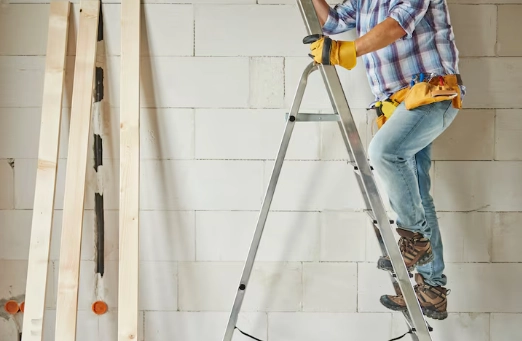
Climb while facing the ladder. Move one step at a time. Keep two hands and one foot, or two feet and one hand, in contact with the ladder whenever possible. Before moving your foot to the next rung, make sure your other foot is placed firmly and your hand has a secure grip. Many climbing mistakes happen during small transitions, not only at the top of the ladder.
Keep Your Body Between the Side Rails
Do not lean far to the side to reach a tool, window, branch or storage box. Your body should stay between the ladder rails. If the work area is out of reach, climb down and move the ladder. A clean rung, stable foot and locked hinge reduce risk only when the user also climbs slowly and keeps both hands available.
Avoid the Unsafe Top Area
Avoid standing on the top cap or upper area of step ladders unless specifically stated to do so by the product instructions. If a task is too high, use a taller ladder rather than trying to reach from a shorter ladder. Providing enough step ladders for buyers to use can help prevent unsafe use by end users.
What Telescopic Ladder Safety Tips Matter for Compact and Outdoor Use?
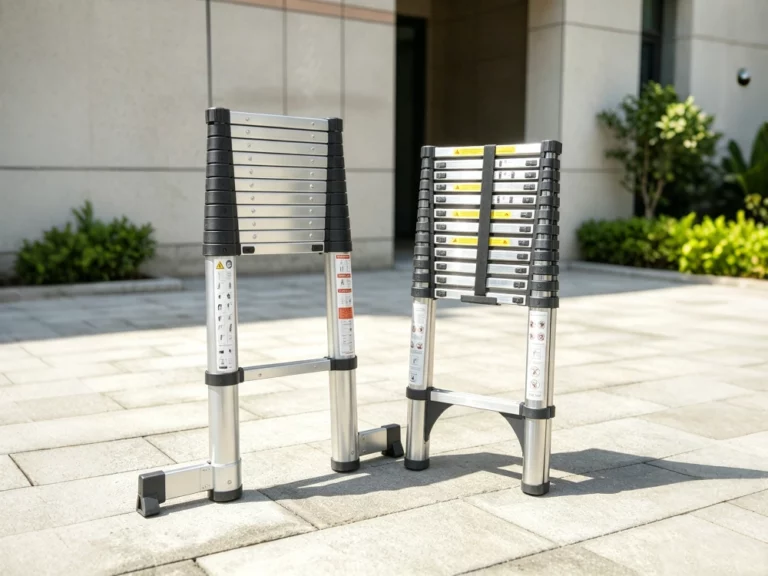
The advantages of Telescopic ladders include compact storage which allows for easy transport from job to job. These are one of the most common type of ladder used for home repair, RV’s, maintenance in the workshop, occasional use outdoors and compact storage markets. Although the ladder has been designed in compact form, equal attention must be given to correct usage.
Full Floor Contact for Better Stability
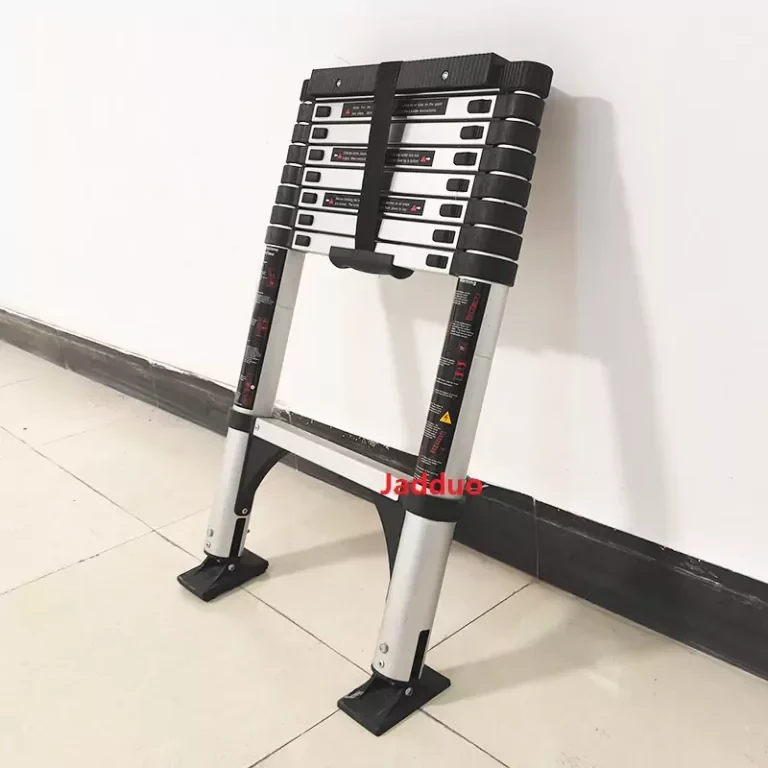
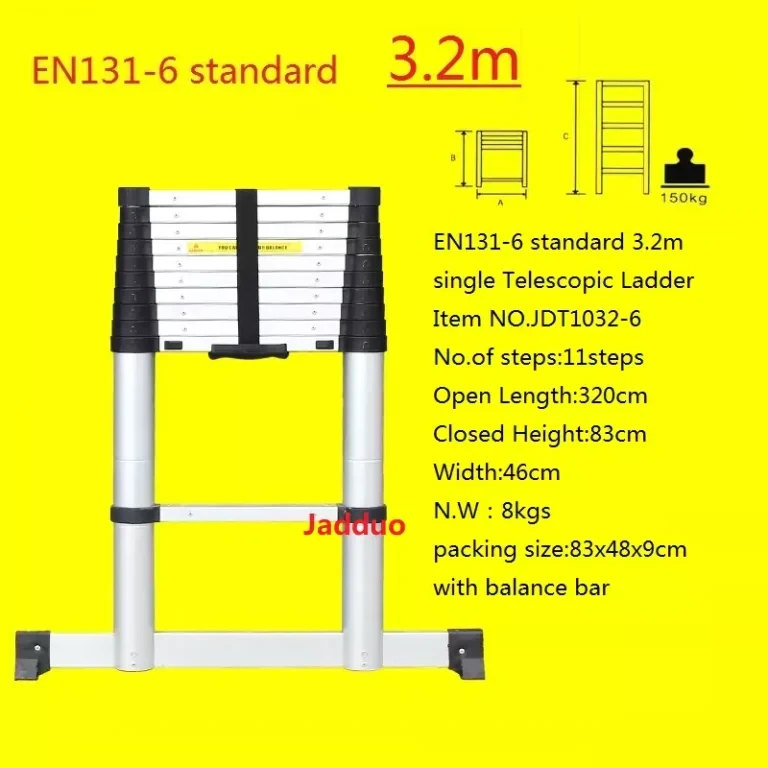
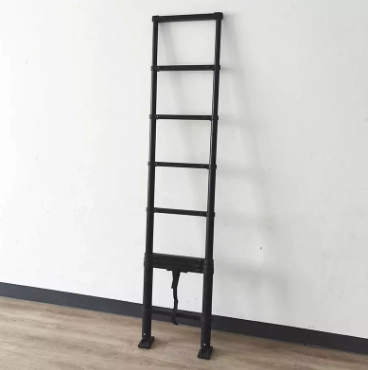
The Black Telescopic Ladder With Stable Foot 100% Fit Floor is better suited to users who need flexible height access and compact storage. Its stable foot design is useful for common indoor and outdoor surfaces, especially when users move the ladder between different work areas. Buyers should not choose a telescopic ladder only because it folds small. Section locking, foot contact and rung condition should be checked before every climb.
Secure Locking Before Every Climb
One of the key telescopic ladder safety tips is checking that each extended section is fully locked before climbing. Do not pull, fold or move the ladder while someone is standing on it. When retracting the ladder, keep hands clear of closing sections. For frequent-use buyers, locking feel and joint stability deserve more attention than appearance alone.
Compact Storage with Real Safety Checks
A telescopic ladder is useful for small homes, vehicles, workshops and maintenance teams, but it should still be checked like any other ladder. Rung surface, joint quality, foot condition and locking action should all feel secure before use.
Which Ladder Safety Features Should Buyers Look For?
For procurement teams, ladder safety features to look for should be linked to the working environment, not only the product size. A ladder that works well for indoor cleaning may not fit outdoor high access or electrical maintenance.
Anti-Slip Feet, Rungs and Reinforced Parts
Buyers should compare foot design, rung grip, hinge strength, frame stability and locking parts. For step ladders, the hinge and standing comfort matter. For telescopic ladders, the locking sections and foot contact matter. For extension ladders, setup control and height adjustment are important.
A safer purchase decision should connect each feature with a real task. A metal hinge step ladder is more suitable for repeated indoor access because the user needs a freestanding structure, not wall support. A telescopic ladder should be checked for stable foot contact and secure section locking because users often move it between rooms, vehicles or outdoor areas. An insulated two-section ladder should be considered when the work may involve electrical or telecom environments, where ladder material matters as much as height.
| Working Situation | More Suitable Ladder Type | Key Buying Focus | Avoid This Choice |
| Indoor cleaning and storage access | Step ladder | Step options, stable standing, hinge quality | Using a leaning ladder without proper support |
| Compact storage and flexible height | Telescopic ladder | Locking system, stable foot, easy storage | Choosing only by folded size |
| Outdoor high access | Extension ladder | Height control, ground contact, setup stability | Using a ladder that is too short |
| Electrical or telecom work | Insulated ladder | Insulating material, safe handling, controlled extension | Using a metal ladder near electrical-risk areas |
Insulation for Electrical-Risk Work
For electrical maintenance, telecom work, utility tasks and outdoor high access, the Red insulated ladder 2 section ladder With pulley and rope is a more suitable direction than a metal ladder. The key reason is not only height, but also the need for insulating material and controlled extension. For buyers serving electrical or telecom users, this type of ladder should be separated from general household ladders in product selection and sales guidance.
Product Selection by User Type
Household users and shop owners may prefer the metal hinge step ladder for routine indoor work. Mobile maintenance teams may prefer the black telescopic ladder for compact storage and flexible height use. Contractors and utility teams may need the red insulated two-section ladder for higher access and electrical-risk tasks. The safer product is the one that prevents the user from overreaching, standing too high or setting the ladder on an unsuitable surface.
How Should Buyers Choose a Safer Ladder for Different Work Sites?
For distributors and project buyers, wrong ladder matching often leads to returns, complaints and unsafe use by end users. A clear selection process should start with task height, working surface, indoor or outdoor use, electrical risk, storage space and user frequency.
Match the Product to the Real Site
In our attempt to compare various models, it is often best to first apply a simple rule to select the required ladder for the task at hand. A step ladder is best used indoors, for jobs that need to be done frequently, where no support against a wall is required. Telescopic ladders are ideal for storage space and transport. However, the sections must be locked in place properly and the foot plates must be stable. Insulated extension ladders are used for higher reaches and work which may be in contact with electrical objects. If a ladder forces you to over reach, to be to high up or to work from an unstable surface then that ladder is not suitable for the required job.
Ask for Details Before Bulk Orders
Before placing bulk orders, buyers should confirm product size, packing needs, model differences, application fit and after-sales service expectations. If the product will be sold in different regions, user habits and common working scenarios should also be considered. Ladder Climbing Safety should be part of product selection, catalog planning and customer guidance.
Service and Contact Support
For project buyers, ladder safety often depends on choosing the right model before the order is placed. If you need product photos, packing information, model comparison or application-based suggestions, Jadduo can support ladder selection for wholesale, OEM/ODM and project supply. You can share your working height, use scenario, market requirement and order plan through the contact page.
FAQ
Q: What Are the Basic Ladder Climbing Safety Rules?
A: Basic Ladder Climbing Safety rules include checking the ladder before use, placing it on stable ground, facing the ladder while climbing, keeping stable contact, staying between the side rails, and choosing the correct ladder type for the task.
Q: Which Ladder Is Safer for Indoor Maintenance?
A: For indoor maintenance, a step ladder is usually more practical than a leaning ladder because it can stand by itself. A metal hinge step ladder is suitable for cleaning, shelf access, lighting work, retail display setup and daily repair tasks. For roof access or electrical-risk work, another ladder type should be selected.
Q: What Should Buyers Check Before Ordering Ladders in Bulk?
A: Buyers should check ladder type, intended working height, foot design, hinge or locking system, rung surface, insulation needs, packing method and service support. Ladder Climbing Safety should be part of the buying decision, not only a note in the user manual.