A lightweight household step ladder should be easy to carry, simple to store, and stable enough for daily home tasks. If you are comparing aluminum and fiberglass step ladders, the answer is usually clear: aluminum is lighter for general household use, while fiberglass is selected more for electrical safety.
Jadduo manufactures household ladders, aluminum ladders, step ladders, telescopic ladders, fiberglass ladders, and OEM/ODM ladder products for export buyers. For this guide, the focus is on aluminum household step ladders because they fit common home tasks such as reaching cabinets, changing bulbs, cleaning windows, trimming small branches, arranging balcony plants, and handling storage room work.
Which Step Ladder Is Lighter for Everyday Home Tasks?
For most home users there is no need for a very heavy-duty industrial type ladder for their normal indoor work. Rather they will require a ladder that can be moved from job to job around the house, collapsed for convenient storage after use and be of a relatively compact size when in use. The material chosen for such a product determines much of this user experience.
Aluminum Is Usually Better for Lightweight Home Use
Aluminum step ladders for home use are generally more portable than their Fiberglass counterparts. During short duration jobs, it makes a big difference if you have to lift, carry and reposition a ladder for only 5 minutes. A user may say that they will just stand on a chair to complete a short task rather than put down the ladder and carry it to the area.
That is why choosing a lightweight household step ladder is not just about comfort. It also helps prevent unsafe shortcuts. For cleaning, storage access, decoration, and light home repair, aluminum normally gives a better balance between weight and daily practicality.
Fiberglass Is Better When Electrical Safety Matters
Fiberglass has a different role. It is not usually chosen because it is lighter. It is chosen because it offers insulation for work near electrical systems.
When comparing fiberglass and aluminum ladders the most important factor is the task at hand. If you are working with wiring, power boxes, telecom lines or any type of electrical maintenance then fiberglass is the better choice. For tasks such as cleaning windows, reaching high shelves, tending to plants or typical home maintenance then aluminum is the more practical choice of material.
Weight Should Be Judged With Load Capacity
A ladder should be light, but it still needs a reliable frame. A good lightweight household step ladder should support the user and small hand tools without feeling loose or unstable.
For buyers, load capacity, step surface, hinge structure, rubber feet, and frame shape should be checked together. Low weight alone is not enough. If the ladder shakes under normal movement, the product will not feel safe even if the material looks good.
What Height and Step Count Should You Choose?
The lightest ladder is not always the right ladder. A 2-step model is easy to carry, but it will not reach high windows. A 7-step model gives more height, but it needs more storage space. The correct step count should follow the real task.
Two to Three Steps for Cabinets and Quick Indoor Tasks
Two-step and three-step ladders are suitable for kitchen cabinets, wardrobes, bookshelves, pantry shelves, and simple indoor use. These short models are easy to open and close, which makes them practical for apartments and small homes.
For retail buyers, this type works well as an entry-level foldable household ladder. The user does not need professional training. The use case is obvious, and the product can be explained in a few seconds.
Four to Five Steps for Windows Lights and Storage Rooms
Four-step and five-step ladders are more suitable for windows, ceiling lights, storage rooms, curtains, and higher shelves. This is the height range many families actually need.
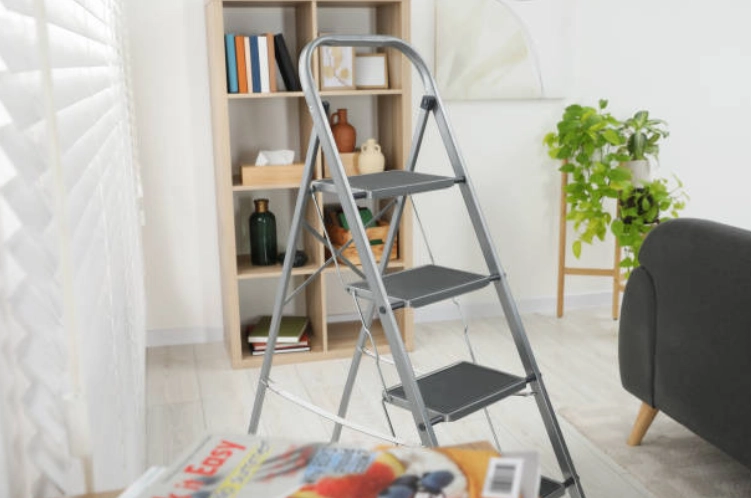
To address this mid-height demand, Jadduo’s Black Aluminum Household Ladder with Non-slip Strip fits daily household work where reach, folding storage, and foot grip all matter. It is not only about being light. The anti-slip step design is useful for cleaning work, especially on smooth indoor floors.
Six to Seven Steps for Higher Household Maintenance
Some homes need more reach for stairwell walls, garage shelves, garden trimming, or taller storage areas. In these cases, a taller aluminum step ladder may be worth the extra weight.
The D-tube Aluminium Ladder gives buyers more size options from lower indoor access to higher household maintenance. For distributors, this makes SKU planning easier. One product series can cover several home-use heights instead of forcing every customer into the same size.
What Safety Features Matter on a Lightweight Household Step Ladder?
A ladder used at home often stands on tile, wood flooring, concrete, or balcony ground. These surfaces can be smooth, dusty, or slightly wet. That is why a lighter ladder still needs clear safety details.
Non-Slip Steps for Wet or Smooth Floors
A non slip step ladder should give the foot enough friction during normal movement. For a step ladder for home cleaning, the user may step up with damp soles or dust on the floor. A smooth pedal increases slipping risk.
The black household ladder from Jadduo uses anti-slip strips on the pedal area. This is a practical detail rather than decoration. It improves foot contact at the place where slipping normally happens.
Stable Folding Structure for Daily Standing Safety
A household ladder must fold easily, but the frame should not feel loose after opening. The user may turn slightly, hold a cloth, stretch one arm, or carry a small tool. These movements create side pressure on the ladder.
Buyers should check the hinge area, the side rail alignment, and whether the ladder sits flat after it is opened. A light frame with poor geometry can feel unstable. A light frame with better section design and proper contact points can feel much safer in daily use.
Rubber Feet and Floor Protection
Rubber feet help the ladder grip the ground and protect indoor flooring. This detail matters for household buyers because many ladders are used on tiles, wooden floors, or finished interior surfaces.
If the foot pads are too hard, too small, or poorly fitted, the ladder may slide or leave marks. For B2B buyers, this can lead to complaints even when the main aluminum frame is acceptable.
Which Jadduo Step Ladder Fits Different Home Scenarios?
Different home users buy ladders for different reasons. Some want a practical black ladder for cleaning and repair. Some prefer a white ladder that can stay visible in a balcony or plant corner. Some distributors need one series with wider step options.
| Jadduo Product | Suitable Use | Buyer Logic |
| Black Aluminum Household Ladder with Non-slip Strip | Cleaning, storage, lights, windows | Practical household tasks with anti-slip support |
| Aluminum Alloy Flower Stand Ladder White | Balcony plants, light access, home display | Functional ladder with lifestyle value |
| D-tube Aluminium Ladder | Multiple home heights and SKU planning | Wider step range for different users |
Black Aluminum Household Ladder With Non-Slip Strip for Practical Family Use
This model is suitable for users who care about practical daily access. It fits cleaning, storage rooms, windows, curtains, and light repair work.
For a lightweight household step ladder, the value is easy to explain to end users. They need a ladder that folds, stands firmly, and gives better foot grip. For hardware stores and household product channels, this kind of product has a clear selling point without heavy technical education.
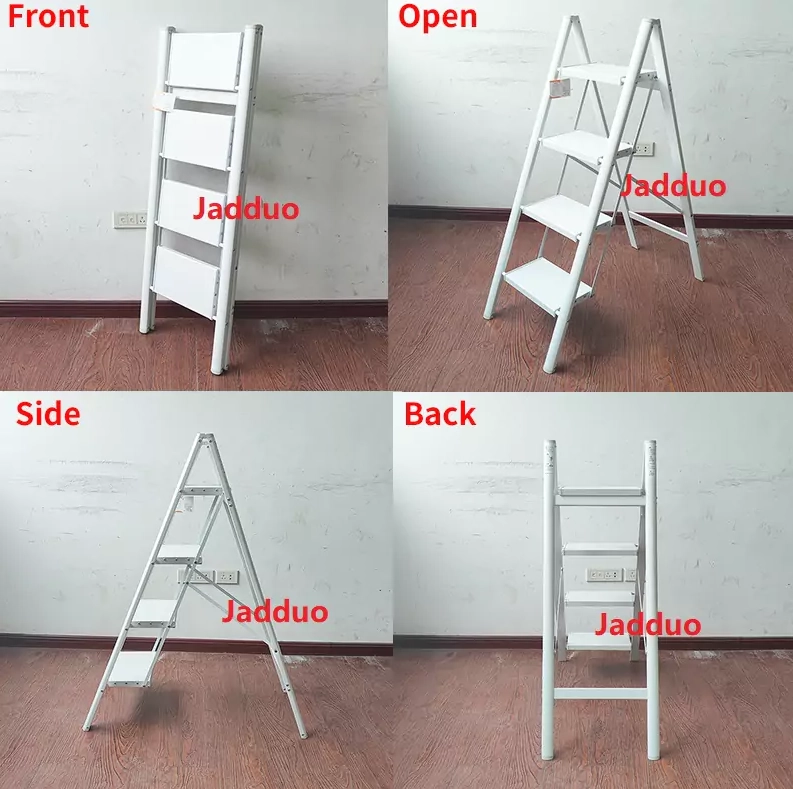
Aluminum Alloy Flower Stand Ladder White for Homes That Need Function and Decoration
Some ladders are stored away after every use. Some stay visible, especially in small apartments, balconies, or plant corners. The Aluminum Alloy Flower Stand Ladder White fits this second type of user.
It can work as a household ladder for light access and also as a flower stand ladder for plant display. This gives retailers another sales angle. The product is not only a tool for repair work. It can also fit home decoration, balcony storage, and plant care.
D-Tube Aluminium Ladder for Buyers Who Need More Size Options
The D-tube structure deserves more attention than a simple “more sizes” description. A ladder side rail does not only carry vertical weight. It also faces small twisting forces when the user steps up, shifts body weight, or reaches sideways.
A round tube can be light and easy to produce, but its contact direction is the same around the profile. A D-shaped tube gives a flatter face on one side, so the frame can be arranged with a clearer load-bearing direction. In simple terms, the ladder can keep a slimmer and lighter profile while giving the side rail a more controlled support surface.
For buyers, this engineering detail has practical value. It reduces the loose, swaying feeling that users often dislike on taller household ladders. The D-tube Aluminium Ladder is therefore useful for retail programs that need 2-step to 7-step coverage, especially when customers compare not only price but also standing confidence.
How Should Buyers Balance Weight Storage and Long-Term Value?
A household ladder may not be used every day, so the user experience before and after use matters. Can it be carried with one hand? Can it fit behind a door or beside a cabinet? Does it feel safe enough that users will actually choose it instead of a chair?
Easy Storage Reduces Daily Friction
A lightweight household step ladder should be easy to take out and put back. If storage is difficult, users will avoid it. This is common in apartments, small homes, and balconies where every tool needs a fixed place.
For B2B buyers, folding size and display logic also matter. A product that stores neatly is easier to explain on a product page, in a retail aisle, or in cross-border e-commerce listings.
Lower Maintenance Starts With the Right Material and Finish
Aluminum is practical for household use because it is easy to clean and does not need complicated care. Still, the final product depends on many small process details: pipe cutting, drilling, sleeving, labeling, assembly, and packaging.
These details affect how the ladder opens, how plastic sleeves fit, how steps align, and how well the product arrives after shipping. For distributors, long-term value is not just material cost. It includes fewer after-sales problems, clearer use instructions, and fewer complaints about shaking, scratches, or poor folding feel.
Service and Contact Support for Wholesale or OEM Orders
For wholesale or OEM orders, buyers usually need more than a product photo. They need to decide step count, color, packaging, product positioning, and whether one series can cover several household tasks. If you are comparing aluminum ladders for retail, hardware, or home goods channels, prepare your target height range, expected order quantity, packaging needs, and market use cases before you contact Jadduo.
A lightweight household step ladder should be selected by task, not by weight alone. Aluminum is usually the lighter and more convenient material for normal home use. Fiberglass should be used when electrical safety is part of the job. For Jadduo’s range, the black anti-slip household ladder fits practical family work, the white flower stand ladder fits lifestyle home scenes, and the D-tube series supports wider step-count planning for buyers who need more SKU flexibility.
FAQ
Q: Which is lighter, an aluminum or fiberglass step ladder?
A: Aluminum is usually lighter for normal home tasks. Fiberglass is mainly chosen for electrical safety. If you need a lightweight household step ladder for cleaning, storage, decoration, or light repair, aluminum is usually easier to carry and store.
Q: How many steps are enough for a household ladder?
A: Two to three steps are enough for cabinets and shelves. Four to five steps are better for windows, lights, and storage rooms. Six to seven steps are more suitable for higher household maintenance, garden trimming, or garage storage.
Q: What should buyers check before ordering a lightweight household step ladder?
A: Check the material, step count, folding size, load capacity, anti-slip step surface, rubber feet, side rail structure, and packaging. For B2B orders, also check whether the ladder series supports different sizes, colors, and OEM/ODM requirements.