
Most people ignore the household ladder until a small job is already waiting. A bulb is out. A curtain rail is loose. A storage box is too high. Someone wants to check the gutter before rain comes. At that moment, the ladder is no longer a catalog item. It is the thing standing between a quick repair and a risky climb on a chair.
JADDUO supplies household ladders, telescopic ladders, extension ladders, and related access products. For home and light work buyers, the useful question is simple: which ladder gives enough reach without making setup, carrying, or storage difficult?
A good household ladder does not need to look impressive in a showroom. It needs to feel ordinary in use. Pull it out, open it, climb, finish the task, fold it back. If that sequence feels troublesome, many users will avoid the ladder and improvise with whatever is nearby.

What Should Buyers Compare in a Household Ladder?
Start with height, stability, and storage together. A ladder can reach the ceiling and still be a poor buy if it is awkward to open in a hallway or too bulky to store behind a door. In a real home, handling often decides whether the ladder gets used at all.
Height Range
The working height should match the job, not the biggest number on the page. The safer ladder is the one that lets a person change a light, reach a cabinet, or clean a corner while standing in a normal position.
One quick check is to name the task before naming the ladder. Ceiling light, kitchen cabinet, garage shelf, balcony wall, roof edge: each one changes the reach requirement. That keeps the buyer away from choosing extra height just because it sounds safer.
For a fuller selection framework, buyers can also review Key Structural Factors to Evaluate When Choosing the Right Ladder, which connects ladder height with material, load rating, configuration, stability, and storage.
Stability Features
Stability starts with feet, frame structure, locking points, and floor contact. A photo cannot show the small wobble a user feels on smooth tile or a garage floor. That is why the room matters as much as the ladder.
The first few seconds after stepping onto the ladder tell a lot. If the user pauses, grips harder, or shifts weight twice before working, the ladder may be technically usable but not comfortable enough for repeated household use.
Storage Footprint
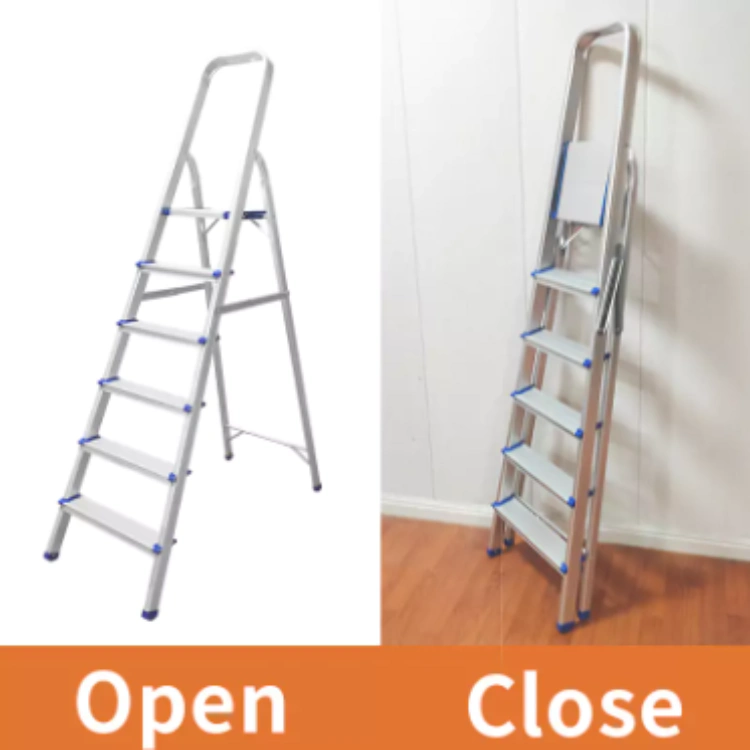
Many homes do not have room for large access equipment. Folded size, weight, and carrying method decide whether the ladder is used often or forgotten in storage. Buyers can compare the Household Ladder category when compact indoor storage is the main need.
Storage sounds like a small buying point until the ladder arrives. A ladder that blocks a closet, scratches a wall, or needs two hands every time will be avoided. A slightly smaller model may serve the home better if it is easier to take out.
Which Ladder Type Fits Which Home Task?
A short indoor repair, a garage shelf, and an outside wall do not ask the same thing from a ladder. One universal model usually sounds convenient in planning and becomes awkward in use.
For a distributor, this becomes range planning. One compact household ladder may cover daily indoor tasks. A telescopic or extension model can cover the customer asking for occasional outdoor reach. Mixing the two use scenes too casually creates returns.
Step Ladder Use
A step ladder is practical for cabinet access, ceiling light work, and small repairs. Aluminium Ladder with Iron Bracket works as a clear reference when the buyer wants a simple standing structure for household use. The selling point is not drama; it is quick setup.
Telescopic Ladder Use
Telescopic ladders help when the buyer wants more reach but has limited storage space. The locking structure, extension feel, and setup process need a careful look before choosing this route. The Telescopic Ladder category is useful when storage length is a key buying point.
Extension Ladder Use
Extension ladders belong in higher-reach work: outdoor walls, roofline checks, and similar jobs. They usually ask for more setup space and closer attention to angle and support. This type is less about everyday convenience and more about real reach.
That difference should be clear in product listings and sales notes. A customer buying for a small apartment is not shopping for the same problem as someone maintaining an exterior wall.
How Do Height, Stability, and Storage Affect the Decision?
A good ladder choice has to fit the home layout as well as the task. In a small apartment, a neatly folded ladder may be safer in real life than a taller one that is always in the way. In a house with outdoor maintenance, reach becomes more important, but setup still has to feel controlled.
Here is a plain comparison many buyers use during selection:
Use these decision rules: choose a step ladder for low indoor tasks where quick setup and a compact footprint matter; choose a telescopic ladder when extra reach is needed but storage length is limited; choose an extension ladder only when the work area provides enough setup space and the required reach cannot be met safely by a smaller format. In every case, confirm the selected model’s load rating, dimensions, locking system, feet, and intended use before approval.
| Task Type | More Important Check | Common Buying Risk |
| Indoor cabinets and lights | folded size and quick setup | buying too tall |
| Garage shelves | stable standing feel | ignoring floor surface |
| Outdoor walls | reach and support angle | choosing by height only |
Reach and Balance
Enough reach means the user can stay centered. Overreaching is a warning sign. Either the ladder is too short, the position is wrong, or the task needs a different access method.
Space at Home
Apartment buyers and homeowners often have different storage limits. A ladder that folds cleanly may be more useful than a larger ladder that blocks a storage room.
Storage also changes user behavior. If the ladder is hard to take out, people grab a chair or shelf instead. A practical folded size helps prevent that shortcut.
Frequency of Use
For frequent use, carrying comfort and setup speed matter. For occasional seasonal work, storage size and reach may matter more. Match the ladder to the normal pattern of use, not only the highest task.
This is why the same ladder can get two very different reviews. A homeowner who uses it every week notices weight and folding action. A seasonal user may care more about whether it reaches the job once or twice a year.
What Safety Checks Matter Before Order?
Before ordering, request a model-level evidence block covering maximum load, ladder type, working height, closed dimensions, gross weight, locking points, foot design, intended use, and the certification or test scope that applies to that model. This information turns a general household ladder comparison into an order specification that a distributor or end user can verify.
Safety checks belong before purchase. Small details decide whether the user climbs calmly or keeps second-guessing each step. That feeling is hard to repair after the product reaches the customer.
The safest-looking ladder on a product page still needs practical checks. Can the user see the lock? Do the feet sit flat? Is the standing surface comfortable enough for the time spent on the task? These are not decorative details.
Load Rating
The ladder has to support the user and any light tools carried during work. A load rating gives the buyer a way to match the ladder to the user, task, and tools. It should not be treated as a label added after the real selection is finished.
Commercial and residential buyers should verify the standard and certification scope that applies to the selected model, such as EN 131 or an applicable ANSI rating. The maximum load must include the operator, clothing, tools, and any materials carried during the task. JADDUO company information lists a 150 kg load reference and EN131-certified telescopic ladder products, but the exact load rating and certification must be confirmed for the selected household ladder. Buyers should also check the manufacturer’s stated working-height limits and keep both feet within the permitted standing area; do not treat a fixed 1.2 m reach allowance or a universal top-rung rule as a substitute for the model instructions.
Locking Points
Locking points have to be easy to see or feel when engaged. A ladder that feels uncertain during setup will not inspire confidence, even if the design looks fine in a photo.
Anti-Slip Features
Feet, steps, and surface contact all affect stability. Anti-slip details matter most on smooth floors, garage surfaces, and lightly uneven outdoor areas.
For household buyers, the first feeling underfoot is important. If the user feels the ladder shift even slightly, the work slows down. People grip harder, lean less naturally, or step down to reposition. That behavior should be considered part of product quality.
How Should Buyers Compare Ladders for Different Household Tasks?
Home buyers often choose one ladder and use it for years. The same product may come out for shelves in spring, lights in winter, and a quick outdoor repair after a storm. That mixed use is exactly why the task list matters. The ladder is not bought for a single perfect scene.
Indoor Repairs
Indoor work usually needs a lighter ladder with a compact footprint. The ladder should move through doorways easily and go back into storage without rearranging the room. If it bumps every wall on the way out, the user remembers that.
From the homeowner’s side, the ladder cannot feel like a project before the project starts. If it is heavy, awkward, or hard to unfold, small repairs get delayed or handled with unsafe substitutes.
Outdoor Maintenance
Outdoor tasks often need more reach and more confidence on rougher ground. For garden walls, exterior lights, or seasonal cleaning, the user may carry a cloth, tool, or small box while climbing. Hand position, foot contact, and setup angle matter more than the height number alone.
Occasional vs Frequent Use
If the ladder will be used often, setup speed and carrying comfort deserve more attention. If it will be used only seasonally, folded size and storage may matter more.
Conclusion
Household ladder selection works better when the task comes first, followed by height, stability, and storage. JADDUO’s household ladder range gives buyers a practical way to compare compact access tools for indoor and light maintenance needs. The right ladder is not always the tallest model. It is the one people will actually take out, set up correctly, and use without unsafe shortcuts.
For wholesale or mixed household orders, it is usually better to build a small ladder range than push one model into every use scene. Clear task matching reduces returns and helps end users choose with less guesswork.
FAQ
What is the best household ladder type?
The best type depends on the task. Step ladders suit indoor access, telescopic ladders save space, and extension ladders help with higher reach.
Is a taller ladder always better?
No. A ladder should provide safe working height without becoming too hard to set up, carry, or store. Extra height helps only when the structure still feels controlled in the actual space.
What should buyers check before ordering?
Buyers should check height, folded size, load rating, locking structure, foot design, and the intended use scene. For mixed household or distributor orders, JADDUO’s contact channel can help clarify ladder type, quantity, and packing needs.