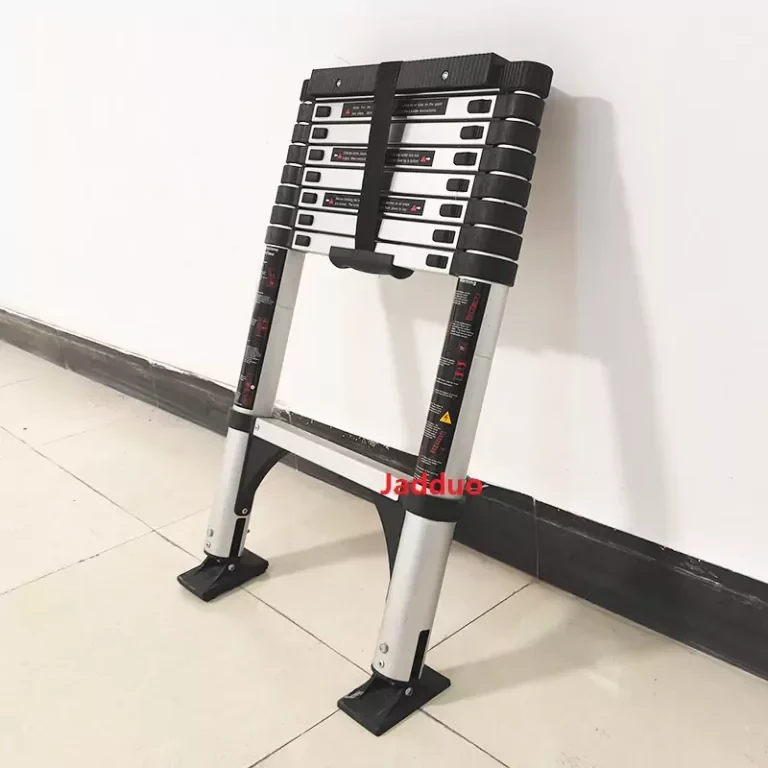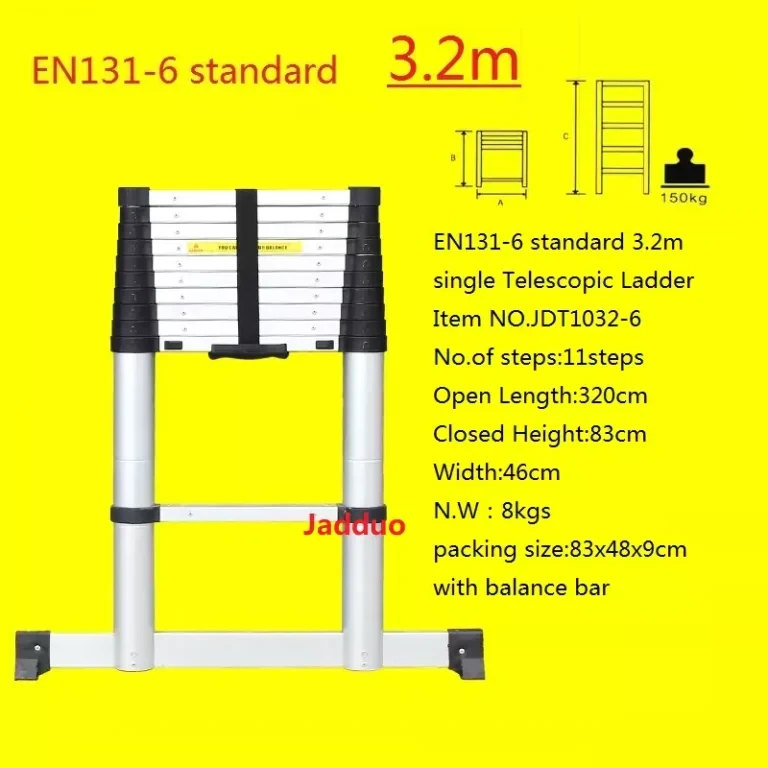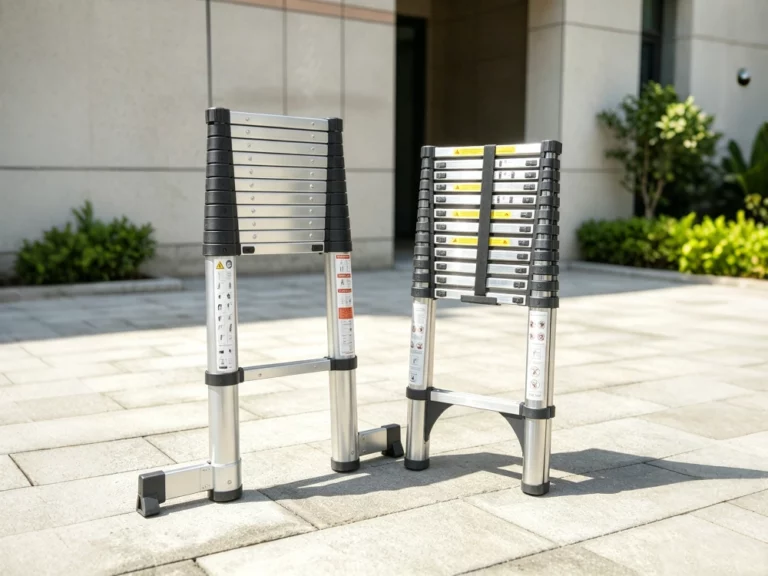
A Telescopic Ladder may feel unfamiliar at first because its sections move, its locks must engage correctly, and its working height changes with each task. Confidence should not come from ignoring those details. It should come from checking them in the same order before every climb.
For a homeowner, the practical questions are simple: Is the ground firm? Are all extended sections locked? Is the ladder positioned correctly? Can the task be completed without leaning sideways? These checks are the foundation of ladder safety for beginners.
Jadduo develops household, telescopic, step, platform, and insulated ladders for different working conditions. Its range includes metal, stainless-steel, and aluminum structures for different carrying, storage, moisture, and closing needs. High shelves, gutter checks, decorations, and exterior repairs place different demands on a ladder. Selection should begin with the task and environment.
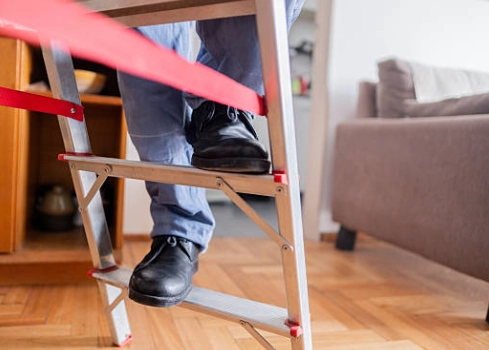
Why Does a Telescopic Ladder Feel Intimidating at First?
Most anxiety starts before the climb. Users may be unsure whether each section is locked, whether the feet can shift, or whether the ladder has been extended farther than needed. A repeatable routine removes much of that uncertainty.
Fear Caused by Height and Perceived Movement
Small movement feels greater once your feet leave the floor. Do not rush. Climb down and check the feet, side rails, surface, and upper contact point. If the ladder rocks or twists, reset it.
Start with low work. Practice climbing a few rungs, pausing, and descending. Confidence grows from controlled use, not from remaining on an unstable ladder.
Uncertainty Around Extension and Locking
A telescopic structure depends on section locks. Extend only the sections needed for the task and check every locking point according to the manual. A sound alone is not enough if the lock position is unclear.
Practice extension and retraction at ground level. This teaches the sequence and keeps fingers away from moving sections.
Confidence Built Through Knowledge and Repetition
Use the same order each time: inspect, position, extend, lock, test, and climb. Repetition teaches hand placement, load response, and when a second person should remain nearby.
This routine also makes a ladder for home maintenance easier to manage because setup becomes part of the work rather than a rushed step before it.
How Should You Prepare a Telescopic Ladder Before Climbing?
Safe ladder setup for home use depends on reach height, ground condition, angle, and combined load. These checks decide how predictable the ladder feels.
Choose a Reach Height That Matches the Task
Extend only the height required. More length may place you higher than necessary and make the structure harder to control.
Keep your body between the side rails. If the work cannot be reached without standing on restricted upper rungs or stretching sideways, descend and use a different position or ladder length.
Set the Ladder on a Stable Surface at the Correct Angle
Place the feet on firm, level ground, away from mud, loose gravel, wet tiles, cables, and uncontrolled doorways. For a leaning ladder, use the 1:4 rule: move the base about one unit away from the wall for every four units of vertical height.
The upper contact point must also be firm. Avoid weak trim, sliding contact points, and strong wind.
Confirm Every Lock and Stay Within the Load Rating
Check each extended lock, then press down on a low rung while standing on the ground. The structure should remain firm.
The supplied instructions specify a maximum load of 150 kg for one person, including tools and carried materials. Treat this as a combined load. For B2B importers, the load rating should be reviewed together with the destination market’s compliance requirements. Buyers supplying the European market should confirm whether the ordered model and its test documents meet the applicable EN 131 requirements. Products intended for the United States may need supporting documentation aligned with the relevant ANSI A14 ladder standard. CE, GS, RoHS, or other documents should be confirmed by model and order rather than assumed to cover the full product range. Before placing a bulk order, request the available test reports, warning labels, user manuals, and packaging information for the exact Telescopic Ladder configuration.
Which Climbing Habits Reduce Anxiety During Home Maintenance?
Correct setup is only the first half of safe use. Once climbing starts, movement should remain slow, centered, and predictable.
Maintain Three Points of Contact
Keep two hands and one foot, or two feet and one hand, on the ladder. Face the rungs while climbing and descending.
Use a tool belt, hook, or ground assistant instead of carrying a wide or heavy object. Awkward items block your view and reduce hand contact.
Move Slowly and Keep Your Body Centered
Keep your belt area between the rails. If your shoulder moves beyond a rail, climb down and reposition the ladder. Do not twist or bounce the structure to gain reach.
Pause when needed. A steady pause is safer than a sudden movement caused by fear. Never move the ladder while another person is on it.
Practice First on Low-Risk Household Tasks
Begin with high storage access, a reachable window, or lightweight decorations. These jobs allow practice away from roof edges.
Gutter cleaning, roof checks, tree trimming, and exterior repairs involve more variables.
Which Telescopic Ladder Design Best Matches the User and Work Area?
Material and closing structure affect carrying effort, corrosion resistance, storage, and the way a ladder feels during use. The design should match the work area and carrying frequency.
| Main Priority | Suitable Direction | Point to Check |
| Cost control and dry-area use | Black metal structure | Coating condition and dry storage |
| Humid or corrosion-prone use | Stainless-steel structure | Carrying weight |
| Frequent movement and controlled closing | Aluminum slow-down structure | Lock and closing action |
Black Metal Telescopic Ladder for Stable, Cost-Conscious Use
The Black Metal Telescopic Ladder suits garages, storerooms, workshops, and household maintenance in dry conditions. Its metal structure suits users who prefer a more substantial feel and distributors building a cost-sensitive range.
Moisture and coating damage still require attention. Clean the ladder after use, inspect the finish around joints and feet, and avoid damp outdoor storage.
Stainless Steel Telescopic Ladder for Damp or Outdoor Conditions
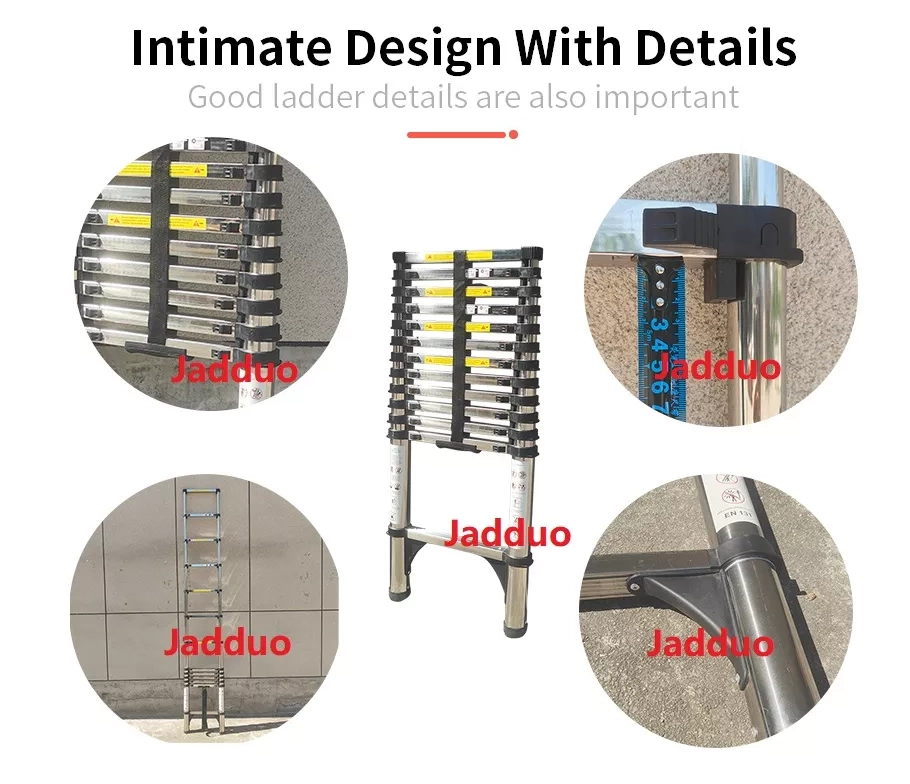
The Stainless Steel telescopic ladder with Finger Safety Gap suits users who care about corrosion exposure and hand clearance during retraction. The gap reduces direct contact between descending sections and supports controlled closing.
This structure is relevant to humid garages, covered outdoor areas, and coastal markets.
Aluminum Slow-Down Ladder for Frequent Carrying and Controlled Retraction
The Aluminum Alloy One Time Folding Telescopic Slow Down Ladder is suited to homeowners and maintenance staff who move between rooms, vehicles, and outdoor work areas. Aluminum reduces carrying effort, while the slow-down function supports controlled closing.
This design fits buyers seeking a slow-closing ladder mechanism and compact storage.
B2B Importer Quality Control Checklist
A sample should be checked as a working product rather than reviewed only by appearance. Importers can use the following points during sample approval, pre-shipment inspection, or supplier evaluation:
| Inspection Point | What the Buyer Should Check | Why It Matters |
| Tube and rung alignment | Sections extend in a straight line, rung spacing remains consistent, and no visible twisting appears | Poor alignment can affect smooth extension and load distribution |
| Lock engagement | Each section locks fully and releases in the intended sequence | Incomplete engagement is a common source of user uncertainty |
| Retraction control | Moving sections close at a controlled rate and the finger-clearance area remains unobstructed | Closing behavior affects both safety and user confidence |
| Plastic sleeves and end parts | Sleeves, feet, caps, and molded parts fit firmly without excessive movement | Loose parts may affect stability, noise, and long-term operation |
| Surface treatment | Coating, stainless-steel finishing, or aluminum surface treatment is even around joints and contact areas | Surface defects may increase corrosion or wear risk |
| Labels and instructions | Load warnings, locking guidance, usage restrictions, and destination-language manuals match the approved sample | Clear instructions reduce misuse and distributor liability |
| Packaging protection | Retracted sections, feet, locks, and exposed edges remain protected during transport | Damage in transit can affect operation before the product reaches the user |
Jadduo’s production flow includes pipe cutting, drilling, indentation or stamping, sleeving, labeling, assembly, and packaging. These stages give importers practical inspection points for production follow-up. A purchase specification should define the approved material, dimensions, locking structure, surface finish, labels, packaging, and inspection method before mass production begins.
How Can Buyers Keep Ladder Use Reliable Over Time?
Confidence drops when a ladder becomes dirty, stiff, damaged, or difficult to lock. Maintenance and supply checks belong in the buying decision.
Inspect, Clean, and Store the Ladder After Use
Remove dust, paint, mud, and moisture. Check the rungs, rails, feet, locks, and moving sections. If a lock does not engage cleanly, remove the ladder from use until it is checked.
Do not add oil or grease unless the manual permits it. Store the ladder retracted in a dry area where vehicles, tools, or heavy objects cannot strike it.
Check Certification and Supply Reliability Before Purchasing
Home users should review the rated load, intended use, warning labels, anti-slip feet, locking indicators, and closing instructions.
Importers and distributors should confirm which documents are available for the destination market, whether manuals and labels can be localized, and how packaging protects moving sections. Sample inspection should include lock engagement, rung alignment, foot grip, surface finish, and closing behavior.
Use Jadduo Service and Contact Support for Product Matching
Jadduo supports OEM and ODM discussions covering material, size, packaging, labels, and market positioning. Buyers should provide the destination country, expected user, work environment, storage limits, load requirement, and documentation needs. Clear information helps the service team compare suitable structures.
Choosing the right Telescopic Ladder is one part of building confidence. The user also needs a fixed setup routine, centered climbing habits, careful storage, and a design matched to the work area.
For projects involving material selection, packaging, market documents, samples, or application questions, buyers can use the Jadduo contact channel. Sharing the environment, carrying frequency, storage space, and closing preference helps narrow the options.
FAQ
Q: Is a Telescopic Ladder safe for a first-time user?
A: It can be suitable when the user works on firm ground, checks every lock, follows the correct angle, and practices at a low height before attempting roof or gutter work.
Q: Why does a retractable ladder move slightly while I climb?
A: Some movement may come from structural clearance, but rocking, twisting, or shifting feet should not be ignored. Climb down and recheck the ground, angle, locks, feet, and upper support.
Q: Which ladder material is easier to manage at home?
A: Aluminum reduces carrying effort, stainless steel suits damp or corrosion-prone areas, and black metal can fit dry environments and cost-sensitive purchasing. The correct material depends on movement, storage, moisture, and closing preferences.