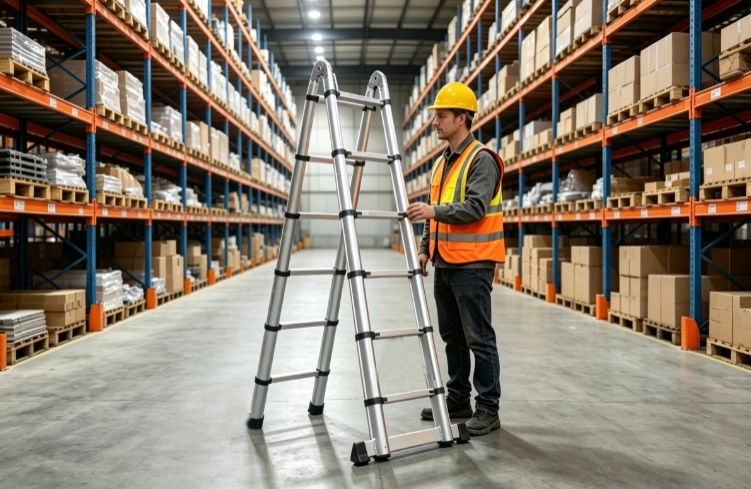
A Warehouse Ladder is used more often than many buyers expect. Stock picking, shelf inspection, lighting repair, label replacement, inventory counting, and routine facility maintenance all require safe height access. If the ladder is too short, workers may stretch sideways. If the base is unstable, small movements can become a safety problem. If the ladder is hard to move or store, teams may use the wrong tool just to finish the task faster.
For industrial buyers, the right decision is not only about height. A useful warehouse ladder safety guide should connect the ladder structure with the real task, floor condition, storage layout, user weight, tools, and daily handling frequency.
Jadduo manufactures ladders for household, commercial, and industrial use, including telescopic ladders, A-frame step ladders, industrial platform ladders, fiberglass ladders, and OEM/ODM ladder solutions. For warehouse buyers, Jadduo’s value is not only product supply, but also the ability to match different access tasks with suitable ladder structures, such as twin-sided access, portable A-frame use, and extra base support for improved stability.
Why Does Warehouse Ladder Safety Matter in Daily Industrial Work?
The work in the warehouse consists of repeated climbing rather than single occasions of use of a ladder. In the course of a shift one ladder is used by several workers. The ladder can be moved between aisles and set up next to the shelves, the pallets, the packing stations and the maintenance areas. Thus, the selection and the setup of the ladder is as important as the ladder itself.
Fall Risk in High Shelf Access
Accessing high shelves is the primary function of a Warehouse Ladder. Products such as cartons, spare parts, labels, tools, lighting fixtures and inventory tags are typically located on high shelves. Greatest risk occurs when a task requires both hands, thereby losing contact with the ladder.
When selecting a ladder to work at height, choose a ladder that allows the user to work from within the side rails of the ladder. When selecting ladders for repeat use for tasks such as picking from shelving, avoid selecting ladders based solely on maximum working height. Consider the working position of the user, where they will place their hands and the stability of the ladder during use.
Wrong Ladder Size and Overreaching
Many ladder problems start before the first step is taken. If the ladder is too short, the worker may climb too high or stretch sideways. If it is too tall or bulky, it may be difficult to position in narrow storage zones. A Warehouse Ladder should match the working height, shelf depth, aisle width, and frequency of movement.
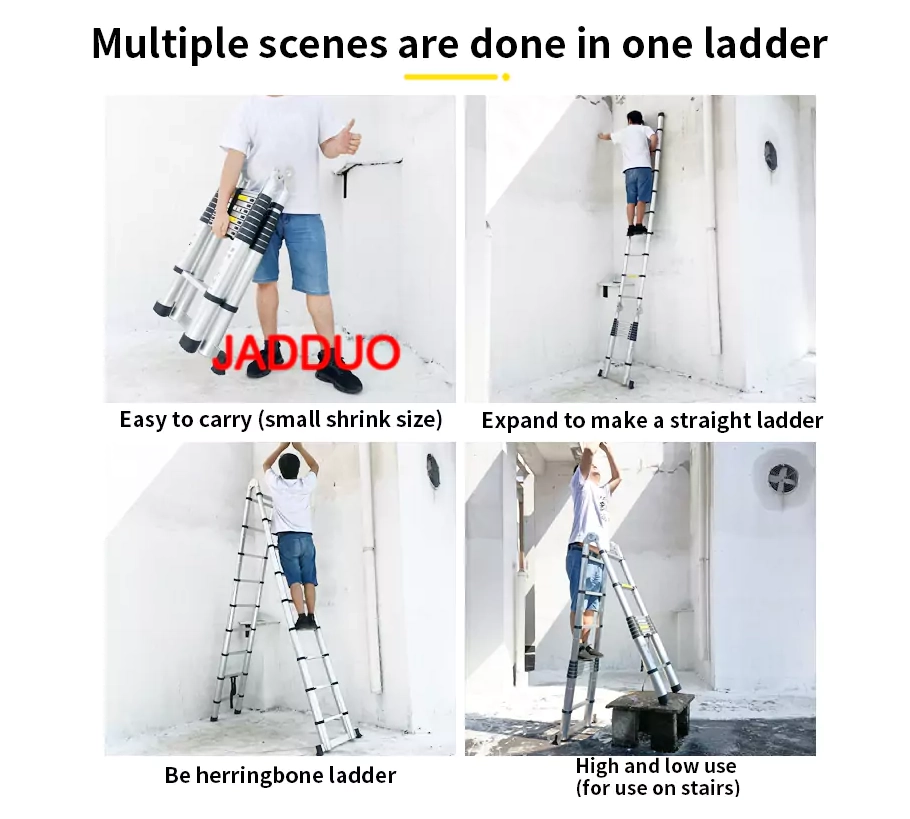
For warehouses with mixed tasks, a flexible model can reduce the need to buy several single-purpose ladders. The Aluminum 2 IN 1 Multipurpose Telescopic Ladder Portable A Frame Ladders suits buyers who need both A-frame support and telescopic adjustment for light warehouse maintenance, shelf checking, and indoor facility work.
Stable Access for Repeated Warehouse Tasks
A ladder used once a month and a ladder used every day should not be judged the same way. For repeated warehouse tasks, stability, locking feel, foot grip, and easy repositioning matter. Workers are more likely to use the correct ladder if it is easy to carry, set up, and store near the job area.
In this spot we can evaluate an industrial storage ladder as part of your workflow. If the ladder takes too long for your team to use then they may try to find a work around. If the ladder is stable and placed near where it will be used then it will be easy for your team to use safely.
What Type of Warehouse Ladder Fits Your Storage and Maintenance Tasks?
Different ladder structures solve different problems. A warehouse with high racks, open maintenance areas, and narrow aisles may need more than one type of ladder. The goal is to match the access method with the task, not to force one ladder into every job.
Twin-Sided Ladder for Two-Way Access
A twin-sided ladder works well when workers need access from both sides or when the task does not always happen against a wall. The Jadduo Black Oxidized Twin-sided Stick Ladder can fit warehouse zones where short-height access, toolroom use, packing area maintenance, or stockroom work happens from different directions.
Its twin-sided structure gives buyers another option beyond a standard single-side step ladder. For teams handling light picking, shelf arrangement, or quick maintenance, this ladder can reduce unnecessary repositioning.
A-Frame Telescopic Ladder for Flexible Indoor Work
An A frame ladder for warehouse tasks is useful because it does not need wall support. That matters for central aisles, shelf ends, lighting points, and temporary maintenance areas. Jadduo’s 2 in 1 telescopic A-frame model is suitable for buyers who want one ladder to cover several indoor tasks instead of storing separate tools for each job.
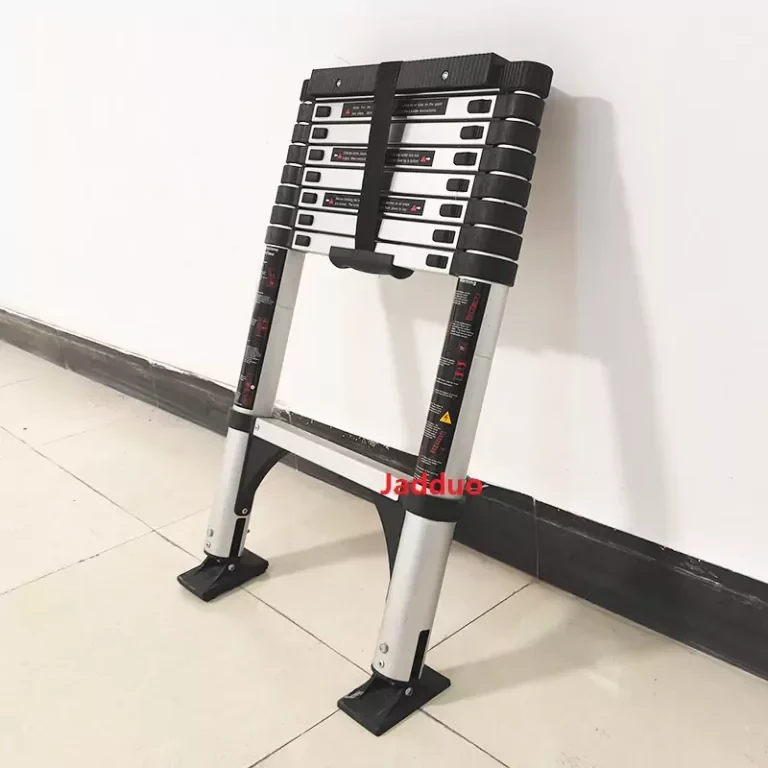
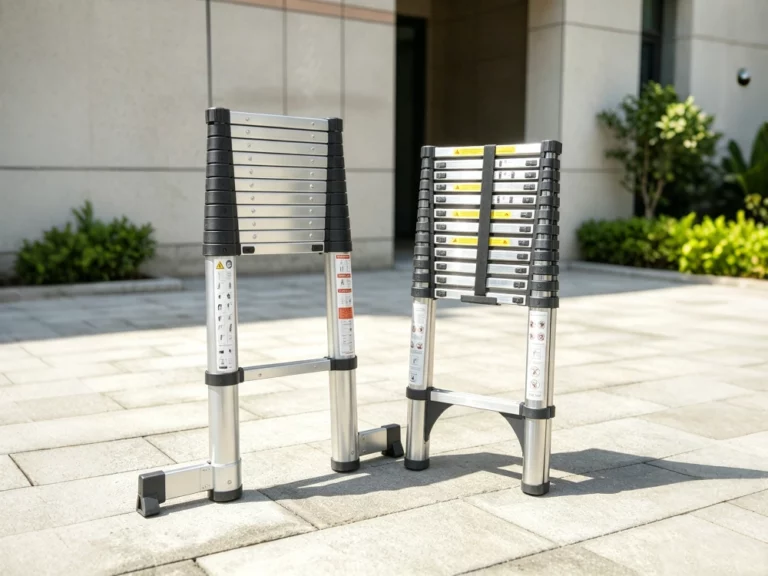
A telescopic ladder for warehouse use should also be checked for locking steps and correct opening position. The advantage is flexibility, but the safety value comes from proper setup.
Wide-Joint Ladder for Better Ground Stability
Some warehouses have smooth concrete floors, packing debris, light dust, or frequent movement around the working area. In those places, buyers should pay close attention to the base. A wider support structure helps reduce shaking during normal use.
The Wide Joints 2 In 1 Ladder With 2 Balance Bars is a practical option for teams that care more about standing confidence and base support. A ladder with balance bars is especially relevant for maintenance zones, stock handling areas, and tasks where workers may carry small tools while climbing.
Which Safety Features Should Industrial Buyers Check Before Ordering?
After choosing the ladder type, buyers should look at details that affect daily use. A clean product photo is not enough. A warehouse buyer should ask how the ladder locks, how it contacts the floor, how much load it supports, and whether the structure fits the work area.
Load Capacity for User and Tools
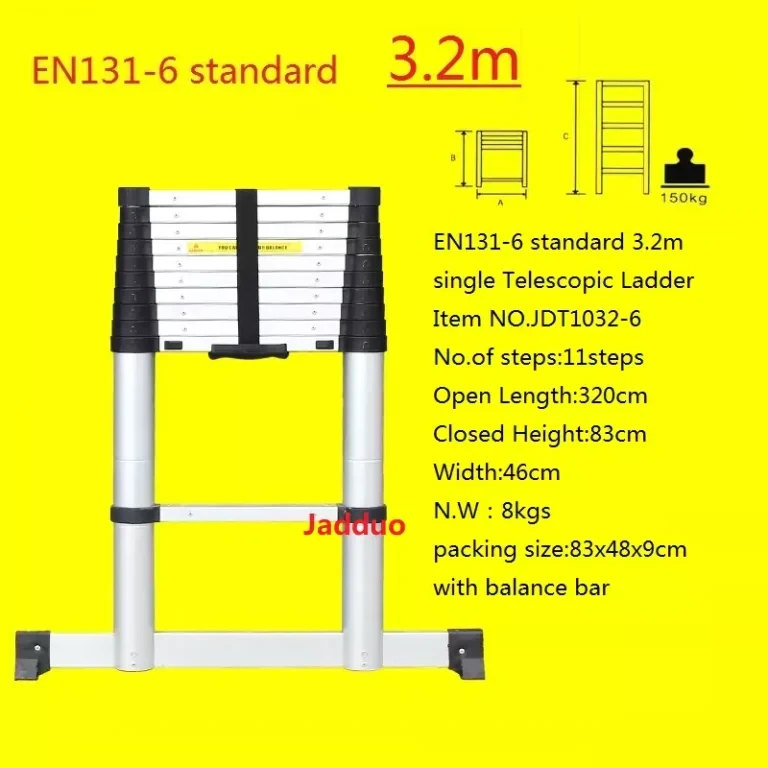
Jadduo’s ladder knowledge base uses 150kg as a standard load capacity reference, including the user and tools. This point is important for a Warehouse Ladder because workers rarely climb empty-handed. They may carry scanners, small cartons, replacement parts, fasteners, or tool bags.
A safe purchasing habit is to calculate real use, not just body weight. If the job regularly involves tools or parts, the ladder should be selected with that combined load in mind.
B2B Procurement Compliance Note: For heavy-duty industrial storage environments, matching the 150kg load capacity is not only about static weight. Sourcing departments should verify whether the access hardware conforms to international testing benchmarks such as EN131 Professional for the European market or ANSI Type IA with a 300 lbs rating for the United States. For industrial-grade aluminum ladder projects, buyers may also ask the supplier to confirm material grade, extrusion process, and wall thickness at critical stress points. Jadduo can support specifications such as 6063-T5 extruded aluminum alloy and 1.2mm–1.5mm wall thickness where the selected model and order requirement allow. These details help improve torsional rigidity during deep-shelf inventory picking and reduce the risk of structural bowing during multi-shift warehouse operations.
Locking Mechanisms and Correct Setup
For telescopic and multi-position ladders, locking mechanisms are a core safety detail. Before use, each engaged section should be checked. In work platform mode or extended positions, the ladder should be fully opened and locked before the worker climbs.
This is not a complicated rule, but it is often ignored in busy storage areas. A warehouse maintenance ladder should make lock checking easy and visible so workers can confirm setup before starting the task.
Anti-Slip Feet and Balance Bars
Anti-slip feet help the ladder maintain contact with the floor. Balance bars increase the base footprint and help reduce side movement. These details are more useful than decorative features because they directly affect how the ladder behaves on the ground.
For buyers comparing models, the Wide Joints 2 In 1 Ladder With 2 Balance Bars is worth considering where stability is a main concern. It fits tasks where the ladder is moved often but still needs a steady base.
How Should You Match Warehouse Ladder Specs to Real Working Conditions?
A good specification starts with the job site. Buyers should walk through the warehouse and check shelf height, aisle space, floor condition, storage points, and how workers actually move during the task.
Height Range and Shelf Layout
If the ladder is used near shelves, choose a height that lets workers reach the target area without standing too high or leaning out. For open warehouse areas, an A-frame structure may be safer than a leaning ladder because it does not require wall support.
For mixed shelf and maintenance work, a telescopic or 2 in 1 ladder can give more flexibility. This is useful for buyers who need one Warehouse Ladder for several departments.
Portability and Storage Space
A ladder that is difficult to move may stay in the wrong place. Then workers may use a chair, pallet, or unsuitable ladder nearby. Portability helps safety because the correct ladder can follow the task.
Telescopic and multipurpose structures are useful where storage space is limited. They can be kept in a toolroom, maintenance corner, service vehicle, or warehouse utility area without taking too much floor space.
Material and Surface Durability
Material choice should follow the working environment. Aluminum ladders are often selected for easier movement. Black oxidized surface designs may be preferred where the buyer wants a cleaner visual match with toolrooms, commercial storage zones, or modern warehouse equipment areas.
For heavy-use environments, do not judge only by material name. Check joints, step design, foot structure, locking method, and how the ladder will be moved, stored, and inspected.
Why Work With Jadduo for Warehouse Ladder Sourcing?
Warehouse ladder sourcing is rarely a one-item purchase. Distributors, facility teams, and project buyers may need several sizes, structures, packaging options, and compliance documents.
Product Range for Different Warehouse Jobs
Jadduo’s product range covers telescopic ladders, A-frame step ladders, industrial platform ladders, fiberglass ladders, and custom solutions. This makes it easier to match different warehouse tasks, from shelf access and light maintenance to more stable multi-position use.
For this article’s topic, the three most relevant options are the Black Oxidized Twin-sided Stick Ladder for two-way short-height access, the Aluminum 2 IN 1 Multipurpose Telescopic Ladder Portable A Frame Ladders for flexible indoor tasks, and the Wide Joints 2 In 1 Ladder With 2 Balance Bars for buyers who want stronger base support.
Compliance and Bulk Supply Support
For B2B buyers, ladder sourcing is not only about price. Certification documents, stable production, packaging, labeling, and repeat supply also matter. Jadduo supports OEM/ODM orders and can provide common ladder compliance documentation upon request, which helps importers and distributors prepare for different market requirements.
This matters when a Warehouse Ladder will be sold through retail channels, supplied to facility teams, or added to a project procurement list.
Service and Contact for Custom Orders
Different warehouses may need different heights, structures, cartons, manuals, colors, or market documents. Buyers can discuss working height, storage layout, expected load, packaging, and target market requirements through Jadduo’s contact page. A clear request helps the factory recommend a ladder structure that fits the real work instead of only matching a general product name.
FAQ
Q: What type of Warehouse Ladder is suitable for high shelf access?
A: For high shelf access, choose a ladder that lets the worker reach the shelf without leaning sideways or standing too high. A-frame ladders work well in open areas, while 2 in 1 telescopic ladders can suit warehouses that need flexible height access and compact storage.
Q: Why are balance bars useful on warehouse ladders?
A: Balance bars widen the ladder’s base and help reduce shaking during normal use. They are useful in maintenance areas, stockrooms, and warehouse aisles where the ladder may be moved often but still needs stable floor contact.
Q: How should industrial buyers compare warehouse ladder options?
A: Buyers should compare working height, load capacity, locking structure, anti-slip feet, base support, storage space, material grade, compliance documents, and supplier service. The right choice should match the task, not just the product size.