
Work platform ladders are designed to provide a high level work area for tasks that require more time than can be achieved with a single reach. When purchasing a work platform ladder, B2B buyers must select the correct model to complete a specific task. This would include consideration of access, total working load, handling and any required documentation. Procurement decisions must be based on written model-specific information and not upon assumptions relating to product category names.

What should a B2B buyer look for in a work platform ladder?
To assess a work platform ladder for B2B purchasing, seven aspects need to be considered: the task, the required working position, the platform dimensions, the total load, the setup and locking method, the movement and storage and finally the supplier’s documentation. Start with the job and not with the decorative images of the catalogue. Write down where the work platform will be used, what has to be reached, how long will the work take, which tools have to be carried and how will the work platform be moved within the premises.
Ask the supplier for the exact model number and current technical information about the product. Check the dimensions for use and storage as well as the load information and what this consists of. Find out how many users are permitted and what the sequence of setup is. Also find out what needs to be locked or checked before use. Include any information about custom packaging and other project specific requirements in this written specification pack.
One documented Jadduo scaffolding-ladder work-platform configuration illustrates why model-level checking matters. Its instructions call for the ladder to be fully extended, its locking mechanisms engaged, and its platform level and secure. It’s described for one person, with a maximum load of 150 kg including the user and tools. Those details belong to that documented configuration, so buyers should request the corresponding information for the model under consideration.
Start with the task, not the catalogue category
The customer-supplied English material for platform ladders describes them as items of equipment with a work area at the top for long-term use. This is the starting point for a purchasing brief.
Rephrase the task in more operational terms. Does the user work from one fixed location or between a number of locations? What space does the item have to sit on? Are there any specific doors, corridors, lifts, vehicles or storage areas that restrict dimensions of the item? Is it to be carried by one person or by a number of people using the buyer’s methods?
Questions like these help to avoid common sourcing errors, such as sourcing a ‘work platform ladder’ only to have the supplier try to guess what you really need. By outlining the specific work area, required height, tools to be used, frequency of movement and storage constraints a more appropriate response can be given based on specific use cases.
Use these 7 checks to compare models
1. Define the required working position
State the target task and where the operator needs to stand. Ask for the platform height, overall working dimensions, and any access dimensions that affect placement. Don’t substitute an estimated reach for the supplier’s model drawing. Put the required measurement and the quoted measurement side by side.
2. Confirm the usable workspace
Request the dimensions of the required platform and any special conditions of that working area. Also request any special tools or materials that will be required by the operator and list these in the inquiry. We would like to check fit prior to ordering as opposed to discovery during installation that the working area is too small to complete the required task.
3. Calculate the total working load
Give the supplier a complete load scenario that includes the operator, tools, and any materials permitted for the task. Ask what the stated maximum load includes and request the exact wording from the model’s technical document.
As an example of a complete load statement, the documented Jadduo configuration for quotation purposes would refer to the noted example configuration and state the applicable value for the selected model, as opposed to the documentation value of 150 kg including user and tools for the example configuration as noted above.
4. Review setup and locking steps
Request the setup sequence as part of your approval of the sample or purchase order. Identify which parts extend, which parts lock into place, how the platform is set up and what checks the user needs to complete after assembly.
Jadduo’s documented scaffolding-ladder configuration consists of a series of steps to fully extend the ladder, lock it in place, position the platform on the rungs of the ladder and finally to check that the scaffold is level and secure. A purchasing department would get more out of a product description by outlining these steps to set up the product as opposed to a generic statement that describes the product as easy to set up.
5. Check placement, movement, and storage
Identify the real site constraints and include them in the RFQ. Get quoted the working dimensions and also the folded/stored dimensions where relevant. Also quote unit weight, main handling points and how you intend to secure any movable parts for transport. If any items are to pass through narrow doors, then quote these as strict limits in numbers.
In multi-site distribution, dimensions and packaging configuration of a package may also influence the buying decision. Thus instead of relying on images of the products quoted for, you should ask for the dimensions of the quoted unit.
6. Request model-specific documents
Make sure the supplier pack makes it easy to identify the quoted item. Request model reference, dimensioned drawing, load statement, setup instructions, packing information and a comprehensive list of components supplied. Check if any further documentation is required for the destination market / end customer and include this in the supplier inquiry. Confirm in writing whether the requested additional documents are applicable.
Keep simple revision control. Indicate document date or revision number on the quotation and have this same information reviewed by purchasing, receiving inspection and receiving departments.
7. Match the supplier response to the purchase order
Before approval, compare the quotation, sample information, packaging details, and purchase order line by line. Flag open items rather than filling gaps with assumptions. If a specification changes, ask for an updated written package.
It is also important to clearly state all commercial conditions, such as quantity, production period, packaging, shipping terms and after sales contact for the project in hand. All of these conditions vary from order to order, so it is best to clearly state them in your quotation rather than refer to them in a general website note.
Supplier question checklist for an industrial work platform inquiry
Send a set of structured questions to shortlisted suppliers. Responses can then be compared easily and reduce the need for subsequent emails.
| Area | Questions to ask |
| Application | What task and environment is this exact model intended to be used for? |
| Dimensions | What are the dimensions platform, working, access, stored for the given model? |
| Load | What is the maximum load for this equipment and is this including user, tools and materials. |
| Users | How many people may use the platform at one time? |
| Setup | What needs to be extended, fitted, locked or checked before use? |
| Stability | What is the correct method for placing the unit onto the platform and how will the platform be confirmed to be level and secure. |
| Handling | What is the unit weight of the product? What type of movement and storage would be required? |
| Documents | Which drawing, instructions, parts list and packing data were used for the quoted item? |
| Production | What processing, assembling, checking and packaging activities are required for this order? |
| Commercial terms | What is the order quantity, delivery schedule, shipping conditions and after sales contact details in the quotation? |
Ask the supplier to answer on the basis of one model reference only. A reply mixing information of several products would create a lot of additional work for purchasing as well as for incoming inspection.
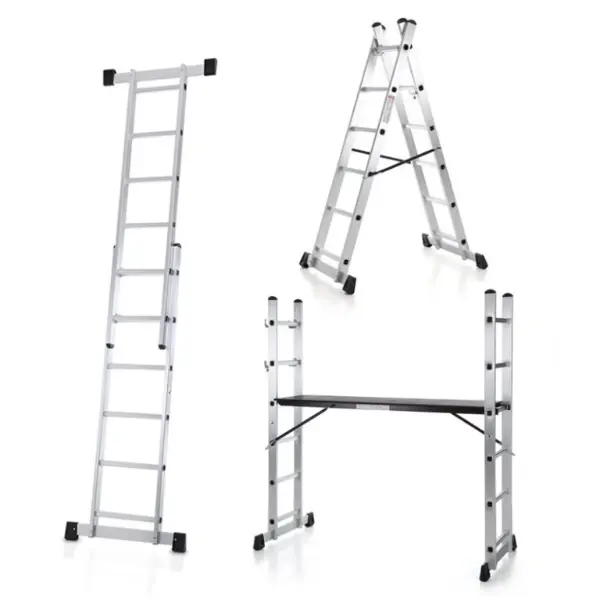
When does a work platform ladder fit the task?
This category needs to be considered when a fixed working surface is required and a suitable model can be selected for the site and the required task. A work platform step ladder may need to be evaluated against a number of different access situations whilst an industrial work platform may be required for another.
Pause your purchase order if you have any of the following questions regarding the working position, platform dimensions, total weight to be lifted, method of setup, and path of travel. These are specification items that should be cleared up before you receive the product. Also, if your environment or required task changes, verify if the supplier’s proposed model still meets your requirements after you re-send the updated conditions.
For procurement teams it is a simple decision: choose the supplier that in their written model description matches the buying specification exactly. If no supplier has covered the entire buying specification, keep the requirement ‘open’ as opposed to translating any unanswered questions into consequent assumptions.
What Jadduo can document for a sourcing conversation
The Jadduo company page describes Jadduo as a manufacturer of ladders. On the company page you will also find an overview of the work platforms that we produce in addition to the telescopic ladders, step ladders, utility scaffolds, aluminium scaffolds, aluminium ladders and steel ladders that we offer. After having studied the current products offered on this page, you can then proceed to send us a model-specific inquiry.
Customer-supplied production information also records pipe processing and packaging steps. It distinguishes follow-on operations for round and square pipes, then lists labeling, strapping, stapling or nailing, assembly, and packaging. This gives buyers useful topics for a supplier discussion, but it doesn’t establish capacity, lead time, or the process for every item. Ask which steps apply to the quoted work platform ladder and request project-specific confirmation.
FAQ
What is a work platform ladder?
A work platform ladder is typically a structure that provides a top level workspace for longer duration tasks than simple reaching. Category names for purchasing should lead to model specific checks around platform dimensions, maximum load, number of users, setup requirements, locking, movement, storage and documentation.
How do I choose a work platform ladder for industrial use?
Start with defining the task. Note down the required working position, workspace, total load, site access, number of relocations and storage dimensions. The work platform ladder supplier then selects the suitable model and supplies you with a drawing, load information, set-up information, complete parts list and packing details.
What load information should a buyer request?
Please confirm the maximum load for the exact model and specify what this includes. It would also be good to confirm the expected load from operator, tool and material in your inquiry. The documented Jadduo configuration is for 150kg including user and tools. This configuration should not be used as a basis for other models for which there is no documentation.