When tackling a job that involves getting up high, such as cleaning gutters or putting up a rooftop tent, the surface underfoot seldom offers a smooth, even base. Ladder Safety begins by noting that an off-kilter footing ranks as the main reason for tip-over mishaps. If you have sensed that uneasy sway while perched about five feet off the ground, you understand how a bad arrangement leaves no room for error with gravity. This overview shares practical methods to steady your gear on inclines, yielding dirt, and bumpy spots. Thus, you can carry out tasks with full assurance.
Why Is Surface Stability Critical for Ladder Safety?
Before climbing the initial step, consider how the basics of ascending shift completely on a tilt. A minor tilt down low leads to a major offset up high. As a result, the balance point often moves beyond the frame edges.
High Risk of Lateral Tip-Over on Slopes
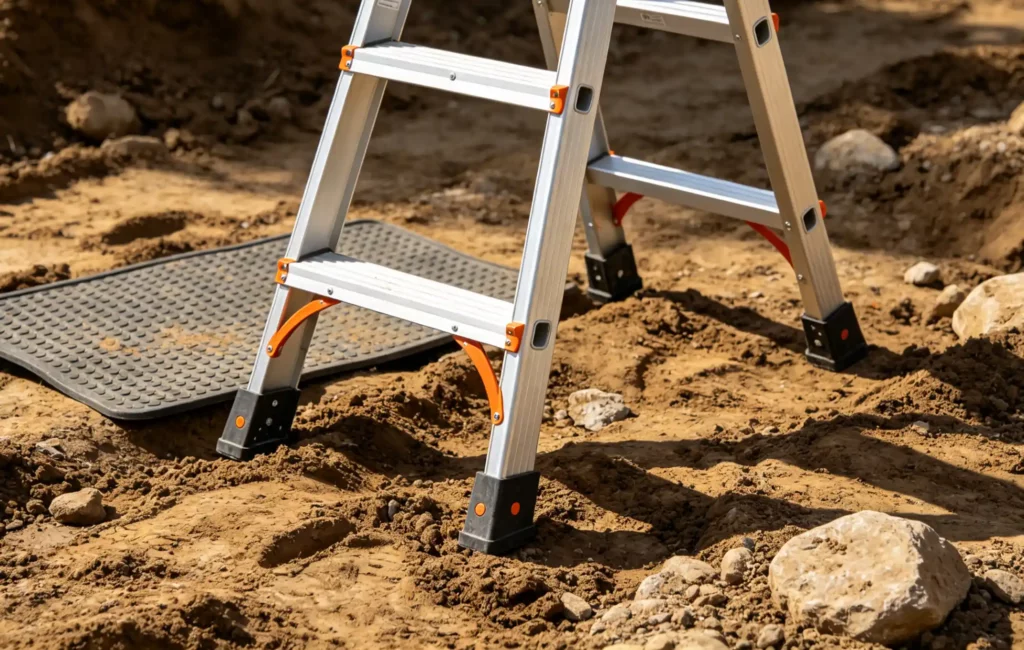
On ground that lacks evenness, your weight presses harder on one frame side over the other. This builds a side pull. It might make the bottom slide away or the upper part twist from the support surface. Even a modest five-degree slope can upset the frame’s steadiness. This holds true unless you pick a self-adjusting or broad-bottom type.
Ground Compression and Shifted Load Capacity
Earth, turf, and stones can trick the eye with their solid look. Yet, they tend to give way in spots once bearing your mass and gear, often around 150kg. Should one foot drop an inch more than its pair, the whole setup turns into a hinge for a tumble. Meeting the standard 150kg weight limit matters greatly. However, that limit applies only when the burden spreads out evenly over a solid footing.
Impact of Improper Base Placement on EN131 Standards
Work-grade tools undergo checks to meet EN131 rules, which expect a 75-degree lean for top steadiness. Uneven spots make hitting that exact lean tough. If the bottom sits too distant or near due to the rise, you miss the grip strength and motion-weight test perks from current builds.
How to Level Your Ladder on Challenging Terrain?
Making things even goes beyond looks; it centers on firm hold. Avoid propping a leg with random blocks or spare boards, since those shift readily under strain.
Use Professional Ladder Levelers and Stabilizers
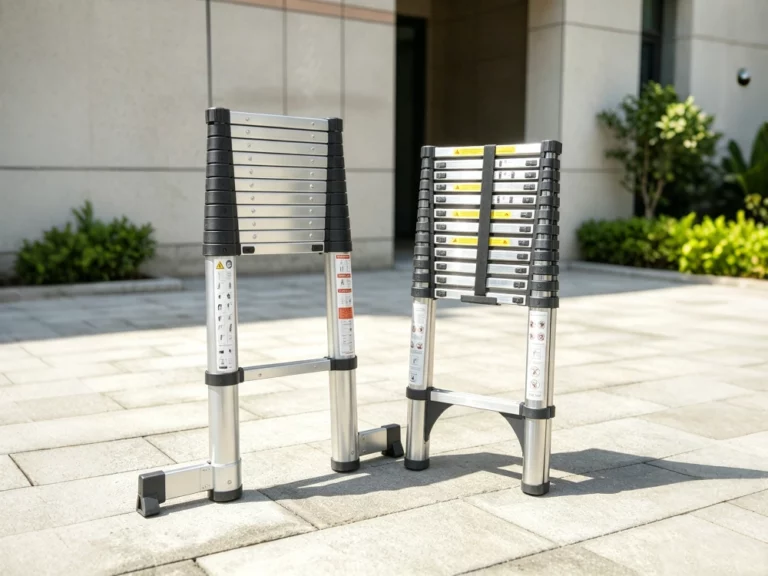
The surest method to deal with a grade is through built-in adjust legs. Such add-ons let you lengthen one leg alone to match height gaps in the land. For regular outside jobs, select a version with a steady rod or broad hold base. These cut the jiggle that sparks mishaps.
Clear Debris and Create a Firm Foundation
Remove stray stones, bark chips, or damp foliage prior to setting up. On mushy spots, add-ons like dirt grips or rubber caps boost the foot spread. This stops the metal from digging into soil. It also lets the no-slide tags and weight-motion tests perform as planned.
Implement the Three-Point Contact Rule Constantly
A solid bottom covers just part of the effort; actions on the steps count equally. Holding two hands and one foot, or two feet and one hand, on the frame all the time reduces the rock that upsets a footing already facing rough land.
Which Jadduo Solutions Provide the Best Stability?
To ease concerns about the land, begin with proper build quality. For more than ten years, Jadduo has served as a quiet helper for nature lovers and work experts. Located in China’s hardware hub, their design group owns several patents. All aim at one aim: ensuring you stay as secure at ten feet as on flat earth. From plane-quality metal to strict ISO9001:2015 reviews, their tools handle the mess of build zones and tough camps.
A-Frame Design Stick Box Ladder Aluminum for Dual Support
For jobs without a wall for backing, an A-frame stands as the top pick for Ladder Safety, such as Jadduo’s A-Frame Design Stick Box Ladder Aluminum. This type has a broad, self-stand form that fights off tilts on home rough spots. The box-link build keeps the frame stiff even when the surface stays off even.
2X4 Extension Telescopic Tent Ladder for Outdoor Terrain
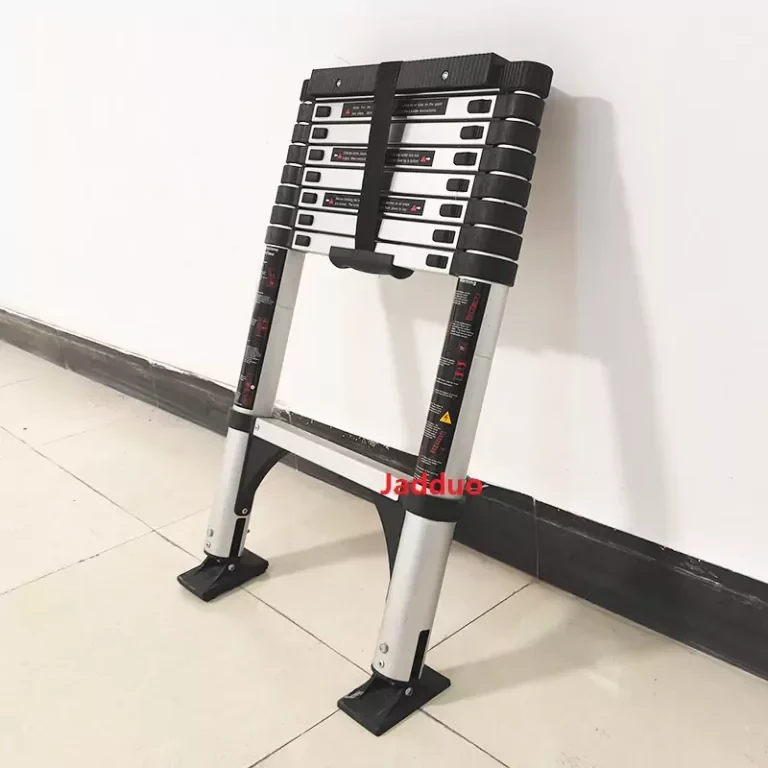
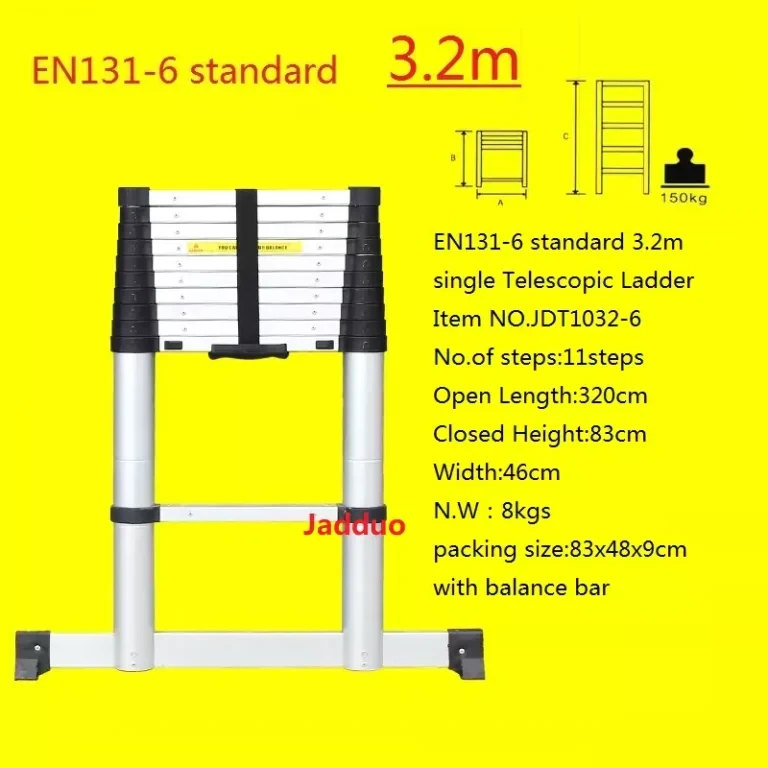
During off-path trips, the earth poses the top threat. The 2X4 Extension Telescopic Tent Ladder suits rooftop tents best. It includes round rubber bases that fit sand, pebbles, and grass. It bears the 150kg need for one person plus camp items. At the same time, it keeps the key 75-degree floor lean.
Black Aluminum Flower Stand Step Ladder for Interior Use
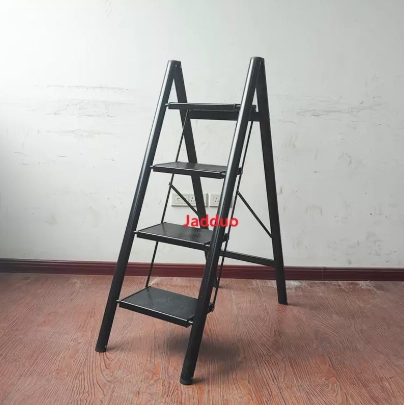
Rough spots do not always lie outdoors. For layered floors or odd inside grounds, Black Aluminum Flower Stand Step Ladder gives a sure, no-slide base. One can shift it with a single grip. Yet, it delivers a steady spot for long chores like trimming or coating walls.
Are You Ready to Upgrade Your Professional Equipment?
Putting money into solid tools marks the best path to handle dangers of raised tasks.
Benefit from Comprehensive OEM and ODM Services
If your field calls for set heights or custom parts for steep grades, skilled makers offer tailored plans. With quick 72-hour tech help, experts can guide on setups that match your land issues.
Global Compliance and Certified Manufacturing Excellence
Safe practices speak worldwide. Opting for items that pass EN131, ANSI, and GS checks means every joint and turn has faced motion-weight and no-slide trials. Such approval assures the gear holds up when counted on most.
Contact Our Expert Team for Wholesale Inquiries
Be it for shop purchases or site team leads, the group handles smooth shipping via FOB Ningbo and plain pay setups. Get in touch now to lock in tools that put safety first on any ground.
FAQ
Q: How do I know if the ground is too uneven for a standard ladder?
A: If the steps fail to stay even and the frame sides line up straight within a few degrees at the core, the spot tilts too much. In that case, even out the area, add a match tool, or go for an A-frame that gives a freer, firmer bottom. Ladder Safety insists on avoiding a climb into any slant.
Q: Can I use a telescopic ladder on soft soil or sand?
A: Yes, provided you fit special bases. Many stretch types for camps or open areas have big, turning rubber feet. These keep the legs from dropping in. Test the hold with light weight before going to full reach.
Q: What is the benefit of a wide balance bar on irregular surfaces?
A: A balance bar, also called a steady bar, widens the bottom a lot. This broad stand makes side flips far less likely. Such risk tops the list on off-even paths or yard walks.