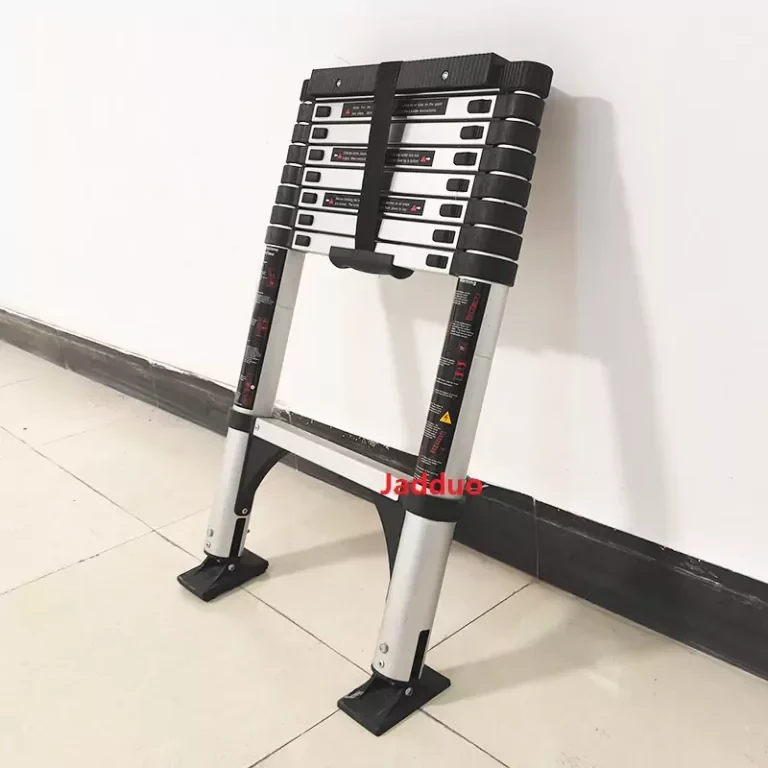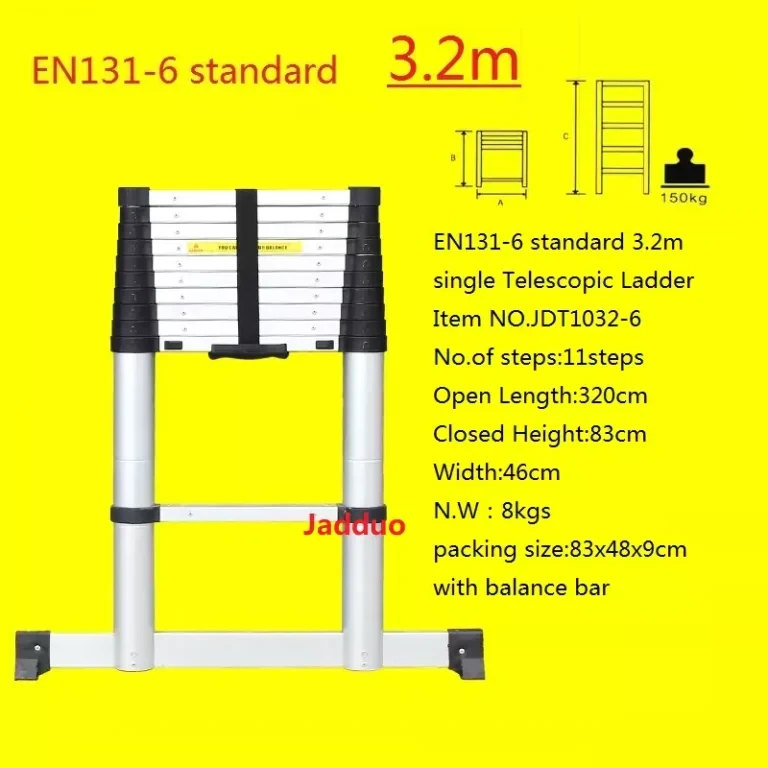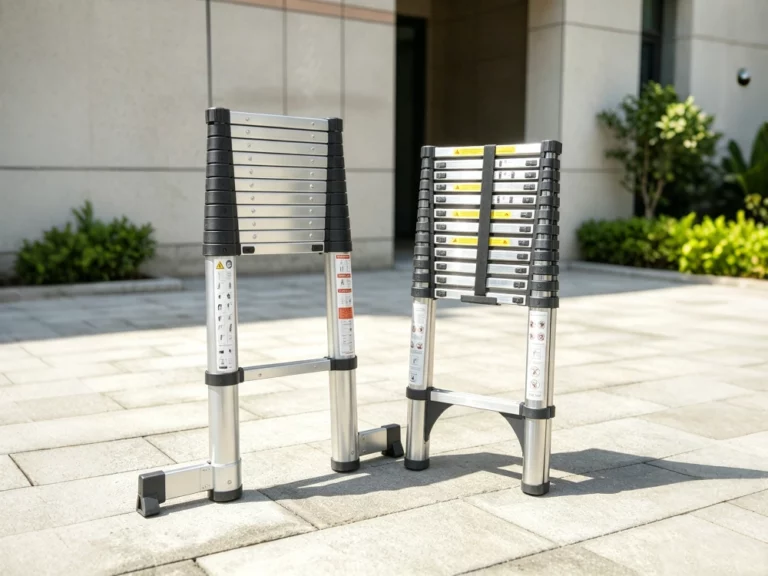
A reliable purchase starts with a thorough inspection of individual ext ladder parts, or extension ladder components, and the duty rating behind the product. Price, height, and appearance matter, but they do not show how the ladder will behave after months of warehouse handling, outdoor maintenance, or repeated roof access work. Buyers need to check rails, rungs, locks, pulley, rope, feet, hinges, labels, material choice, and service support before placing a bulk order.
Jadduo is a ladder manufacturer from Yongkang, China, with product lines covering telescopic ladders, A-frame step ladders, industrial platform ladders, insulated fiberglass ladders, and OEM/ODM ladder solutions. For overseas buyers, the useful point is product matching. A wall-supported access ladder, a self-supporting indoor ladder, and an insulated multi-position ladder should not be selected by the same rule.
Why Should Buyers Check Ext Ladder Parts Before Ordering?
Ext ladder parts are where later problems usually appear first. A ladder may look acceptable during a sample review, but field use can expose weak section movement, unstable feet, loose locking points, rope wear, or poor label placement. For B2B buyers, these are not small after-sales issues. They affect returns, user complaints, and repeat order confidence.
Rails, Rungs, and Section Connection
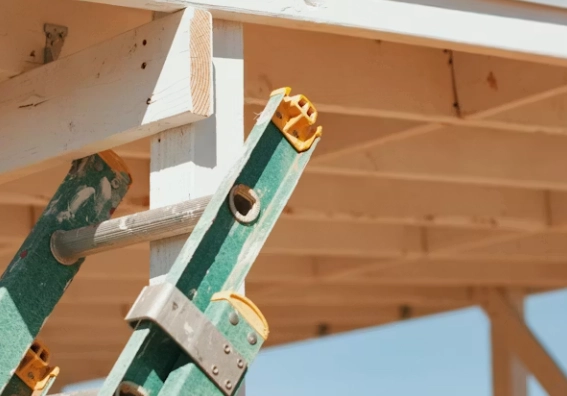
Rails and rungs form the working frame. On an extension ladder, the connection between ladder sections also matters because the product extends, retracts, and carries load at different working heights.
From a procurement inspector’s view, the rail-to-rung connection is one of the first areas to check. A clean catalog photo cannot show whether drilling, tube expansion, riveting, and assembly are controlled well across a full batch. Jadduo’s production flow includes pipe cutting, drilling, stamping or indentation, sleeving, labeling, strapping, assembly, and packaging. This gives buyers a practical basis for discussing structure consistency instead of only asking for a lower unit price.
For extension ladder components, buyers should check rung fit, side rail alignment, section overlap, visible burrs, loose movement, and whether the ladder can be inspected easily after repeated use.
Pulley, Rope, and Height Control
A pulley and rope system affects how smoothly workers raise and lower an extension ladder. If the rope path is awkward, the pulley action feels rough, or the section movement is not controlled, users may pull harder than needed or avoid setting the ladder correctly.
This is where cheap sourcing can create hidden cost. Low-grade pulley assemblies and poorly matched rope can lead to jamming, fraying, or difficult height adjustment after outdoor exposure and repeated use. Buyers should ask the supplier how the pulley, rope, locks, and sliding sections are assembled and inspected. For exterior maintenance, roof edge access, and facility repair, Jadduo’s 2 Section Ladder With Pulley and Rope is the most relevant model to review because the working performance depends directly on this height-control structure.
Feet, Locks, and Anti-Slip Details
Feet, locks, and anti-slip areas are often ignored in early price comparison. They should not be. Feet decide how the ladder contacts the ground. Locks keep the working position fixed. Rung texture affects the user’s footing.
A practical ladder parts checklist should include rails, rungs, rope, pulley, locks, feet, labels, warning marks, and visible wear points. Buyers should also ask whether replacement ladder parts can be discussed before shipment, especially for distributors or maintenance teams that may need spare feet, labels, rope, or other service items later.
How Does Load Capacity Affect Ladder Selection?
Ladder load capacity should be checked by exact model and use condition. A general category name does not tell buyers enough. The real working load includes the user, tools, tool belt, carried materials, and sometimes site-specific handling habits.
User Weight, Tools, and Working Load
One common procurement mistake is treating user body weight as the total load. In real work, a person may climb with cleaning tools, repair parts, a drill, safety gear, or small materials. These items add weight and change balance.
Jadduo’s knowledge materials mention a standard 150kg load capacity for ladder products, with instruction content also referring to 150kg including the user and tools. Buyers should still confirm the exact model data, label wording, and applicable documents before confirming an order.
Task Frequency and Site Conditions
A ladder used daily by a maintenance team faces different stress from a ladder stored for occasional household repair. Smooth warehouse floors, rough concrete, outdoor ground, wet surfaces, and jobsite storage conditions also change the buying decision.
For high-frequency use, buyers should pay closer attention to the ladder locking mechanism, section fit, foot material, and ease of routine inspection. The goal is not only to pass sample approval. The ladder must remain clear and safe to operate after normal field use.
Certification and Market Requirement Check
Buyers should confirm which documents apply to the exact model and destination market. Jadduo company information lists ISO9001:2015 and certifications such as CE, GS, ANSI, EN131, and RoHS upon request, but these should be checked by model and order requirement.
This step is important for importers and distributors. Labels, manuals, packaging, load marks, and warning content may need to match the sales market.
Which Ladder Structure Fits Different Work Scenarios?
A better ladder selection starts with the job. Many buying mistakes happen because the buyer compares ladders only by height and price. The support style should match the way the worker will actually use the ladder.
Exterior Maintenance and Roof Access
For gutters, roof edges, exterior walls, and building maintenance, buyers usually need wall-supported height access. In this case, the section movement, pulley and rope system, foot contact, and locking behavior deserve closer review.
The 2 Section Ladder With Pulley and Rope fits this type of work because it is built around height adjustment and extension control. Buyers should review it for exterior maintenance, facility service, and roof access tasks where extension movement is part of daily use.
Indoor Repair and Warehouse Access
Indoor repair and warehouse access do not always need an extension ladder. A self-supporting structure may be easier to place between shelves, near lighting points, or in open indoor spaces.
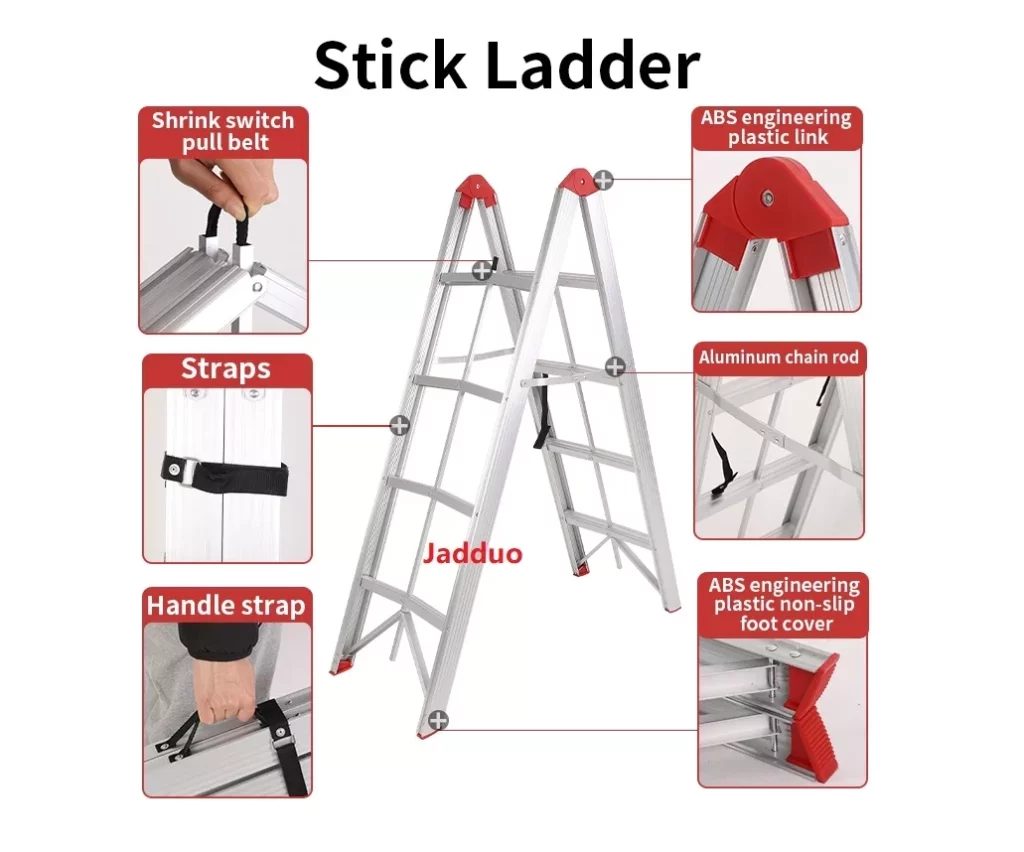
For this use, Jadduo’s A-Frame Design Stick Box Ladder Aluminum is a more natural fit. It suits buyers who need an A-frame ladder for warehouse use, shop repair, household maintenance, or general indoor access. The main selection logic is simple: if the ladder should stand by itself, an A-frame structure is usually easier to manage than a wall-supported ladder.
Electrical and Multi-Position Work
Electrical-related work needs a different check. Buyers should not only ask about height or ladder load capacity. Material, insulation needs, hinge control, and locking stability become more important.
For insulated ladder for electrical work and mixed-position tasks, Jadduo’s Red insulated ladder Multi-Functional ladder big hinge can be reviewed as a specialized option. The official model name is long, but the buying logic is clear: buyers should focus on the insulated structure, big hinge mechanism, and whether the ladder position can be changed and locked with confidence.
What Specs Help Reduce Maintenance Cost Later?
Maintenance cost is often created by small parts. A weak rope, loose hinge, damaged foot pad, unclear label, or hard-to-replace lock may not look serious during sample approval. After shipment, these parts can become the reason for complaints.
Moving Parts and Wear Points
Moving parts need more inspection than fixed parts. On an extension ladder, buyers should check the pulley, rope, locks, sliding areas, and section movement. On a multi-functional ladder, hinges and locking points need extra attention because they control position changes.
This is also why ext ladder parts should be discussed before ordering, not only after a complaint appears.
Material Choice and Working Environment
Aluminum ladders are often selected for general access because they are easier to move and store. Insulated ladder products serve different work conditions where electrical-related risk must be considered. Buyers should match material with the actual environment instead of using one product for every job.
Outdoor maintenance, warehouse repair, and electrical service each create different stress on ladder parts. The same ext ladder parts may wear differently depending on ground condition, storage method, cleaning habits, and user training.
Packaging, Spare Parts, and Repeat Orders
For B2B buyers, packaging and repeat-order consistency matter. If the label position changes, spare part plan is unclear, or package protection is weak, the buyer may face extra work after goods arrive.
Jadduo’s production and packaging process gives buyers a basis for discussing batch details. Before order confirmation, buyers can prepare questions about labels, carton protection, spare feet, rope, locks, color needs, and OEM/ODM requirements.
How Can Buyers Work With Jadduo on Model Selection and Service?
A supplier can only recommend the right ladder when the buyer shares enough working information. Working height, use scene, user group, target market, packaging needs, and document requirements should be prepared before model selection.
Match the Product to the Real Task
For exterior access and height-adjustable work, start with the 2 Section Ladder With Pulley and Rope. For indoor repair, shop tasks, and warehouse access, review the A-Frame Design Stick Box Ladder Aluminum. For insulation needs and multi-position work, check the Red insulated ladder Multi-Functional ladder big hinge.
This product matching keeps the article away from forced comparison. Each model serves a different work problem.
Confirm Documents, Labels, and Custom Needs
Before ordering, buyers should confirm load capacity, certificates, user labels, package method, color, material, spare parts, and custom requirements. OEM/ODM support is useful when buyers need market-specific packaging, private labels, or adjusted structural details.
Service and Contact for Project Buyers
If the project includes mixed tasks, different users, or local document requirements, prepare a clear list before sending details: working height, use scene, sales market, label requirements, packaging method, and spare part needs. Jadduo can review these points through its contact page and help match the ladder structure with the buying purpose.
A safer ladder purchase starts with ext ladder parts, load capacity, moving parts, material, working scene, and service support. For Jadduo buyers, the 2 Section Ladder With Pulley and Rope fits exterior extension access, the A-Frame Design Stick Box Ladder Aluminum fits self-supporting indoor and warehouse tasks, and the Red insulated ladder Multi-Functional ladder big hinge fits insulated and multi-position applications.
FAQ
Q: What Ext Ladder Parts Should Buyers Check First?
A: Buyers should check rails, rungs, section connection, pulley, rope, locks, feet, warning labels, and visible wear points. These ext ladder parts affect extension control, ground contact, climbing feel, and later maintenance.
Q: How Should Buyers Choose Between an Extension Ladder and an A-Frame Ladder?
A: Choose an extension ladder for wall-supported height access such as roof edges, gutters, and exterior maintenance. Choose an A-frame ladder for indoor repair, warehouse access, shelf work, and tasks where the ladder needs to stand by itself.
Q: Why Should Buyers Confirm Load Capacity Before Bulk Ordering?
A: Load capacity should include the user, tools, and carried materials. Buyers should confirm the exact model data, labels, certificates, packaging, and spare part needs before shipment.