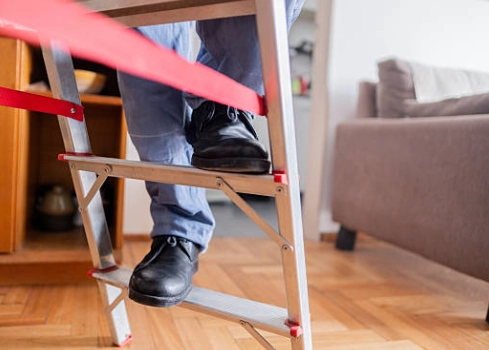
Setting an extension ladder at the correct pitch on a job site requires zero complex tools. Safety codes mandate a slope of 75.5 degrees from horizontal, or 15 degrees from vertical. In field operations, site workers verify this angle by applying the 4 to 1 extension ladder angle ratio or executing a standard arm-reach test. Placing climbing equipment at improper angles creates severe structural hazards, including base sliding under heavy load or backward tipping during high-reach work. For safety officers, civil contractors, and facility procurement managers, establishing rapid zero-tool verification routines prevents job-site injuries and liability risks.
Operating as an industrial climbing equipment manufacturer since 2015, Jadduo produces heavy-duty commercial ladders and scaffolding platform systems engineered for demanding worksites. By maintaining strict internal controls over raw alloy extrusion, wall thickness profiles, and locking mechanism assembly, the factory provides contractors and volume distributors with hardware tested to pass European EN131 safety standards.
![How to Check Your Extension Ladder Is at the Right Angle Without Fancy Tools [41 & Arm Test]](https://www.jadduo.cn/wp-content/uploads/2026/08/How-to-Check-Your-Extension-Ladder-Is-at-the-Right-Angle-Without-Fancy-Tools-41-Arm-Test-1024x624.webp)
How Can You Check Extension Ladder Angles on Site Without Special Tools?
Field crews working on tight schedules rarely carry specialized angle gauges or digital inclinometers up to a wall. Simple physical tests allow operators to verify proper pitch within seconds before stepping onto the rungs.
Execution of the Standard Stand-and-Reach Field Test
The stand-and-reach method offers a practical physical check without requiring measuring devices. The operator stands straight at the ladder base with work boot toes touching both rubber footings. Extending both arms straight forward at shoulder height, the palms should rest flat against the rung directly ahead. If the palms cannot reach the rung without leaning forward, the base sits too far from the wall; if elbows must bend, the setup remains excessively steep. Field safety inspectors frequently use this stand and reach test for ladder angle during routine job-site audits.
Application of the 4-to-1 Step-Distance Ratio
When precise height measurements are known, workers apply the standard 1:4 distance proportion. To set the correct base setback using the 4 to 1 extension ladder angle ratio, calculate one foot of distance away from the vertical support wall for every four feet of working height up to the top resting point. For example, if a ladder rests against a building edge at a height of 16 feet, the footings must sit exactly 4 feet away from the wall. This simple step-counting method automatically establishes the correct angle of inclination for single and extension ladders.
Visual Alignment and Leveling Checks Before Climbing
Executing distance checks represents only part of physical setup. Operators must perform a visual inspection of the ground footing and top contact points. Ensure that both anti-slip rubber pads rest flat on firm, unyielding ground and that the rungs remain horizontal. Upper guide brackets must lie flat against the supporting vertical surface to prevent side twist under worker movement.
Why Is Maintaining the 75.5-Degree Pitch Angle Essential for Worker Safety?
Physics and structural mechanics dictate how downward force translates into base grip and wall friction. Deviating from the 75.5-degree benchmark shifts vector forces, compromising equipment stability.
Optimal Weight Distribution and Friction Balance
Positioning equipment at 75.5° relative to the horizontal surface (or 15° from the vertical wall) establishes physical equilibrium. Under this geometry, worker body weight drives the bottom rubber footings directly into the ground, generating maximum static friction. Adhering to the 4 to 1 extension ladder angle ratio ensures that vertical load transfers smoothly down the side rails without placing excessive bending stress on individual rungs.
Base Slippage Hazards Caused by Shallow Inclinations
Setting a ladder at a pitch angle below 70° alters force distribution. Shallow angles increase the outward horizontal force component pushing against the footing. When horizontal thrust exceeds the friction force between the rubber pads and the floor, a sudden base slip at a shallow angle occurs. This outwards foot sliding causes immediate structural collapse under load.
Backward Tipping Risks Associated with Steep Positioning
Pitch angles steeper than 80° push the structure into a near-vertical alignment. In this position, the top of the rails loses resting friction against the wall. As a worker climbs higher or reaches sideways to perform task work, the combined center of gravity shifts outward beyond the base points. This top-heavy setup causes the rails to tip backward or flip sideways away from the structure.
What Structural Specifications Ensure Maximum Stability at Height?
While proper setup eliminates operator error, equipment performance depends on raw material selection, manufacturing tolerances, and hardware integrity.
Compliance with International Standards and Single Load Capacities
Commercial construction fleets require equipment tested to pass recognized safety certifications. The European EN131 testing protocol mandates rigorous side-rail deflection tests, rung strength verification, and dynamic base anti-slip evaluations under a 150kg single-person working load. Sourcing units compliant with the en 131 ladder standard angle 75 degrees requirement guarantees structural resilience across commercial worksites. Maintaining a 4 to 1 extension ladder angle ratio on site ensures the frame performs strictly within these certified engineering margins.
Structural Aluminum Alloys and Core Hinge Testing
Side rail rigidity depends on raw material grade and wall thickness. Industrial aluminum equipment utilizes 6063-T5 aluminum alloy extrusions, maintaining main wall thickness profiles between 1.2mm and 1.5mm to eliminate rail flex during heavy climbing. A heavy duty 6063-T5 aluminum extension ladder resists twisting forces when carrying heavy tool belts. Additionally, core steel hinge locking joints must undergo 10,000-cycle fatigue tests to verify long-term engagement reliability.
Non-Conductive Framing and Effort-Saving Extension Assemblies
Utility operations demand specialized side rail materials. Electrical utility maintenance requires non-conductive fiberglass side rails to insulate line technicians from live electrical hazards. High-reach two-section units integrate mechanical rope-and-pulley systems, enabling operators to raise heavy upper ladder sections smoothly without manual strain.
Which Jadduo Commercial Ladders Best Fit Your Worksite Applications?
Selecting the correct climbing hardware requires matching structural design with specific job-site environments and hazard profiles.
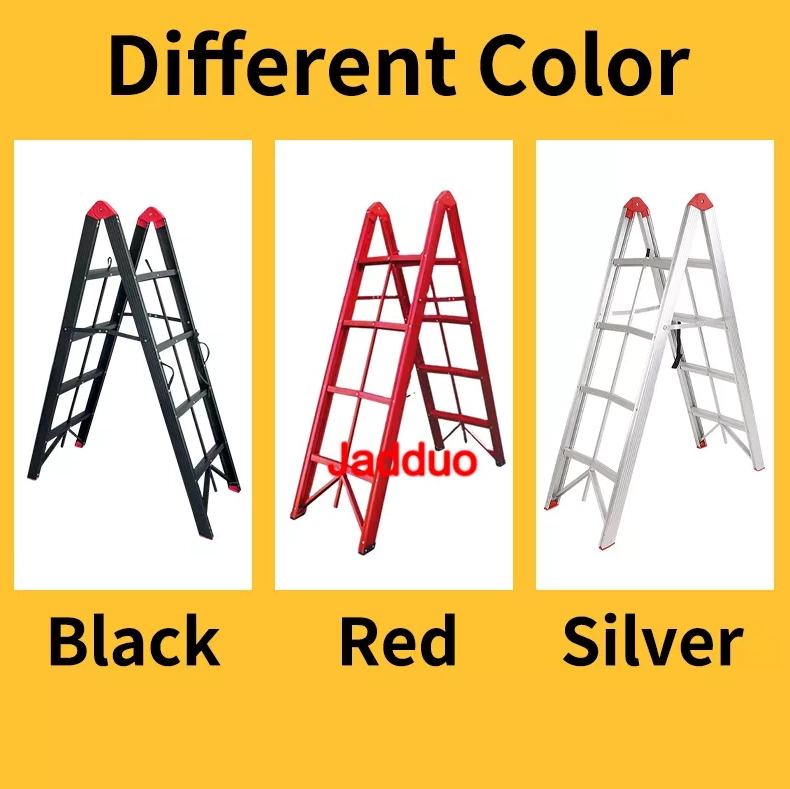
Jadduo Red Insulated Multi-Functional Ladder with Big Hinge for Electrical Utility
Power utility crews working near overhead lines need non-conductive protection along with multi-position flexibility. The Red insulated ladder Multi-Functional ladder big hinge features high-dielectric fiberglass side rails combined with reinforced steel big-hinge locking joints. Rated for a 150kg load capacity, its heavy-duty hinge mechanisms pass 10,000-cycle fatigue tests to ensure stable locking across straight, A-frame, and platform setups.
Jadduo Black Oxidized Twin-Sided Stick Ladder for Compact Engineering Operations
For architectural inspection teams and field service engineers operating in tight spaces, gear portability remains essential. The Jadduo Black Oxidized Twin-sided Stick Ladder utilizes 6063-T5 aluminum alloy framing with a corrosion-resistant black oxidation surface treatment. Its twin-sided stick design collapses into a narrow footprint for transportation inside service vehicles while delivering rigid support on site.
Jadduo 2-Section Ladder with Pulley and Rope for High-Reach Construction Tasks
Exterior masonry, painting, and high-reach facility maintenance demand smooth vertical extension and dependable locking pawls. The 2 Section Ladder With Pulley and Rope combines heavy-duty 6063-T5 aluminum rails with an integrated rope-and-pulley system for effortless single-operator deployment. Rated for 150kg single-person working loads, it features deep-grooved anti-slip rungs and heavy rubber feet that hold firm when placed at the standard 4 to 1 extension ladder angle ratio.
Site leaders reviewing safety inspection protocols can examine our reference guide on How to Check Your Extension Ladder Is at the Right Angle Without Fancy Tools for additional field verification procedures.
How Does Jadduo Support Commercial Procurement with Custom Services?
Commercial buyers require reliable factory partnerships that provide product consistency, custom specifications, and long-term hardware availability.
OEM Custom Manufacturing and Rigorous B2B Quality Control
Operating a dedicated manufacturing facility established in 2015, production protocols include 100% factory inspection of structural welds, wall thickness tolerances, and locking pawl engagement. Commercial distributors and fleet buyers can request custom OEM dimensional configurations, private logo branding, and specialized rail surface coatings to meet specific regional market requirements. Factory engineers assist clients in training field crews to maintain the 4 to 1 extension ladder angle ratio across job sites.
Continuous Spare Parts Availability and Fleet Maintenance
Extending equipment service life lowers long-term operating costs for fleet managers. Maintaining dedicated inventory of replaceable wear components—including anti-slip rubber footings, wide stabilizer bar assemblies, pulley ropes, and steel locking pawls—allows maintenance teams to replace worn parts without replacing complete ladder assemblies.
Direct Technical Consultation and Commercial Volume Orders
Purchasing managers, civil engineering leads, and commercial distributors can coordinate directly with factory technical staff to review engineering drawings, examine material test certificates, or schedule volume shipping arrangements tailored to project construction timelines.
Evaluating climbing equipment specifications, alloy wall thickness tolerances, or custom OEM configurations for upcoming fleet procurement? Please contact our engineering team to review technical parameter sheets, request test documentation, or arrange commercial volume pricing for your project needs.
FAQ
Q: How do I calculate the 4 to 1 extension ladder angle ratio on a job site?
A: To calculate the 4 to 1 extension ladder angle ratio, measure the vertical height from the ground to the upper contact point where the rails rest against the wall, then divide that number by four. Place the bottom rubber footings that calculated distance away from the wall to achieve the standard 75.5-degree slope.
Q: What happens if an extension ladder angle is set flatter than 70 degrees?
A: Setting an angle flatter than 70 degrees increases horizontal outward forces at the bottom footings. This force exceeds the grip capacity of the rubber pads, creating severe base slip risks under worker load.
Q: What single-person load rating is required for industrial EN131 extension ladders?
A: Commercial ladders certified under European EN131 standards must support a minimum working load capacity of 150kg, which accounts for the combined weight of the worker, clothing, and carried tools.
![How to Check Your Extension Ladder Is at the Right Angle Without Fancy Tools [41 & Arm Test]](https://www.jadduo.cn/wp-content/uploads/2026/08/How-to-Check-Your-Extension-Ladder-Is-at-the-Right-Angle-Without-Fancy-Tools-41-Arm-Test-768x468.webp)
![What Is the Correct Placement Angle for an Extension Ladder [75° Rule & Safety Checklist]](https://www.jadduo.cn/wp-content/uploads/2026/08/What-Is-the-Correct-Placement-Angle-for-an-Extension-Ladder-75°-Rule-Safety-Checklist.webp)