Industrial ladder sourcing involves more than choosing a suitable length. Changing work locations, uneven ground, repeated setup, frequent transport, and compact storage all affect risk. The most important safety features on your adjustable ladder include a stable base, dependable section locks, controlled retraction, suitable load capacity, and dimensions matched to the task. These features still require correct setup, inspection, and handling.
Jadduo supplies telescopic ladder options for overseas B2B buyers, including designs intended for uneven surfaces and controlled closure. When comparing them, focus on the complete working application rather than treating one feature as protection against every possible hazard.
Which Safety Features Matter Most in Industrial Environments?
Industrial environments expose ladders to different surfaces, users, tools, and handling routines. Your evaluation should cover how the ladder behaves during setup, climbing, retraction, and movement between work areas.
A Stable Base for Uneven Working Surfaces
Full, secure foot contact deserves close attention when a ladder may be positioned on gravel, grass, stairs, slopes, or other irregular surfaces. Before use, inspect the feet for damage or contamination, check the available grip, confirm the ladder-leg position, and look for visible movement.
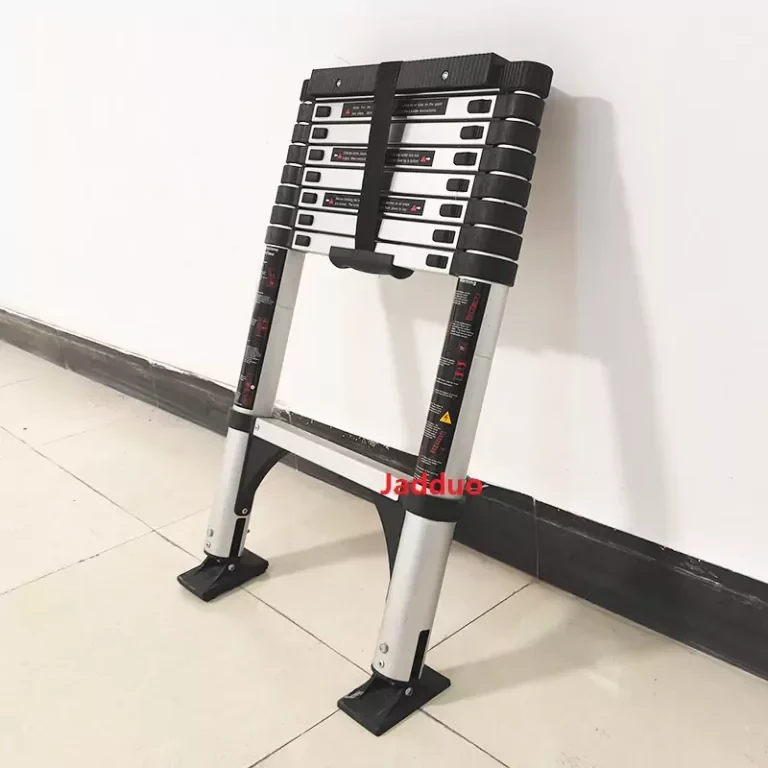
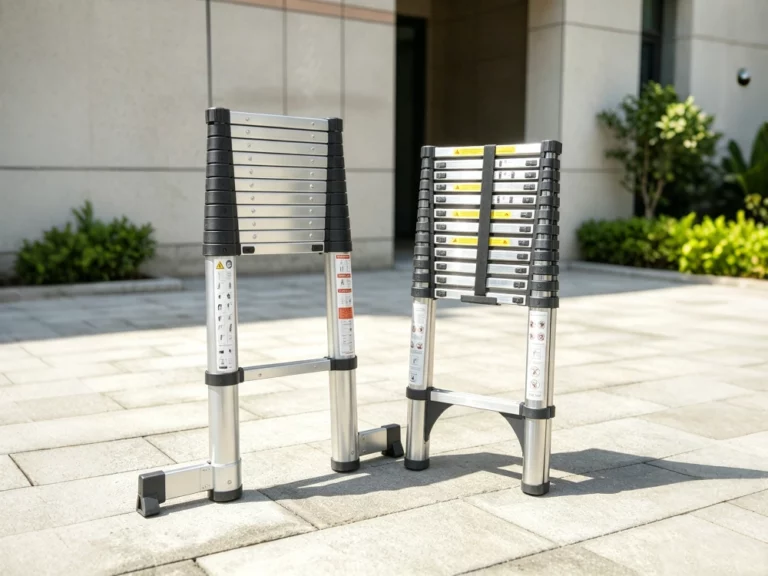
The One-key telescopic ladder with bottom movable foot top reliable telegraph pole has 360-degree movable feet designed to adapt to uneven ground. Its design targets full surface contact and an approximately 70-degree stable setup angle. These model-specific features do not replace assessment of ground strength, clearance, or surrounding hazards.
Secure Extension And Section-Locking Mechanisms
Adjustable sections must remain securely positioned while the ladder is being climbed or used. Buyers should examine whether each lock is visible, easy to inspect, clearly engaged, and practical to operate when workers wear gloves.
Pre-use checks should cover incomplete extension, uneven section engagement, damaged locking parts, and dirt that could affect operation. Safety features on your adjustable ladder are only useful when workers can recognize whether they are functioning correctly. Do not use a ladder if its locks engage inconsistently or release unexpectedly.
Controlled Retraction That Reduces Handling Hazards
Abrupt section closure can create hand-placement and handling concerns, particularly when ladders are collapsed repeatedly during a shift. Controlled retraction gives the operator more time to manage the closing sequence, but hands must still remain clear of moving sections.
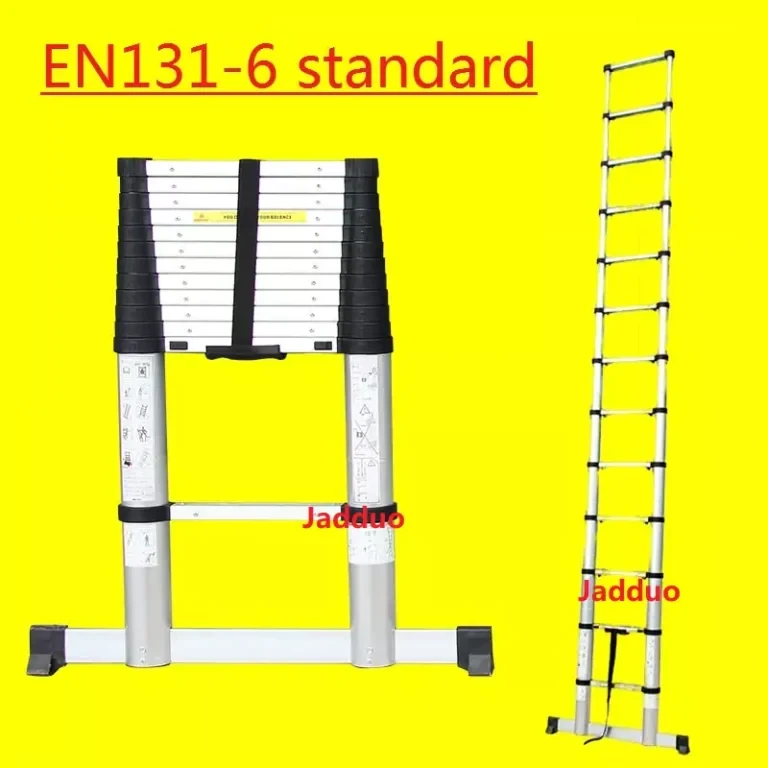
The Ladder with slow closed Passed EN131-6 certificate uses one-click, section-by-section slow descent. An air retraction-slow down mechanism controls the closing movement. This feature supports more manageable handling, but it should not be treated as complete protection against pinching or misuse.
How Should Buyers Compare Load, Size, And Construction?
Once the main operating features have been reviewed, compare the model specifications with real site conditions. Load, ladder length, transport dimensions, and weight all influence practical suitability.
Load Capacity And Real Working Loads
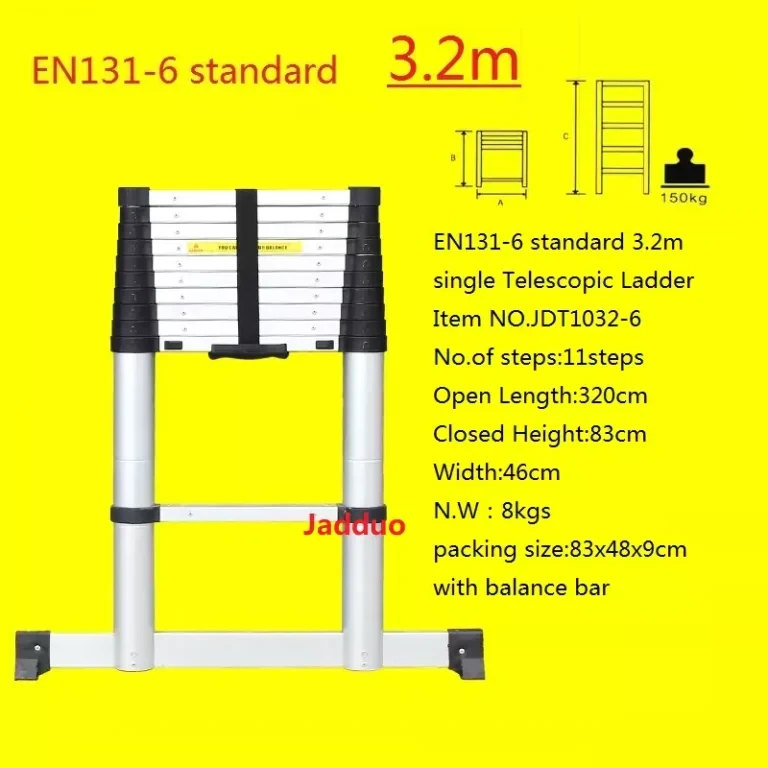
Calculate the working load from the user, clothing, tools, and carried materials—not body weight alone. Both featured Jadduo ladder ranges have a stated maximum load of 150kgs.
That figure is an upper limit, not a target or permission to use the ladder outside its intended configuration. Confirm the exact model specification during purchasing and check delivered goods against the order. Load information is among the safety features on your adjustable ladder that must be verified at model level.
Working Length, Step Count, And Closed Dimensions
Required access length must be balanced against storage and transport restrictions. Movable-foot and slow-closed versions include 2.0m models with 7 steps, 2.6m models with 9 steps, and listed 2.9m versions.
Closed sizes begin at 68cm for the listed 2.0m models and reach 78.5cm for listed 2.9m models. Do not treat total ladder length as safe standing height or working reach. Those limits depend on the ladder configuration, task, and operating instructions.
Materials, Weight, And Jobsite Portability
The movable-foot model uses aviation aluminum alloy construction and a compact telescopic format. Listed gross weights include 4.8kgs for 2.0m, 6.6kgs for 2.6m, and 7.4kgs for 2.9m versions.
Lower transport weight may help teams that reposition equipment frequently. However, procurement decisions should also account for required length, surface conditions, duty pattern, storage space, and handling frequency. Quantitative durability or service-life comparisons require model-specific test data.
What Should A Pre-Use Industrial Inspection Cover?
A short inspection before each setup can identify visible damage, contamination, or unreliable operation. Your inspection routine should be documented, easy to follow, and connected to the exact ladder model.
Feet, Rails, Steps, And Locks
Start at the feet and work upward. Check for worn, damaged, loose, or contaminated foot components. Inspect rails for bending or impact damage, steps for looseness, and locks for complete engagement.
Remove the ladder from service when visible damage or unreliable operation is found. Repairs should not be improvised. Follow the approved inspection and servicing process for the model instead.
Extension, Setup, And Stability Checks
Inspect the ground before extending the ladder. Engage the required sections evenly, confirm secure foot contact, position the ladder appropriately, and test for movement before climbing.
Movable feet are intended to pivot and adapt to irregular surfaces, but they cannot make every location suitable. Safety features on your adjustable ladder still depend on firm supporting ground, correct positioning, adequate clearance, and proper section engagement. The approximately 70-degree position associated with the movable-foot model should not be applied automatically to every ladder configuration.
Retraction, Transport, And Storage Checks
Keep hands away from closing sections and use retraction controls only in the intended sequence. The slow-closed model can make frequent collapse more controlled, though careful hand placement remains necessary.
Before transport or storage, check for dirt and debris between telescoping sections. Secure the collapsed ladder against movement, store it in dry conditions, and protect it from impact. Use only approved maintenance methods, cleaning materials, and service intervals.
How Can Procurement Teams Select The Right Adjustable Ladder?
Procurement teams need a repeatable comparison process. Safety features on your adjustable ladder should match the work surface, operating frequency, access requirement, workforce practices, and storage environment.
Match The Ladder To The Surface And Work Pattern
Document common ground conditions, indoor or outdoor use, repositioning frequency, required access length, and available storage space. The movable-foot model is relevant when uneven-surface adaptability is a priority.
The slow-closed model is worth evaluating where workers frequently collapse ladders for transport or compact storage. Neither design should be assumed suitable for every industrial activity without application-level review.
Verify Documentation And Model-Level Specifications
Request the precise item number, dimensions, step count, maximum load, operating instructions, and available supporting records. Representative models include JDT1020-ONE-DXGKJ-LEG, JDT1026-ONE-DXGKJ-LEG, JD-T1020-6, and JD-T1026-6.
Do not assume that one ladder’s features, test information, or instructions apply across the range. Buyers can also review Jadduo’s company information and available service options during supplier assessment.
Plan For Sampling, Training, And Ongoing Inspection
Where practical, evaluate a representative sample before placing a volume order. Check setup behavior, lock engagement, retraction control, portability, packaging, and compatibility with intended applications.
Include operator instruction and a documented inspection routine in the purchasing plan. Sampling can also reveal whether the selected size, weight, controls, and safety features on your adjustable ladder suit actual workplace handling.
For model specifications, product images, volume-order discussions, or help comparing movable-foot and slow-closed options, overseas buyers can discuss their ladder requirements with Jadduo before finalizing model selection.
FAQ
Which Adjustable-Ladder Feature Is Most Important On Uneven Ground?
A stable base with secure foot contact is a primary consideration. Inspect the supporting surface, foot condition, ladder position, and visible movement. Pivoting feet may improve adaptability, but they do not make weak, obstructed, or unsuitable ground safe.
How Should Buyers Calculate The Required Load Capacity?
Add the user’s body weight to clothing, tools, equipment, and carried materials. Compare that total with the stated maximum load for the exact model, without exceeding the limit or applying it to an unintended ladder configuration.
What Should Users Inspect Before Each Industrial Ladder Setup?
Check the feet, rails, steps, section locks, extension movement, and retraction controls. Look for contamination, impact damage, loose parts, uneven engagement, or unstable contact. These checks help determine whether the safety features on your adjustable ladder remain reliable before climbing.