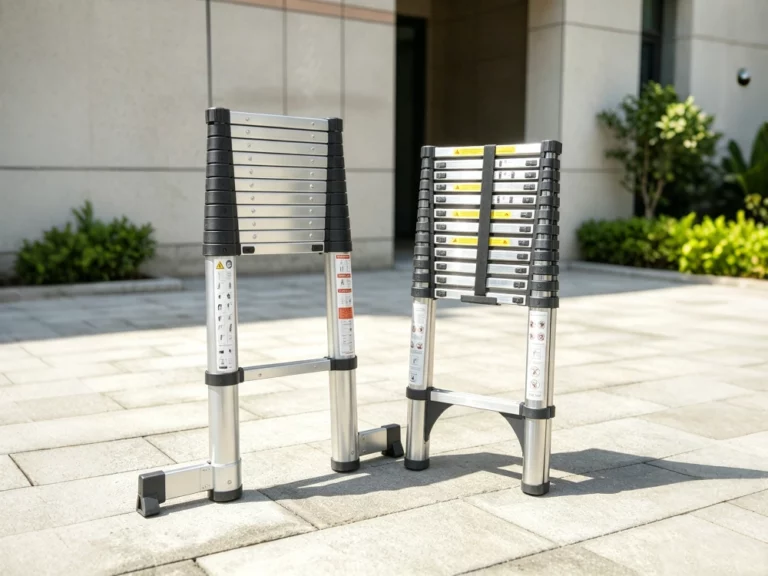
A telescopic ladder provides temporary access to elevated fixtures, service points, storage areas, and inspection locations. Because the ladder retracts to a shorter stored length, it can be practical for service vehicles, compact storerooms, and facilities where equipment space is limited.
It is not the right access solution for every elevated task. Buyers must assess the required access height, floor condition, task duration, tools, transport method, and site procedures before selecting a model. Jadduo supplies several configurations that show how material, ladder length, retraction method, and handling features can support different commercial requirements.
Where Can Businesses Use a Telescopic Ladder?
Commercial use generally involves temporary or periodic access rather than continuous work at height. Before approving a telescopic ladder, define the task clearly and confirm that the selected configuration suits the working environment.
Facility Maintenance and Routine Inspections
Maintenance teams may use retractable ladders to check lighting fixtures, reach service points, inspect elevated surfaces, or complete light repairs. Such work may take place in offices, workshops, utility rooms, apartment buildings, and other managed facilities.
Start the selection process by reviewing the placement surface and required access point. Consider how long the user will remain on the ladder, whether tools need to be carried, and whether the surrounding area can be controlled while work is underway. Compact dimensions do not remove the need to follow the operating instructions for the specific product.
Mobile Repair and Field Service Work
Field technicians often move tools, spare parts, and testing equipment between several locations. A ladder with a short closed size can be easier to fit into a service vehicle while preserving room for other essential equipment.
Closed length is only one part of portability. Procurement teams should also check gross weight, carrying method, intended storage position, and how the ladder will be secured in transit. The chosen model must suit the access task expected at each service location.
Warehouses, Retail Sites, and Managed Properties
A telescopic ladder may be used for periodic access in stock areas, retail back rooms, garages, utility spaces, and managed buildings. Typical work can include inspecting fixtures or reaching service areas that are not accessed continuously.
Buyers should distinguish occasional access from prolonged, complex, or specialized work that requires a different access solution. Businesses should define approved tasks internally and provide users with operating guidance for the exact model supplied.
Why Do Commercial Users Choose a Telescopic Design?
The main commercial advantage is the relationship between extended length and closed size. Buyers can compare these dimensions with vehicle compartments, available storage space, and handling requirements between work locations.
Compact Storage for Vehicles and Limited-Space Facilities
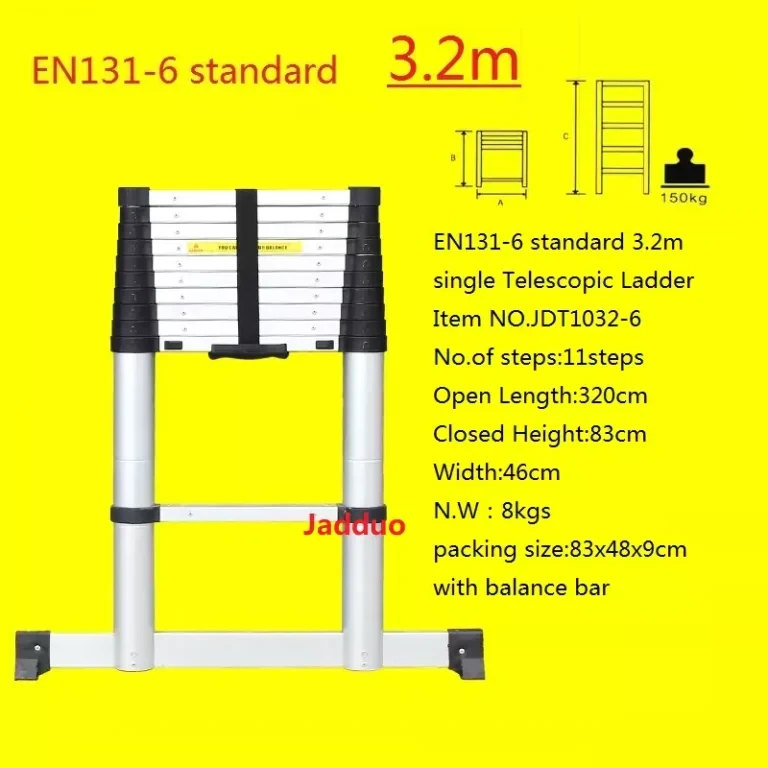
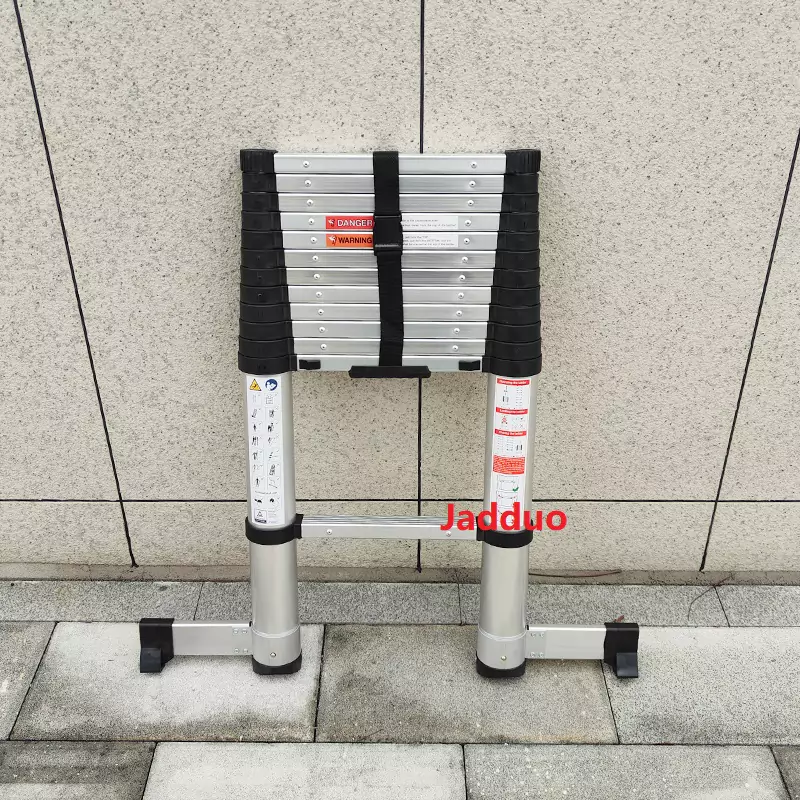
A retractable structure reduces the storage length required when the ladder is not in use. For example, the Aluminum One-Button Soft Close Telescopic Ladder with Balance Bar has a listed 3.2 m version that closes to 81 cm. The 3.8 m version closes to 87 cm.
These confirmed dimensions allow procurement teams to check compatibility with vehicle compartments, warehouse racks, and equipment rooms. They should not be used as universal comparisons with every conventional ladder.
Adjustable Access for Changing Work Locations
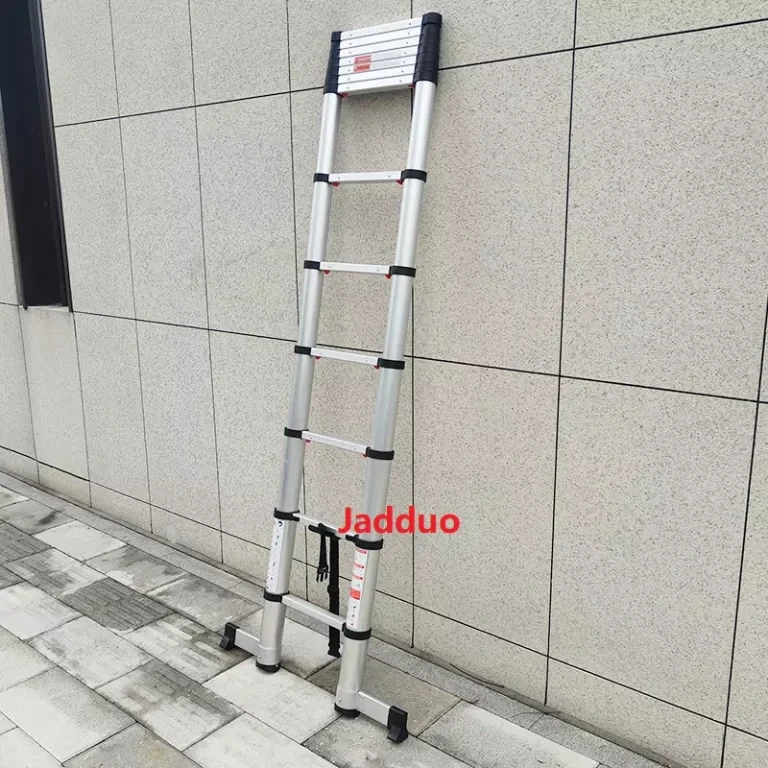
Commercial teams may require access equipment for several recurring heights. The available ladder lengths allow procurement staff to choose a configuration based on those tasks rather than relying on a general product-family description.
Straight ladder length is not the same as safe working height. Buyers should not estimate reach by adding an assumed user height. Instead, match the access point and placement area to the manufacturer’s exact specifications and operating guidance.
Easier Transport Between Tasks
Transport suitability depends on closed dimensions, gross weight, carrying features, and the method used to secure the ladder. Engineered models such as the H552 Stainless Steel Space-Saving Telescopic Ladder Step Space 30cm incorporate heavy-duty securing straps and compact closed footprints to simplify van transit.
Buyers should compare the listed weight with the vehicle layout and workplace handling procedures. They should not assume that every telescopic ladder version is suitable for every worker or transport arrangement.
How Should a B2B Buyer Select the Right Configuration?
A product-family name does not provide enough information for purchasing. Start with the required access point, reject any model that fails the closed-size or handling limit, and then confirm the load listing and operating documents for the exact item number. The right model passes all three checks, not simply the one with the greatest extended length.
Match Ladder Length to the Intended Access Task
Document the access point, available floor area, intended ladder position, and storage limit before comparing models. Compare core physical parameters and operational dimensions across standard commercial configurations:
| Item number | Straight length | Closed size | Steps | Gross weight |
| JDT1026SS30-H552 | 2.6 m | 74.5 cm | 9 | 6.6 kgs |
| JDT1032SS30-H552 | 3.2 m | 81 cm | 11 | 8.4 kgs |
| JD-T1038-6-H554 | 3.8 m | 87 cm | 13 | 10.7 kgs |
Use these figures to compare models, not to make unsupported working-height calculations.
Compare Retraction, Stability, and Handling Features
Review how the ladder is extended, retracted, positioned, carried, and stored. The H554 aluminum model lists a one-button retraction system, soft close design, movable balance bar, and portable, space-saving form.
These features are relevant to an operating assessment, but they do not replace training, correct placement, inspection, or compliance with the product instructions. Before approving a model, ask the supplier to explain how each function operates.
Verify Load, Dimensions, and Procurement Details
Confirm the exact item number along with maximum load, width, packing size, gross weight, step count, and container quantity. These details influence operational suitability, shipment planning, storage, and handling.
For example, JD-T1032-6-H554 and JD-T1038-6-H554 each have a listed maximum load of 150 kgs. Questions about durability, maintenance intervals, corrosion performance, or product life should be submitted to the supplier for documented confirmation.
Which Jadduo Telescopic Ladder Options Illustrate These Uses?
Two official product families illustrate how buyers can compare materials, retraction systems, available lengths, and storage features. Selection should be based on the task and exact item number rather than one feature alone.
H552 Stainless Steel Space-Saving Telescopic Ladder Step Space 30cm
The H552 Stainless Steel Space-Saving Telescopic Ladder Step Space 30cm is built specifically for recurring facility inspections, offering 2.6 m, 3.2 m, and 3.8 m extended options.
Aluminum One-Button Soft Close Telescopic Ladder with Balance Bar
The Aluminum One-Button Soft Close Telescopic Ladder with Balance Bar incorporates an internal pneumatic dampening system, a stabilizing base bar, and a certified 150 kg load rating.
Build a Task-Based Supplier Enquiry
Provide the intended task, required length, storage limit, transport method, quantity, and destination market. Ask Jadduo to confirm the current item number, specifications, packing details, operating instructions, and documentation through its commercial enquiry form.
FAQ
Can a telescopic ladder be used for daily commercial work?
It may suit recurring tasks when the exact model, site conditions, placement, task duration, and operating instructions are appropriate. It is not a substitute for fixed or prolonged access equipment. Businesses should approve defined tasks and inspect the equipment according to the supplied guidance.
How do I choose the correct telescopic ladder length?
Document the access point and placement area, then compare them with the exact item specifications. Do not treat straight ladder length as safe working height or add an assumed user reach.
What product details should a B2B buyer confirm before ordering?
Confirm the item number, straight and closed dimensions, width, gross weight, step count, maximum load, packing size, shipment quantity, operating instructions, order quantity, and destination market.