Getting ready for commercial work up high means the microscopic details of your gear matter significantly. They completely stand between a smooth operational job and real liability risks. One key safety detail that many procurement teams skip is the extension ladder width. A narrow side profile can drastically cut your side-to-side hold, while a broad one might not match your set vehicle brackets or storage hold spots. From extensive field know-how, partnering with Jadduo provides a remarkably strong manufacturing base located in Yongkang, China’s hardware center. Since 2015, the group has focused intensely on the design and worldwide sales of top-tier industrial steps. We handle 30,000 pieces a month with flawless precision. A dedicated 20-person design team owns several structural patents. This technical backbone keeps each manufactured item, from pull-out types to heavy work stands, strictly up to EN131 and ANSI rules. Teaming with this maker means far more than a simple equipment buy. It means gaining years of dedicated build skill and incredibly quick 72-hour tech aid for your ongoing projects.

Why Are Industrial Extension Ladder Width Standards Crucial?
In demanding industrial work fields, rough visual guesses simply will not do for safe equipment sizes. Sticking strictly to set industrial extension ladder width standards guarantees your buy perfectly fits world safe guides.
Compliance with Global Safety Regulations
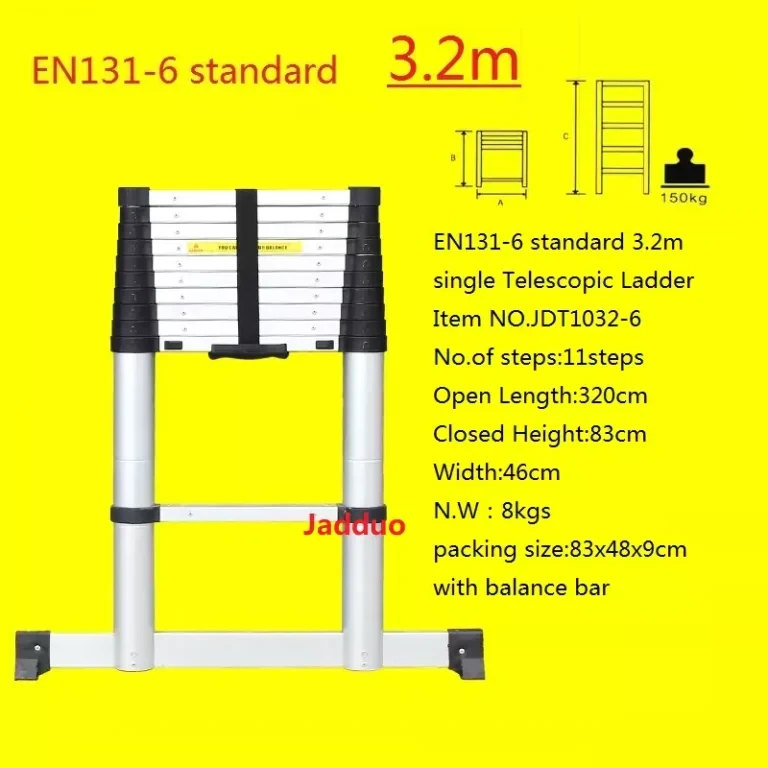
Strict rules like EN131 in Europe or ANSI A14 in America set mandatory side-to-height links to stop catastrophic falls. Such engineered rules keep the step securely rated for a 150kg weight hold even when fully extended out.
Compatibility with Professional Stabilizers and Accessories
Top-tier steady bars, roof ties, and level pads fit only set, standardized outer side sizes. If your purchased step strays from manufacturing norms, your safe add-ons might completely fail to lock securely in place.
Maximum Stability for High-Reach Industrial Tasks
A fixed, standardized side gives your worker a perfectly steady weight center. This structural design proves absolutely key at extreme heights where small side shifts could easily spark bad shakes and severe accidents.
| Standard | Region | Key Requirement for Extension Ladders |
| EN131 | European Union | Mandatory anti-slip labels and dynamic load testing. |
| ANSI A14.7 | United States | Increased load capacity requirements (up to 300lbs). |
| ISO 9001:2015 | Global | Quality management system for manufacturing consistency. |
What Is the Minimum Width for 24-Foot Extension Ladder Models?
Buying industrial equipment from the web calls for rigorously checking the step’s exact ground mark. The minimum width for 24 foot extension ladder types usually sits right from 17 to 19 inches at the bottom base. This precise measurement keeps the tall structure perfectly straight for your highest jobs.
Safety Requirements for Extended Reach Stability
When a step stretches out to its absolute maximum, heavy wind and physical moves from the user naturally grow. A broader bottom structure effectively makes up for this physical pull. It holds the aluminum frame incredibly tight and secure to the earth.
Specific Dimensions for Base and Fly Sections
A professional pull-out step features a bottom base part and a top fly section. You must carefully measure the outer side of the bottom to flawlessly match your fleet space. The top part desperately needs enough side clearance for easy, secure foot spots for your climbing worker.
Balance Between Portability and Footprint Area
Top makers actively try to keep the daily gear light, often utilizing aviation-grade metal, while holding a broad enough base stand to securely back both the user and their heavy tool gear.
How to Use a Standard Extension Ladder Width Chart for Procurement?
For big commercial projects, a standard extension ladder width chart directly serves as your top procurement aid to keep your entire equipment fleet even and uniform.
Simplified Comparison of Different Ladder Sizes
Such a highly detailed chart lets you take quick views of precise side gaps between 16-foot and 24-foot types. It actively aids your buyers in quickly seeing if one exact size works for all your vehicle hold racks.
Accuracy in Technical Specifications for B2B Buyers
Bulk commercial buys heavily need exact, hard information. Top reliable makers share full technical sheets on the outer side, the inner step side, and the anti-slip foot sizes.
Verification of Rung Spacing and Rail Thickness
The main side dimensions stay incredibly vital, but your rung gaps should also perfectly match strict body-fit safety rules. This design choice makes the extension ladder width pair flawlessly with natural, comfortable worker steps.
| Ladder Type | Typical Base Width | Ideal Application |
| Telescopic Tent Ladder | 45 – 50 cm | RV travel, camping, and vehicle roof access. |
| Multi-Functional Ladder | 55 – 65 cm | Interior painting, light industrial, and electrical work. |
| Scaffolding Ladder | 70+ cm (with bar) | Exterior construction and prolonged maintenance. |
Does a Wider Base Extension Ladder Enhance Outdoor Safety?
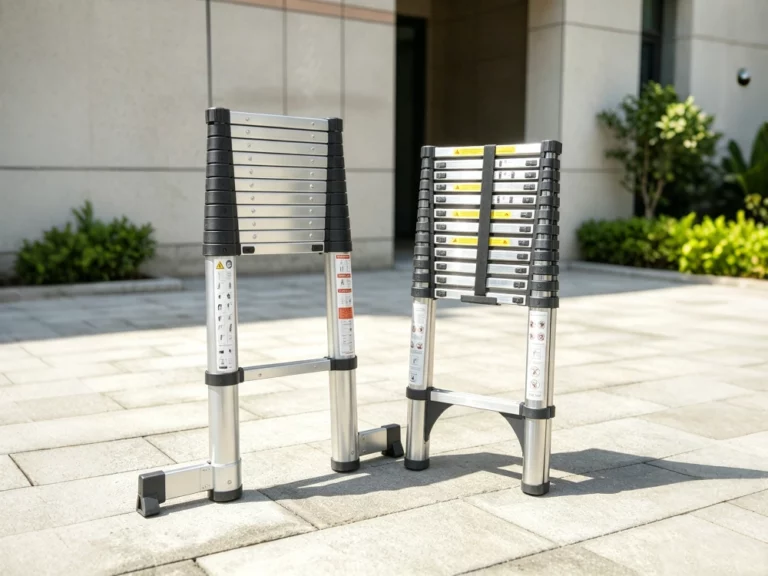
Outside commercial ground seldom levels out perfectly for your crew. A wider base extension ladder for stability often comes heavily equipped with a premium steady bar or big rubber pads to aggressively grab wet turf, loose stones, or soft soil.
Prevention of Tip-Over Accidents on Uneven Terrain
A structurally broad stand cuts the high chance of fatal side slips a massive amount. This mechanical advantage counts the most for severe jobs like heavy drain clears or tall tree cuts where the earth physically softens quickly.
Enhanced Support for Heavy Scaffolding Configurations
Turning a standard step into a heavy work stand means the bottom side directly sets the safe, permissible weight over the entire flat platform reach.
Reduction of User Fatigue During Prolonged Tasks
A firm, extremely wide step shakes noticeably less under pressure. With a remarkably broad and tightly locked bottom, far less physical effort goes to maintaining a steady hold. Consequently, much more of your worker’s energy goes directly to the job itself.
Which Professional Solutions Meet These Exterior Measurements?
Projects needing strict exterior extension ladder width measurements call for premium gear built exclusively for those challenging spots.
2X4 Extension Telescopic Tent Ladder
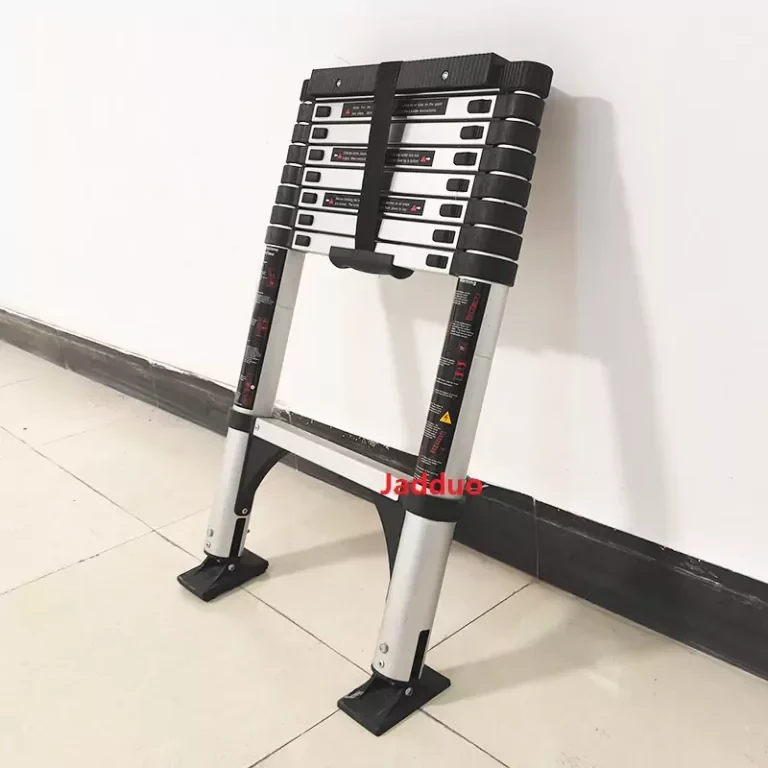
The 2X4 Extension Telescopic Tent Ladder totally suits the fast-grow home and open-air field. Its remarkably small pull-out form folds tightly to completely below 1 meter. This compact size fits your truck holds incredibly well, and seamlessly gives the needed side base for a firm tent reach.
Red Insulated Multi-Functional Ladder with Big Hinge
For your highly dangerous power and live-wire fields, the Red Insulated Multi-Functional Ladder with Big Hinge gives total power safety for your crew. The exceptionally large turn point actively adds a much broader spin locking spot. It massively boosts the frame hold whether placed in an A-shape or fully stretched spots.
Ultra-High Scaffolding Ladder 4m Height
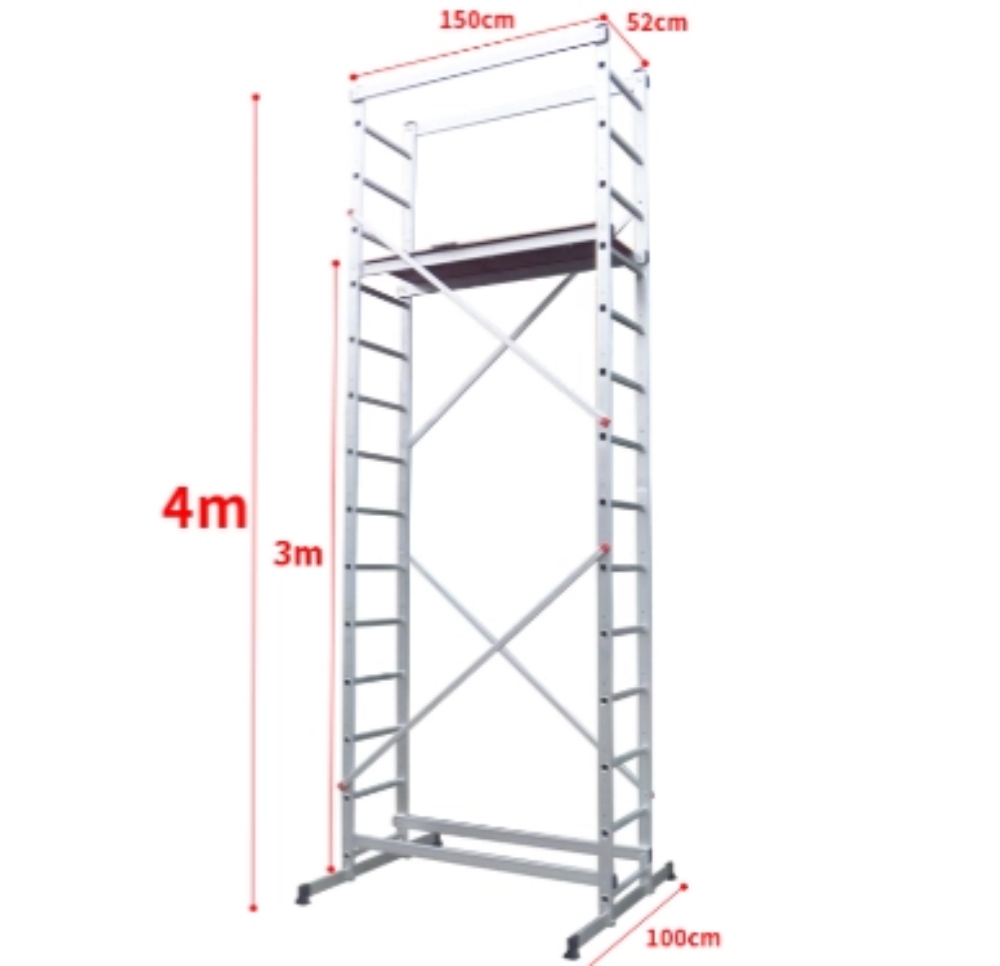
For maximum vertical industrial reach, the Ultra-High Scaffolding Ladder 4m Height perfectly fits complex work spots where a normal extension ladder width falls dangerously short for long overhead maintenance jobs.
Conclusion and Professional Services
Picking the completely right extension ladder width forms a basic, mandatory move for your site safety and smooth daily workflow. Premium models that stick strictly to world rules and successfully add broad bottoms for a secure hold actively guard your crew and your company’s liability funds. From highly compact picks for mobile camper trips to incredibly tough work stands for commercial build sites, pro build quality completely sets the standard apart. The manufacturing plant gives you full procurement aid, like negotiable small runs for bulk trials and extremely fast 15–30 day waits for your perfect fit buys. With incredibly fast 72-hour tech backing and massive sales reach directly to Europe, North America, and Southeast Asia, our full support constantly waits for your next major task.
Contact us today to receive a highly detailed price quote for your specific work step needs and confidently set your 2026 equipment fleet for incredibly long use.
FAQ
Q: Why does the extension ladder width vary between different brands?
A: Side dimensional changes directly tie to the specifically planned work load and the individual maker’s structural build choices. Pro industrial steps very often add extremely broad bottoms for up to 150kg holds and to successfully pass stringent EN131 or ANSI steady checks.
Q: How do I measure my extension ladder to see if it fits a roof rack?
A: You must carefully check the “Outside-to-Outside” side exactly at the biggest spot, which is most often the bottom pads or the attached steady bar. For vehicle storage hold, strictly look at the pulled-in retracted height and the absolute max step side.
Q: Can I add a balance bar to an existing ladder to increase its stability?
A: Some heavy work types let you safely add a steady bar, which strongly boosts the bottom side footprint a lot. Still, you must stick exclusively to certified bars from the original first maker. This vital practice keeps your mechanical lock parts perfectly safe and the rated weight capacity completely true.