Installing telescoping ladder equipment requires more than extending the sections and climbing. You need to match the ladder to the required height, load, surface, access route, and maintenance task, then verify every locking point before use. For overseas industrial buyers, this preparation helps reduce procurement errors and supports consistent site procedures. Jadduo supplies telescoping ladder configurations that address different height, portability, and surface requirements.
What Should Buyers Verify Before Deployment?
Before installing telescoping ladder equipment at a facility, define the task and the operating environment. The correct configuration depends on the access point, work position, equipment carried, and conditions around the setup area.
Match Ladder Length To The Required Working Height
Start by measuring the access point and the position where work will take place. A ladder’s straight length is different from its closed storage size, and neither figure alone confirms the usable height for a particular task. Allow for the ladder’s operating position and the clearance required at the access point.
Procurement teams should compare the required working height with the available ladder lengths, then confirm the intended position and permitted use in the applicable operating instructions. Do not select by extended length alone. A ladder that reaches the work area may still be unsuitable if the surrounding clearance, angle, or access route is inadequate.
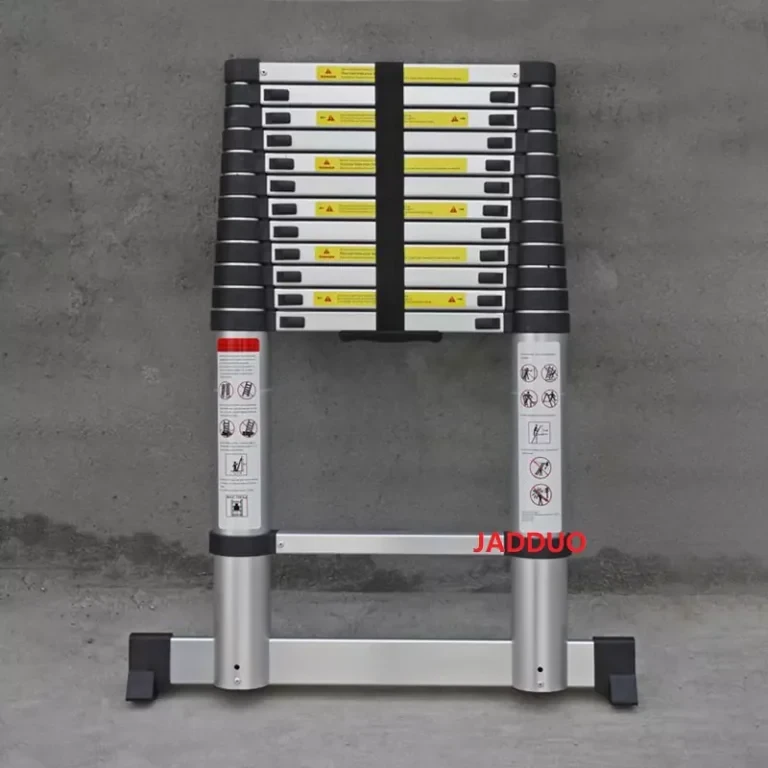
Jadduo’s Single Telescopic Ladder with Stabilizer Bar is available in straight ladder lengths of 2.6 m, 2.9 m, 3.2 m, 3.8 m, 4.1 m, and 4.4 m. The exact dimensions vary by length, so request the relevant configuration before ordering.
Confirm Load And Task Requirements
Calculate the total working load before deployment. Include the user, clothing, tools, test equipment, and any materials carried while climbing or working. The published maximum load is not a substitute for assessing the practical demands of repeated maintenance work.
Both supplied Jadduo configurations in this article have a listed maximum load of 150 kg. This figure applies to the specified products and should not be transferred to another ladder without confirmation. Buyers should also check whether the task involves pushing, pulling, side loading, prolonged standing, or handling bulky equipment, because these activities can affect the suitability of the setup.
Check The Site Before Bringing The Ladder Into Position
Inspect the route and work area before carrying the ladder into position. Check overhead obstructions, doors, passageways, vehicle routes, machinery, electrical hazards, stored materials, and nearby traffic. A clear ladder position can become unsafe if a door opens into it or mobile equipment passes close by.
Assess the surface for level, firmness, cleanliness, and movement. Remove oil, loose debris, packaging, and other items that could affect the feet. Where the ground is uneven, select a configuration designed for that condition and verify the approved setup method before use.
How Should The Work Area Be Prepared?
A controlled work area gives the operator room to position, extend, inspect, and use the ladder without interference. Site procedures should define how access is restricted around active maintenance work.
Select A Stable Positioning Surface
Place the ladder on a firm, unobstructed surface that can support the intended use. Do not compensate for soft, slippery, or unstable ground with loose packing materials unless a documented site procedure specifically allows it and the setup remains suitable.
For uneven outdoor access, a movable-foot design may be relevant. It remains a selection feature to verify, not a replacement for site assessment. The surface must still be capable of supporting the ladder and the working load.
Control Access Around The Setup Area
Establish a clear working zone around the ladder. Keep pedestrians, tools, carts, vehicles, and moving machinery away from the setup. Secure or control doors that could strike the ladder, and coordinate the work with nearby maintenance operations.
The size and control method for the exclusion area should come from your site risk assessment and workplace procedure. Where the ladder is used in a passageway or production area, plan the task so that other operations cannot unintentionally contact the equipment.
Inspect The Ladder Before Extension
Carry out a pre-use inspection before extending the sections. Check the rails, steps, feet, stabilizer components, locking mechanisms, and visible surfaces for damage, deformation, contamination, or excessive wear. Pay particular attention to parts that may have been damaged during transport or storage.
The exact inspection points and rejection criteria must come from the applicable model instructions. Remove the ladder from service when a defect could affect positioning, locking, footing, or structural condition. Record inspections according to your internal maintenance procedure where required.
How Do You Extend And Secure The Ladder?
Extension should be deliberate and controlled. Keep the collapsed ladder positioned where it can be handled safely, extend only the sections required for the task, and verify the locking condition before anyone climbs.
Install And Check Any Stabilizing Components
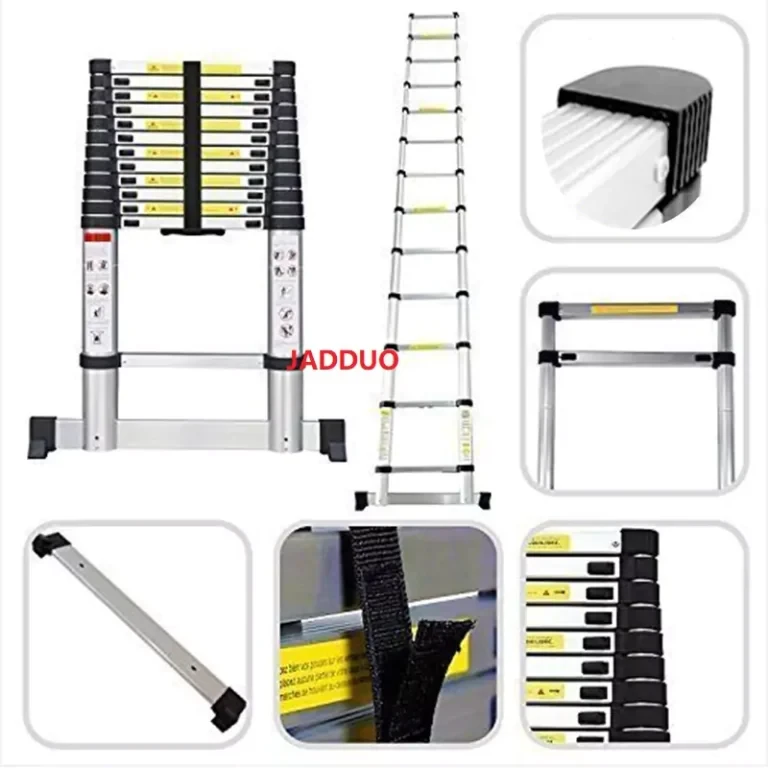
The Single Telescopic Ladder with Stabilizer Bar uses a detachable balance bar. Install this component according to the instructions supplied for the selected configuration, then check that it is correctly fitted before placing the ladder into service. The balance bar can be disassembled when the ladder is being stored or transported.
Do not treat a stabilizer as an independent guarantee of stability. Confirm that the bar, feet, rails, and surface work together in the planned position.
Extend The Sections In The Manufacturer-Specified Sequence
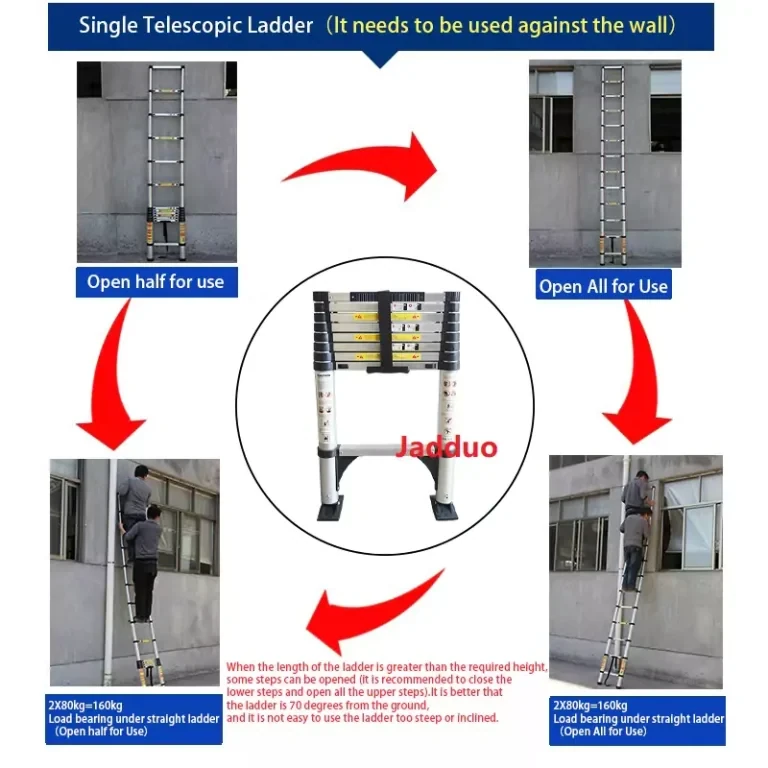
Position the collapsed ladder on the prepared surface before opening it. Extend the sections in the sequence specified for the model, using only the height needed for the task. Each open section must be properly engaged before climbing.
When a shorter configuration is permitted, use the approved method for adjusting the ladder. Do not rely on visual assumptions about whether a lock is engaged, and do not leave a middle section partly open unless the model instructions expressly permit that configuration. Retraction should also follow the specified handling method, with hands kept clear of closing sections and pinch points.
Verify Position, Locks, And Feet Before Use
Complete a final check before climbing:
- Confirm the ladder is in the intended operating position.
- Check every required lock for full engagement.
- Confirm that both feet make stable contact with the surface.
- Check that the stabilizer or movable-foot components are correctly positioned.
- Remove people, equipment, and obstructions from the working zone.
- Confirm that the access clearance remains adequate.
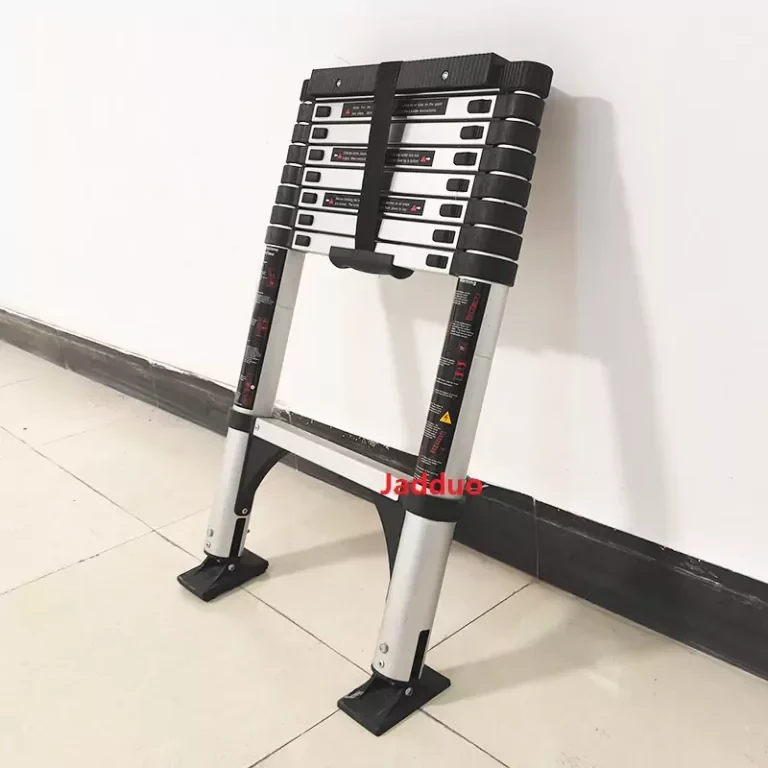
The One-key telescopic ladder with bottom movable foot top reliable telegraph pole has a foot cover that pivots 360 degrees to adapt to uneven surfaces such as grass, gravel, stairs, and slopes. Its product information describes an approximately 70-degree stable angle for this design. Treat that figure as specific to the configuration, not as a universal setup rule for every telescoping ladder.
Which Jadduo Configuration Fits The Maintenance Environment?
Product selection should follow the site assessment, work height, load, surface, carrying requirements, and available instructions. Two configurations can serve different deployment priorities.
Choose The Single Telescopic Ladder With Stabilizer Bar For Flexible Height Adjustment
The Single Telescopic Ladder with Stabilizer Bar is suited to buyers comparing several straight ladder lengths and flexible deployment options. It can be partially or fully extended, and the listed lengths range from 2.6 m to 4.4 m. Its aluminum alloy construction and compact retracted form support evaluation for storage and transport.
For example, the 2.6 m version has a 74.5 cm closed size, 6.6 kg gross weight, 9 steps, and 48 cm width. Its listed maximum load is 150 kg. Confirm the exact item number, dimensions, and supplied components because these details vary by ladder length.
Consider The One-Key Model For Uneven Outdoor Access
The One-key telescopic ladder with bottom movable foot top reliable telegraph pole is a practical comparison for outdoor areas where the surface may include grass, gravel, stairs, or slopes. Its movable feet pivot 360 degrees, while the design also includes one-key retraction, aviation aluminum alloy construction, and compact storage.
The 2.0 m variant has a 68 cm closed size, 4.8 kg gross weight, 7 steps, and 46 cm width. The 2.6 m variant has a 74.5 cm closed size, 6.6 kg gross weight, 9 steps, and 46 cm width. Both listed variants have a 150 kg maximum load. Movable feet do not replace surface assessment or model-specific setup instructions.
Compare Portability, Surface Conditions, And Documentation
Compare each option against the actual maintenance workflow. Review required ladder length, closed dimensions, carrying weight, storage space, transport frequency, deployment frequency, and surface conditions. A compact ladder may suit mobile teams, while a stabilizer or movable-foot design may be more relevant to the planned positioning environment.
Before placing a purchase order, request current technical information, setup guidance, inspection points, and replacement-component details for the selected configuration. Jadduo’s service resources can support this documentation review.
Installing telescoping ladder equipment successfully depends on matching the product to the height, load, surface, and access controls of each task. Verify the configuration and operating information through Contact Us before standardizing equipment for your maintenance teams.
FAQ
What Should Be Checked Before Installing A Telescoping Ladder For Maintenance?
Check the required working height, total load, surface, overhead clearance, nearby traffic, doors, machinery, electrical hazards, feet, rails, steps, stabilizers, and locks. The ladder should be extended only in the approved configuration, with every required locking point engaged before climbing.
How Do Stabilizer Bars And Movable Feet Affect Ladder Selection?
A stabilizer bar increases the ladder’s base contact area, while movable feet are intended to adapt to uneven surfaces. These features can influence selection, but neither removes the need for a firm surface, a controlled work area, and the correct operating procedure.
What Product Information Should Buyers Request Before Ordering?
Request the exact model and ladder length, straight and closed dimensions, gross weight, step count, width, maximum load, supplied stabilizing components, setup instructions, inspection guidance, retraction method, and replacement-component information. Confirm that these details match the intended maintenance environment.