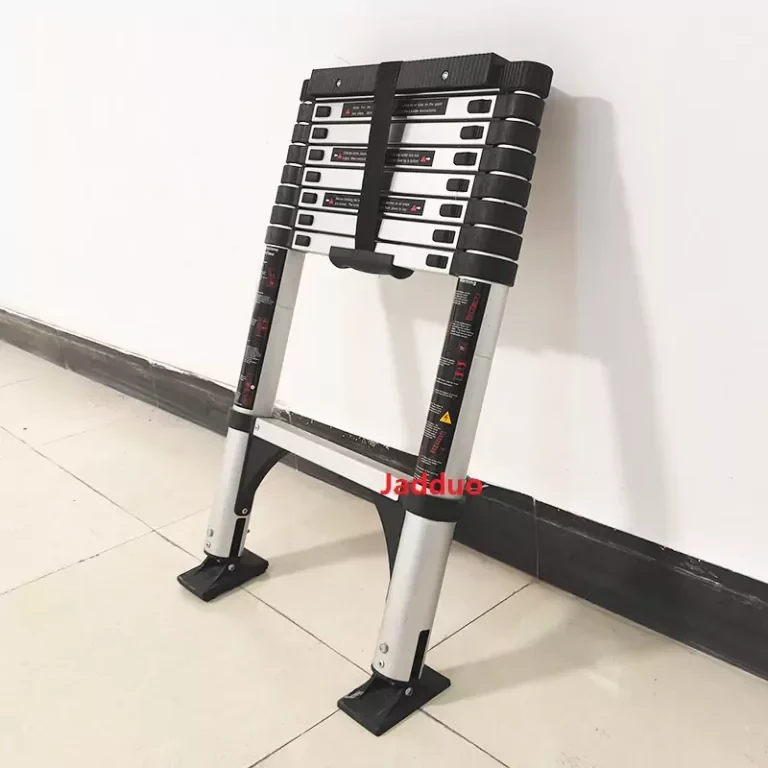
Using Your Ladder Safely on the Roof starts before the ladder reaches the site. You need to match the equipment to the access task, inspect the route and landing area, follow the instructions for the exact product, and control how people use it. A ladder used to reach a roof is not automatically a dedicated roof ladder, and it should not be treated as rooftop work equipment unless its intended use explicitly supports that application.
For overseas contractors, facility managers, and procurement teams, this distinction affects product selection, site planning, training, and purchasing records. Jadduo offers telescopic ladder options with features such as adjustable height, stabilizer bars, hooks, and anti-slip contact components. The correct choice still depends on the roof-access arrangement and the conditions at your work site.
What Should Teams Confirm Before Planning Roof Access?
Roof access involves more than choosing a ladder that appears long enough. Review the complete route, the support points, the work scope, and the controls required before anyone climbs.
Define the Task, Access Route, and Working Environment
First, decide whether the ladder is needed only for ascent and descent or whether workers expect to use it while carrying out another part of the job. These are different requirements. Identify the access height, landing point, roof edge, ground condition, nearby pedestrian or vehicle traffic, weather exposure, and available setup space.
Check whether the ladder can be positioned without blocking a doorway, obstructing an active route, or creating contact with overhead hazards. Consider how it will be moved to the access point and where it will be stored between tasks.
A general-purpose ladder should not be described as a dedicated roof ladder unless the exact product instructions explicitly support that use. Where the proposed roof edge, surface, or access configuration is not covered, request technical confirmation before deployment.
Separate Roof Access From Rooftop Work
Reaching a roof and working on a roof are separate stages. The access ladder may help a worker reach the landing, but it should not automatically become a work platform, material support, or substitute for separately planned rooftop equipment.
Plan the transition at the landing, tool movement, and worker circulation on the roof. Decide how materials will be transferred without compromising balance or contact while climbing. Keep workers within the documented operating method of the ladder and within the controls established for rooftop movement.
Review Instructions Before Selecting or Deploying Equipment
Before ordering, confirm that your team can obtain a clear product description, setup instructions, inspection guidance, and current product images for the exact model. Users should work from the instructions supplied for that product rather than relying on generic advice copied from another ladder.
Unclear instructions create a procurement and deployment risk. Resolve questions about locking, stabilizers, hooks, contact points, adjustment, and intended use before the equipment reaches the site.
Which Ladder Features Matter for the Roof-Access Task?
Feature selection should follow the access plan. A compact ladder may suit a mobile maintenance team, while a different configuration may be more appropriate where the support point or height changes.
Evaluate a Stabilizer-Bar Telescopic Option
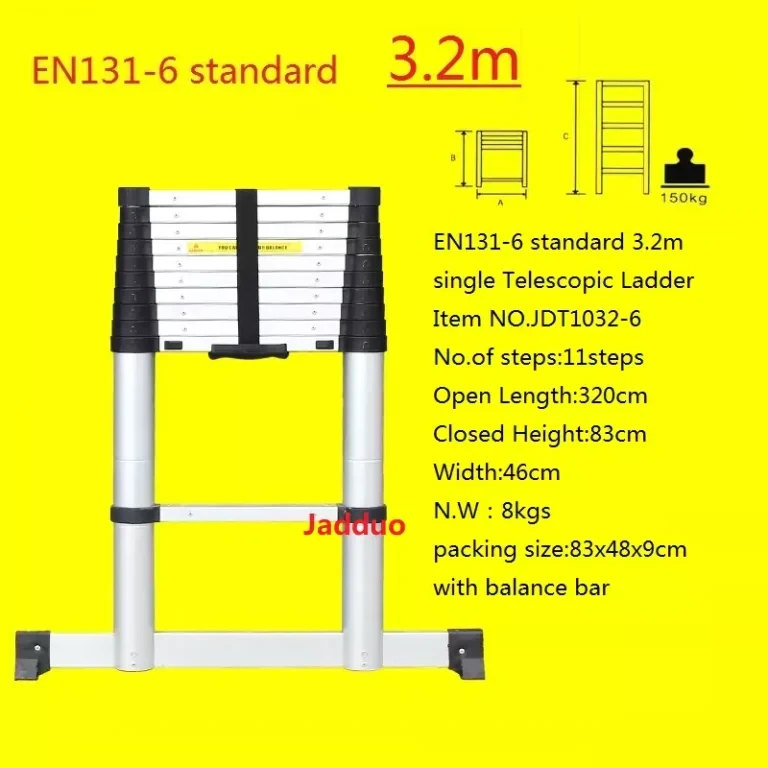
The Single Telescopic Ladder with Stabilizer Bar is a primary option to evaluate when adjustable height, compact storage, and a stabilizer bar fit the documented access plan. Its aluminum alloy structure supports a lightweight, portable format, and the ladder can be partially or fully extended.
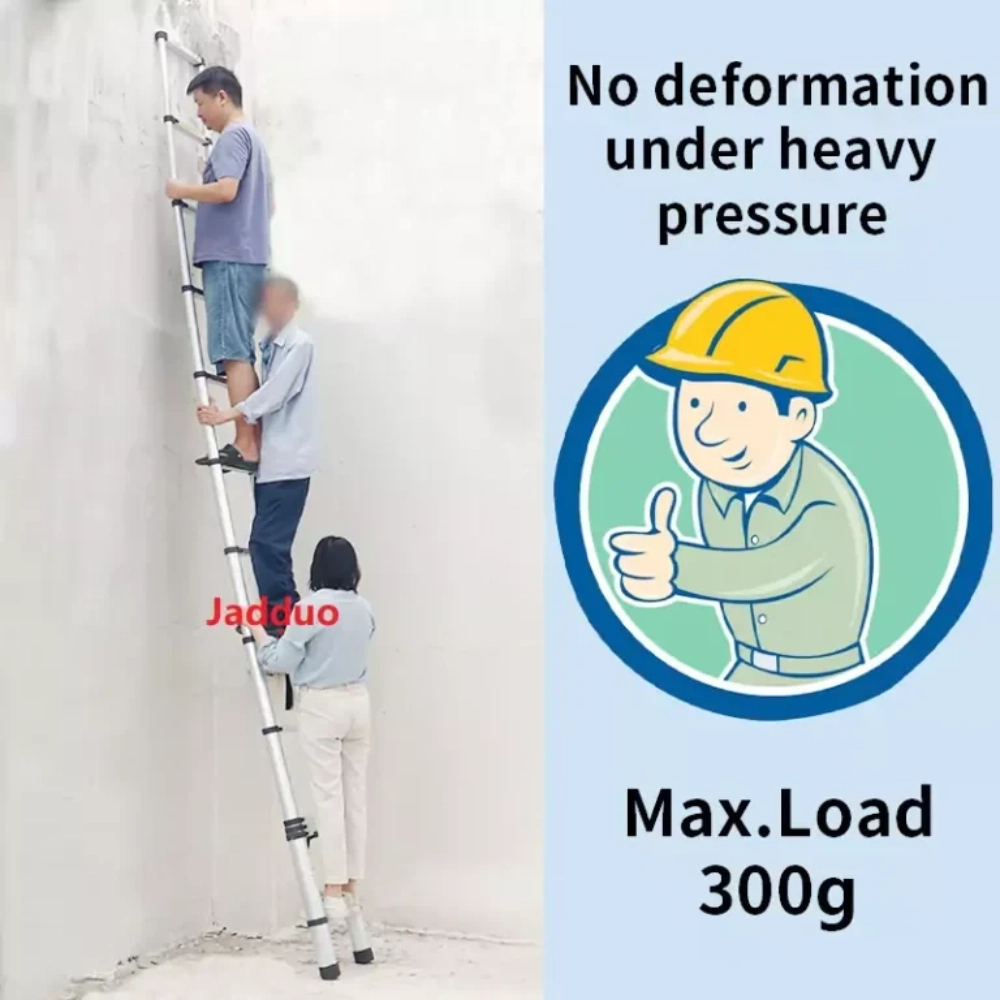
Available sizes include 2.6m, 2.9m, 3.2m, 3.8m, 4.1m, and 4.4m. The documented variants have a maximum load capacity of 150kgs. Select the exact item by checking its specification table, access height, storage requirement, and operating instructions. The stabilizer bar is a stability feature, but it does not establish suitability for every roof surface, edge, or setup arrangement.
Assess Hooks and Contact-Surface Features Carefully
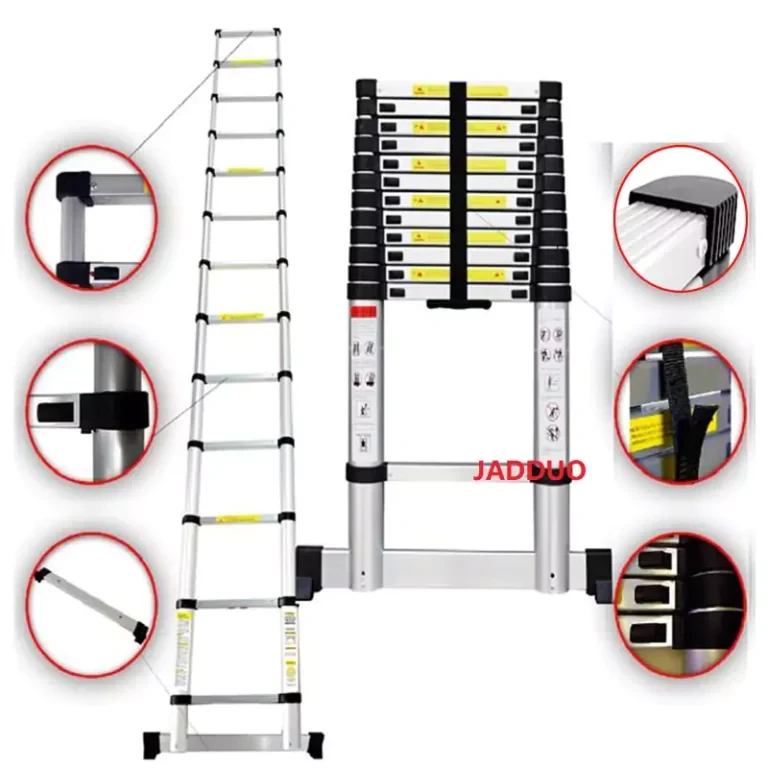
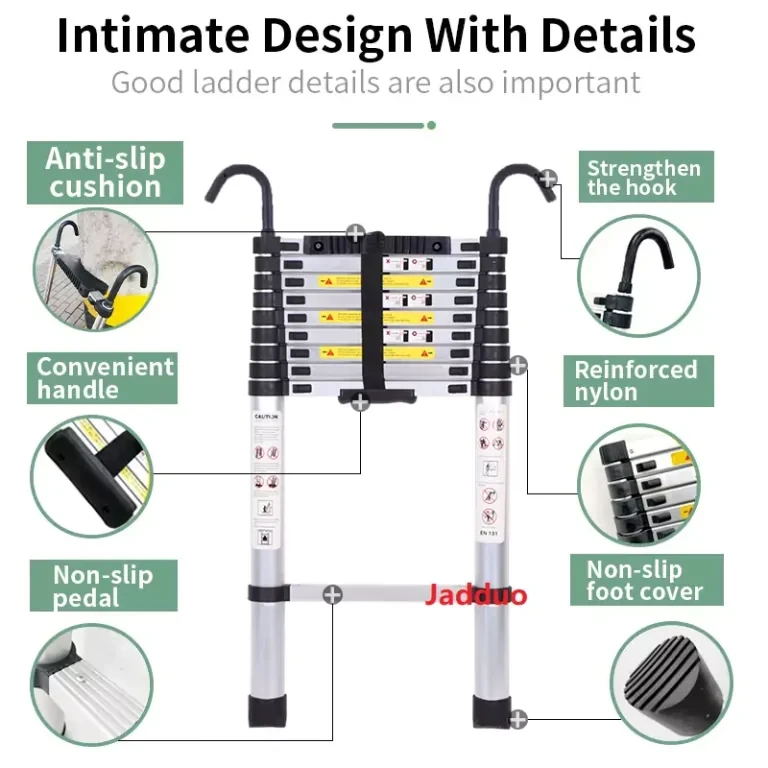
The Extension Tube Aluminum Single Telescopic Ladder with Hook and Anti-slip cushion is a specialized option when its attachment features match a documented support point. It includes safety lock switches, detachable wall and railing hooks, an anti-slip cushion, and compact telescopic storage.
The listed ladder-with-hook variants include 1.4m, 2.0m, and 2.6m options. A maximum load of 150kgs is shown for the documented 1.4m and 2.0m entries. Do not treat these hooks as roof-edge hooks or assume roof compatibility. Confirm that the intended wall, railing, or other support point matches the product’s approved operating method before selection.
Compare Suitability Beyond Nominal Ladder Length
Ladder length alone does not establish safe reach or suitability for a roof edge. Compare the ladder type, documented intended use, access configuration, stability provisions, storage dimensions, transport needs, and available instructions.
For Using Your Ladder Safely on the Roof, procurement teams should also record the exact model and configuration selected. Ask for technical confirmation when the proposed surface, attachment point, accessory, or partially extended arrangement is not covered by the product information. This prevents a familiar-looking feature from being treated as proof of compatibility.
How Should Contractors Control Setup and Use on Site?
Good equipment selection must be followed by practical controls at the work location. Assign responsibility for inspection, setup, access control, and stop-work decisions before the task begins.
Inspect the Ladder and Access Area Before Each Task
Build a pre-use check around visible damage, contamination, missing components, locking operation, feet or other contact points, and the condition of the setup area. For telescopic models, verify that the selected configuration matches the exact operating instructions and that each required lock is fully engaged.
Inspect the ground and the landing area for conditions that could cause movement, obstruction, or loss of balance. If the ladder is damaged, incomplete, incorrectly locked, unstable, or of uncertain compatibility, remove it from service and escalate the issue. Do not rely on an informal visual assumption when a critical component is unclear.
Stabilize the Setup and Protect the Work Zone
Stability should be planned as a complete control. Address firm support, movement prevention, roof-edge interaction, doorways, pedestrian traffic, vehicle exposure, and changing site conditions. A stabilizer bar, hook, or anti-slip cushion may contribute to a suitable setup, but each feature must be used within its documented purpose.
Apply site-specific controls for wind, rain, debris, fragile surfaces, electrical hazards, and restricted access. Mark or isolate the work zone where other people could approach the ladder. Recheck conditions when the task lasts long enough for weather, traffic, or surface conditions to change.
Manage Climbing, Transitions, and Material Handling
Climb and transition only according to the selected ladder’s operating method. Keep tools and materials from interfering with the user’s contact, balance, or ability to move through the landing. Plan lifting, hoisting, or handover arrangements separately when materials cannot be carried safely.
Control who may use the ladder, whether supervision is required, and who can stop the task. Stop work when the ladder moves, a lock cannot be confirmed, the support point changes, or the roof environment becomes unsafe. Using Your Ladder Safely on the Roof requires an active decision process, not a one-time setup check.
How Can Buyers Turn Safety Requirements Into a Procurement Checklist?
A useful checklist connects product evidence with the real work site. Procurement, facility, contractor, and safety stakeholders should review the same information before approval.
Request Product-Level Evidence From Suppliers
Request the exact model name, intended-use statement, specification table, setup instructions, inspection criteria, replacement-part information, and current product images. Verify dimensions, load limits, materials, locking features, hooks, stabilizers, and contact components against the selected model.
Record unresolved questions about roof edges, surfaces, accessories, and access configurations. Do not infer compatibility from a product name or from a feature designed for a different support point. Retain the approved instructions where users can access them during deployment and training.
Connect Purchasing Decisions to Site Controls
Document who approves the equipment, who performs pre-use checks, how damaged equipment is isolated, and where the instructions are retained. Include the access height, roof arrangement, work scope, storage needs, and transport conditions in the purchasing review.
Reassess the selection when the access point, surface condition, work scope, or operating environment changes. Jadduo’s service resources can support product-related questions, but final suitability must be confirmed against the exact model instructions and your site procedures.
When you are Using Your Ladder Safely on the Roof, the strongest procurement decision is the one that links the selected ladder to a defined task, a controlled setup, and a documented user process.
For current product information or help comparing these telescopic options with a documented access requirement, use Contact Us. Confirm the exact model, configuration, and site conditions before approval.
FAQ
Can a Telescopic Ladder Be Used to Access Every Type of Roof?
No. A telescopic ladder may be suitable for a particular access task only when its documented intended use, configuration, support points, and operating method match the site conditions. Roof edge design, surface type, landing arrangement, weather, and work scope can change the decision. Do not assume that a stabilizer bar, hook, or anti-slip cushion makes a ladder suitable for every roof.
What Product Documents Should a B2B Buyer Request Before Ordering?
Request the exact model name, intended-use statement, specification table, setup instructions, inspection criteria, replacement-part information, and current product images. Also request clarification for any roof edge, surface, accessory, or attachment arrangement not covered by the available product information. Keep the approved material with the site equipment and procurement record.
When Should a Ladder Be Removed From Service?
Remove it from service when you find visible damage, contamination that affects contact, missing components, faulty or uncertain locking, damaged feet or contact points, unstable placement, or unclear compatibility with the planned setup. Isolate the ladder, report the issue, and return it to use only after the responsible process confirms that it is suitable.