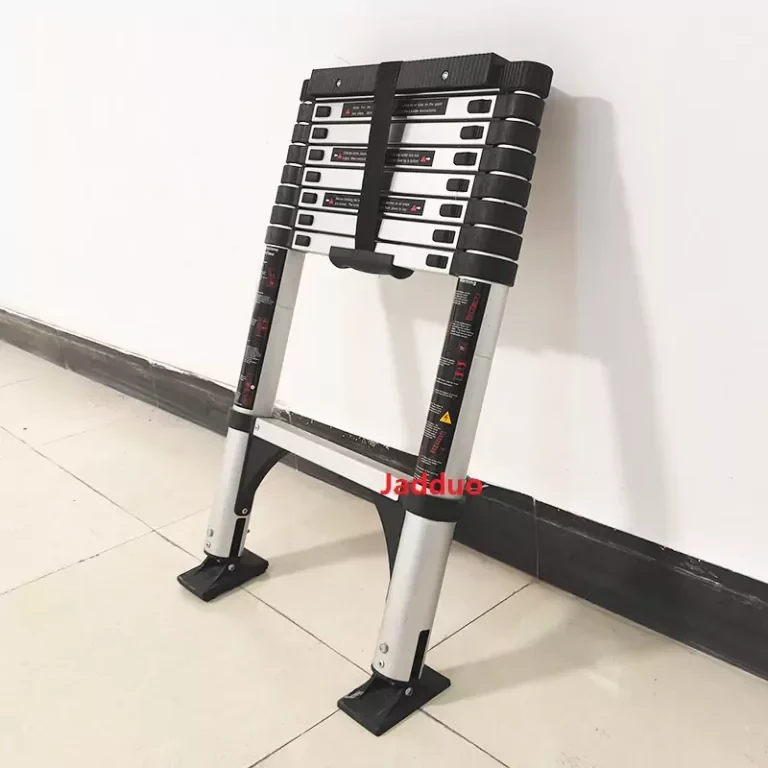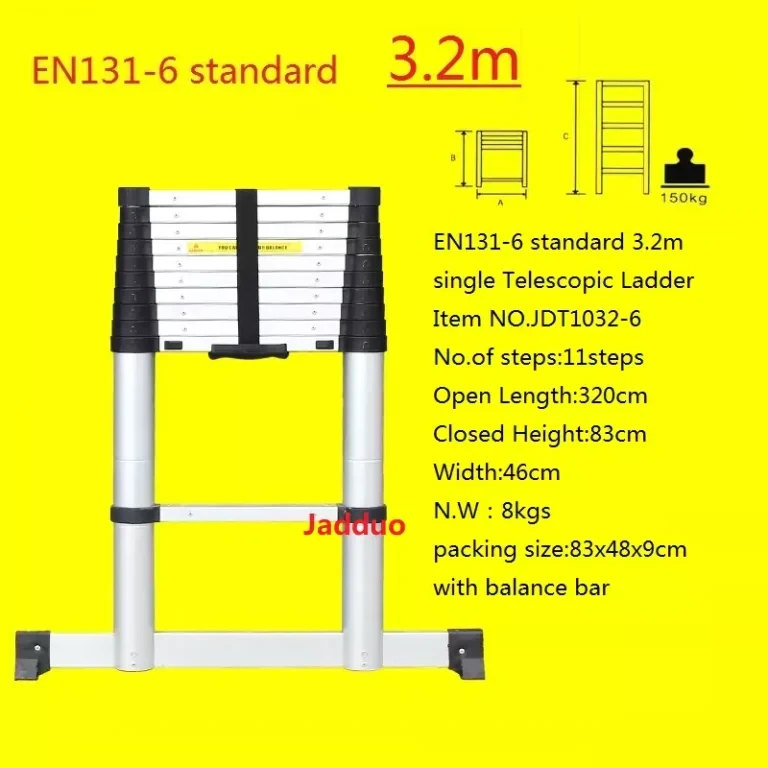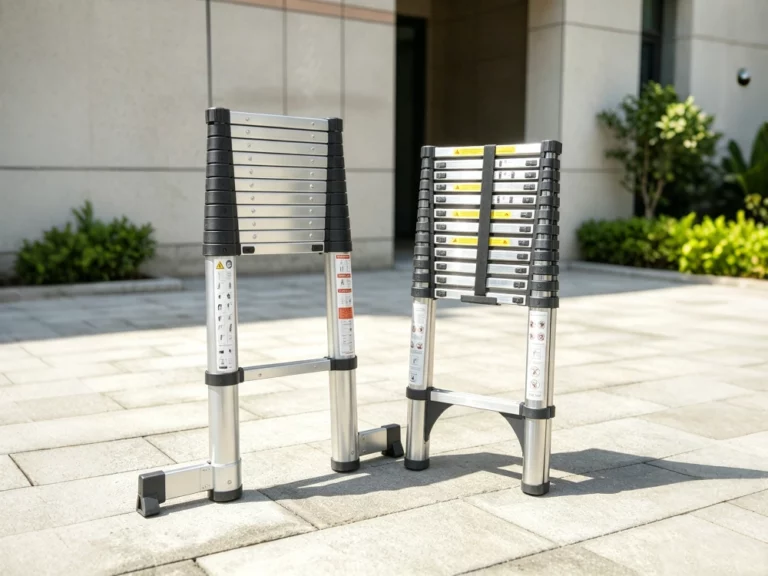
To Position a Ladder correctly, start with the task, not the first ladder available. Check the required reach, floor condition, working direction, load, and time at height. This is the basis of how to position a ladder safely. A stable setup reduces overreaching, foot movement, and rushed climbing.
Jadduo develops household, multipurpose, telescopic, extension, platform, and fiberglass ladders for home users, distributors, maintenance teams, and project buyers. Its range lets buyers compare compact step ladders with adjustable structures instead of forcing one ladder type into every job.

Why Does Correct Ladder Positioning Matter Before You Climb?
A sound ladder can still become unsafe after poor setup. Before you position a ladder, inspect the floor, support point, required reach, and nearby movement. Good ladder safety for home use follows the same basic logic as professional work: the ladder must remain stable during climbing, work, and descent.
A Stable Surface and a Clear Work Zone
Use firm, level, dry ground. Remove cables, tools, oil, water, and debris from the feet and surrounding area. Keep the setup away from doors, busy walkways, equipment, and children. Never level a ladder with loose bricks, boards, or packaging, since they can shift after weight is applied.
Height, Reach, and Total Load Decisions
Choose enough height to work without standing near the top or stretching outside the side rails. Include the user, tools, and materials in the total load. Jadduo’s supplied instructions use a 150 kg maximum-load example and state that the ladder is intended for one person, with tools included. Check the rating of the selected model before use.
Feet, Hinges, Locks, and Opening Position
Check anti-slip feet for wear and make sure both sides contact the floor. Fully open a freestanding frame. On a folding or multipurpose ladder, inspect every hinge and lock after changing the configuration. Do not climb while a joint is partly engaged, and never move the ladder while someone is on it.
How Should You Position Different Ladder Types?
The way you position a ladder depends on whether it stands independently, leans against a surface, or changes configuration. One setup method does not suit every structure.
Freestanding Step Ladders for Indoor Household Tasks
Place all feet on the same surface and face the steps toward the work. Keep the ladder close enough for a centered posture but clear of doors, cabinets, and moving equipment. This setup suits lighting, ceiling cleaning, cabinet access, wall care, and routine indoor maintenance.
Leaning Ladders at the 1-to-4 Ratio
For a leaning ladder, the supplied instructions use a 1-to-4 ratio. The base moves about one unit away from the support for every four units of vertical height. This correct ladder angle avoids a setup that is too upright or too shallow.
The 1-to-4 rule can also be checked through basic geometry. If the vertical support height is (H) and the base distance from the wall is (D), then (\tan \theta = H/D). Setting (D = H/4) gives an angle of about 76 degrees. In a simplified model of a uniform ladder resting against a solid wall, the horizontal friction required at the feet is approximately (F = (W/2)\cot \theta), where (W) is the combined downward load. A shallower angle increases horizontal thrust at the base and raises the chance of outward slipping. This formula is a positioning reference, not a substitute for the ladder’s stated load rating.
Before setup, measure the usable support height and mark the required base distance. Check that the floor is dry and level, the upper contact point is rigid, and the ladder does not rest against glass, loose cladding, gutters, or other surfaces that may move. Doors, vehicle routes, overhead cables, and pedestrian traffic should also be included in the site check.
Multipurpose Configurations with Balance Bars
After changing a multipurpose ladder, recheck the ground, hinges, locks, and working direction. Balance bars widen the contact area and reduce side-to-side movement, but cannot compensate for soft ground or incomplete locking. Repeat the check whenever the ladder moves.
Which Ladder Fits Your Home or Professional Work?
To position a ladder for a real task, match the structure to the height, floor area, storage limit, and movement frequency.
| Product Format | Suitable Work | Main Selection Point |
| Compact flower stand ladder | Cabinets, lighting, cleaning | Step count and folded size |
| Household ladder with handrails | Higher indoor reach | Handhold and storage length |
| Two-in-one ladder with balance bars | Changing maintenance positions | Joint locking and base stability |
Golden Flower Stand Ladder for Compact Household Tasks
The Aluminum alloy flower stand ladder Golden color is offered in two-, three-, and four-step versions. Listed use heights are 45.5, 67, and 86 cm, while net weights range from 2.2 to 4.0 kg. Its folding aluminum frame, widened non-slip steps, rounded edges, and reinforced connections suit indoor movement and compact storage. Select the step count from the working height, not appearance alone.
Walnut Wood Aluminum Ladder for Handrail Support and Higher Reach
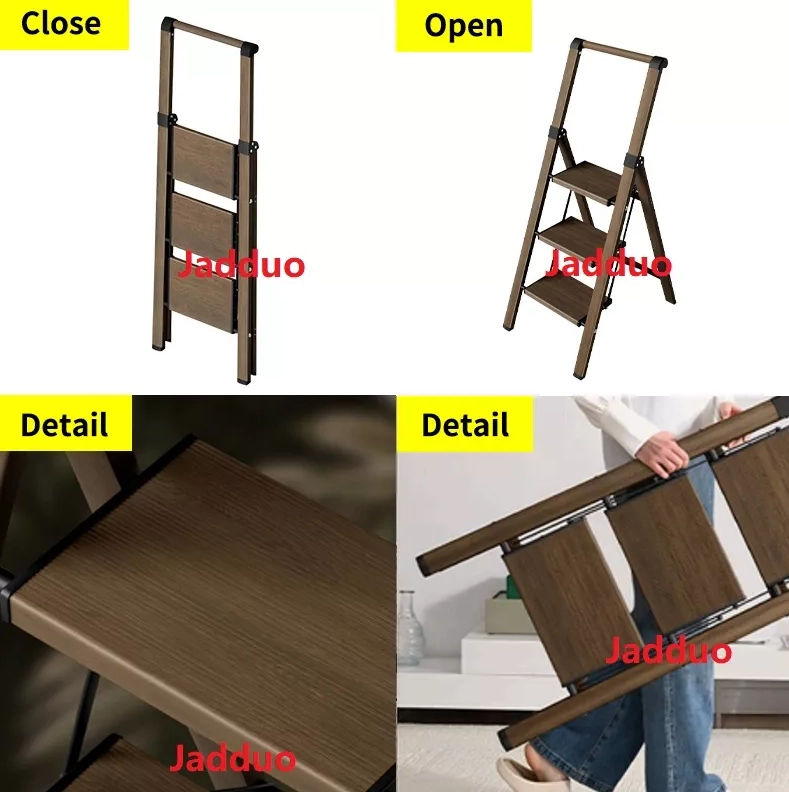
The Walnut wood aluminium alloy flower stand ladder household ladder with handrails provides two- through six-step options, with listed net weights from 2.8 to 6.6 kg. The aluminum substrate uses a wood-grain finish, and the frame folds for storage. Its handrails provide an upper handhold during entry and descent, but users must remain centered and avoid reaching outside the frame.
Wide Joints 2 In 1 Ladder for Changing Work Areas
The Wide Joints 2 In 1 Ladder With 2 Balance Bars suits work where one ladder must serve changing positions. Two balance bars increase the base footprint. The format may suit maintenance teams, decorators, and property workers. Each change still requires a fresh lock and surface check; flexibility does not remove setup responsibility.
How Can You Climb Safely After Positioning the Ladder?
Even after you position a ladder correctly, poor movement can pull the load outside the base. Climbing should remain slow, centered, and controlled.
Three Points of Contact and Controlled Movement
Maintain three points of contact on a ladder: two hands and one foot, or two feet and one hand. Face the steps while climbing and descending. Move one limb at a time and do not jump from the bottom step. Plan how tools will reach the work area before climbing.
A Centered Body and Hands Free for Climbing
Keep your body center between the side rails. Climb down and reposition the ladder when work moves beyond comfortable reach. Use a tool belt or separate lifting method instead of carrying bulky items in both hands. A handrail supports movement; it does not make sideways leaning safe.
Conditions That Require You to Stop Work
Stop if the ladder shifts, a lock loosens, the floor becomes wet, or wind affects control. Do not stand on the top two rungs where instructions prohibit it. Never use a ladder as a bridge or support for heavy objects. A nearly finished task does not justify an unstable setup.
What Should Buyers Check Before Ordering or Reusing a Ladder?
Compare the specification with the task, then inspect the structure before work. A short ladder inspection checklist prevents many setup problems.
Step Count, Working Height, Weight, and Storage Size
Compare usable working height, not only overall ladder height. Check whether the folded product fits a cabinet, storeroom, service vehicle, or retail carton. Weight matters when staff move it several times each day. For distributors, a mixed step-count range serves more household tasks than one fixed size.
Materials, Feet, Joints, Locks, and Maintenance Cost
Aluminum reduces rust-related care, but joints, fasteners, feet, and steps still require inspection. Remove dirt from hinges and locks so moving parts close completely. Replace worn feet and retire ladders with bent rails, cracked joints, loose steps, or uncertain structural repairs. Inspection should follow the load path from the feet through the frame to the standing step.
Jadduo Service and Contact Support for Product Matching
For a safe ladder setup for professional use, provide the task height, floor condition, combined load, storage limit, preferred format, order quantity, and destination requirements. Jadduo can then discuss step count, structure, finish, packaging, and service needs without relying on a generic recommendation.
Project and Purchasing Support
If your team is comparing household step ladders with multipurpose models, prepare the working height, user-and-tool load, storage dimensions, operating surface, and order volume. Use the Jadduo contact page to request product sheets, packing information, model matching, or purchasing details for your market.
FAQ
Q: How do I Position a Ladder safely on a floor that is not level?
A: Do not use loose blocks or packaging to raise one foot. Move to a level surface or use a ladder and approved leveling method designed for that condition. Confirm full foot contact before climbing.
Q: What is the correct ladder angle for a leaning ladder?
A: Use the 1-to-4 ratio stated in the instructions: place the base about one unit away from the support for every four units of vertical height. Recheck the position after loading the first rung.
Q: Should I choose a household step ladder or a two-in-one ladder?
A: Choose a household step ladder for routine indoor tasks with stable floor space. Choose a two-in-one format when work requires different positions, but inspect every joint, lock, and balance bar after each change.