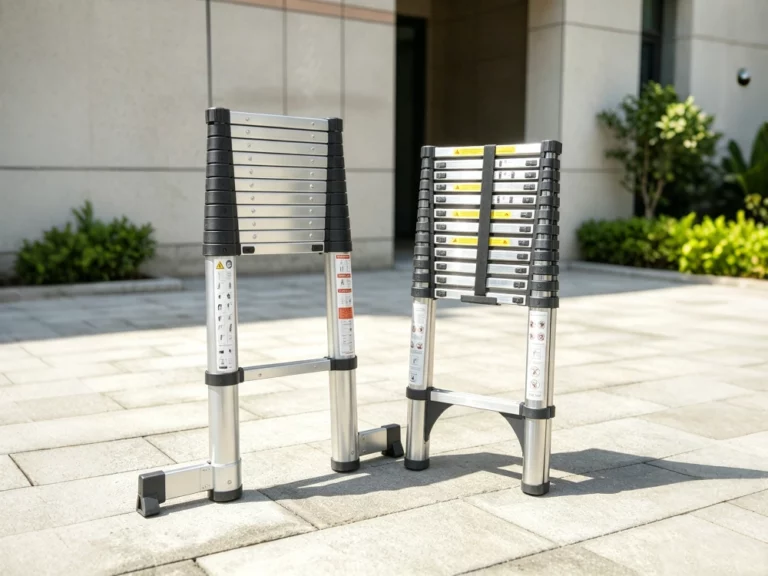
Choosing between Aluminum vs Stainless Steel Telescopic Ladders depends on carrying frequency, storage, moisture, impact, and the work itself. Aluminum usually suits frequent movement and general maintenance. Stainless steel often suits damp or abrasive conditions. Buyers should still compare finished weight, tube structure, locks, feet, closing system, packed size, and rated load.
Jadduo manufactures telescopic, step, platform, and fiberglass ladders for household, professional, wholesale, and OEM/ODM needs. Its production flow covers pipe cutting, drilling, stamping, sleeving, assembly, labeling, and packing. Tube fit, hole position, rivet alignment, and lock engagement affect how telescopic sections move, so this comparison focuses on finished products rather than metal names alone.
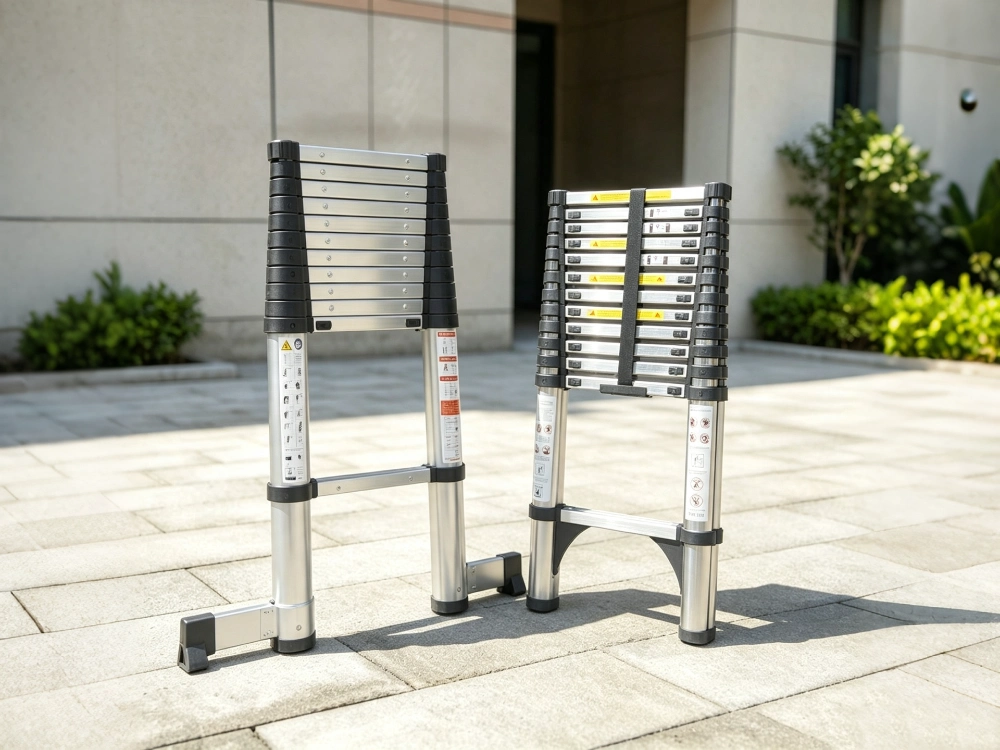
What Are the Main Differences Between Aluminum and Stainless Steel Telescopic Ladders?
Start with the work environment. Buyers comparing aluminum vs stainless steel telescopic ladders should check handling, moisture, repeated impact, storage, and the exact ladder structure.
| Decision Point | Aluminum Alloy | Stainless Steel |
| Carrying | Usually easier for repeated movement | Better where handling weight matters less |
| Moisture | Suitable for normal use with cleaning | Better for frequent damp exposure |
| Impact | Tubes still require dent inspection | Often selected for bumps and surface wear |
| Main Check | Weight, locks, balance bar, packed size | Steel grade, tube condition, anti-pinch design |
Aluminum Alloy Prioritizes Portability and General-Purpose Use
Aluminum alloy is a suitable material for a ladder, which is moved from room to room, through warehouse aisles, in vehicles or to other job sites. Aluminum has a natural oxide layer and is therefore suitable for indoor as well as outdoor applications. Cleaning of dirt and moisture is, however, necessary. A dent does not show any visible corrosion, but can affect the telescopic movement. House maintenance, window cleaning, access to RVs, warehouse applications and seasonal applications are typical areas of application.
Stainless Steel Prioritizes Wear and Corrosion Resistance
Stainless steel is often selected for balconies, damp storage, kitchens, outdoor maintenance, and sites with frequent contact. A telescopic ladder for humid environments still needs checks for steel grade, tube condition, joints, and locks because salt or dust can collect between sections. See this detailed aluminum alloy and stainless steel telescopic ladder comparison for more background.
Material Choice Depends on the Complete Ladder Structure
Material density alone does not show performance. Tube thickness, height, step count, section overlap, locks, stabilizers, and packed dimensions all matter. Jadduo’s supplied product information commonly uses a 150kg rated load, including the user and tools. A 150kg telescopic ladder still requires engaged locks, intact feet, stable ground, and correct operation.
Which Material Performs Better for Weight, Durability and Safety?
The key question is whether the ladder can be carried, positioned, climbed, closed, and stored without avoidable strain. This is where aluminum vs stainless steel telescopic ladders need actual SKU data.
Finished Weight Matters More Than Material Density Alone
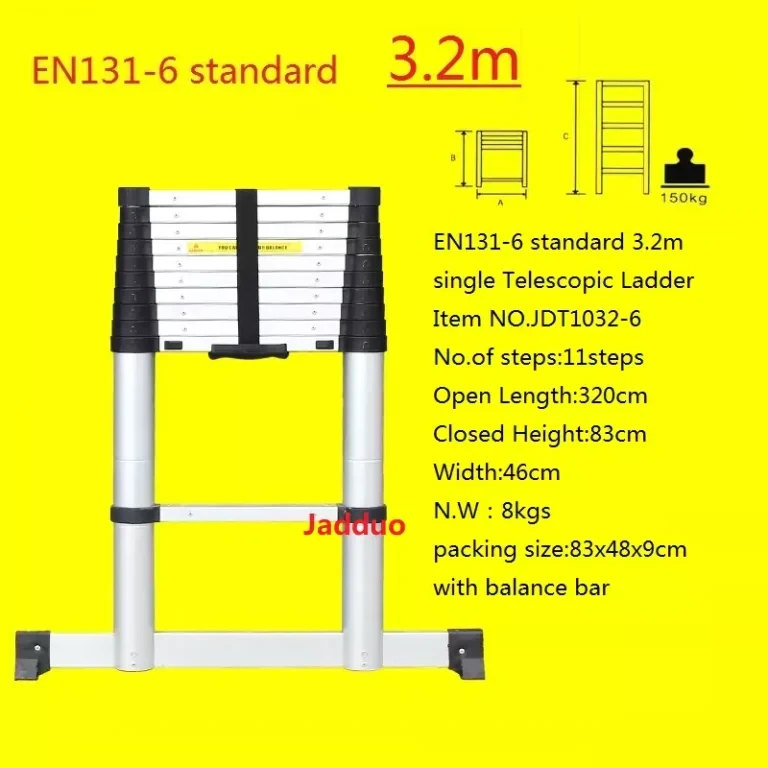
Jadduo lists a 3.2m aluminum balance-bar ladder at 8.4kg and a 3.2m stainless steel finger-safety ladder at 8.6kg. Both are 11 step ladders designed to hold up to 150kg and have now been added to the site. The 3.8m aluminum ladder weighs 10.7kg whilst the 3.8m stainless steel finger-safety ladder weighs 10.5kg. The material is less important than the structure.
Durability Depends on Moisture, Impact and Usage Frequency
For the buyer comparing aluminum ladder rails to stainless steel ladder rails, durability is determined by the location where the ladder will be used as well as how the ladder is handled. Aluminum is used to reduce the carrying effort of the ladder, while stainless steel is used where there is moisture, abrasion, or repeated bumps to the ladder rail. Neither aluminum nor stainless steel ladder rails should be used with bent tubes, worn ladder feet, damaged locks, or with debris inside of sliding sections of the ladder rail. Inspection is more important than the broad service-life claims of manufacturers.
Safety Comes from Locks, Feet and Controlled Retraction
Each section must lock fully, and the feet must rest on a flat surface. A balance bar widens base contact. Slow closing controls retraction, while an anti-pinch structure reduces finger gaps. Rated load includes the user, clothing, tools, and carried items. No material offsets a partial lock or unstable ground.
Which Jadduo Telescopic Ladder Fits Your Work Scenario?
Aluminum vs stainless steel telescopic ladders should not be presented as the same tool with different finishes. These three products address different handling, safety, and height needs.
Portable Aluminum Choice for Frequent Relocation
The Aluminum One-Button Soft Close Telescopic Ladder with Balance Bar suits mobile maintenance, warehouse work, home repair, window cleaning, RV access, and light construction. The 3.2m version is listed at 8.4kg with 11 steps; the 3.8m version is 10.7kg with 13 steps. Both are rated at 150kg. Its one-button retraction, soft close, and movable base support make it a practical aluminum telescopic ladder with balance bar for repeated carrying.
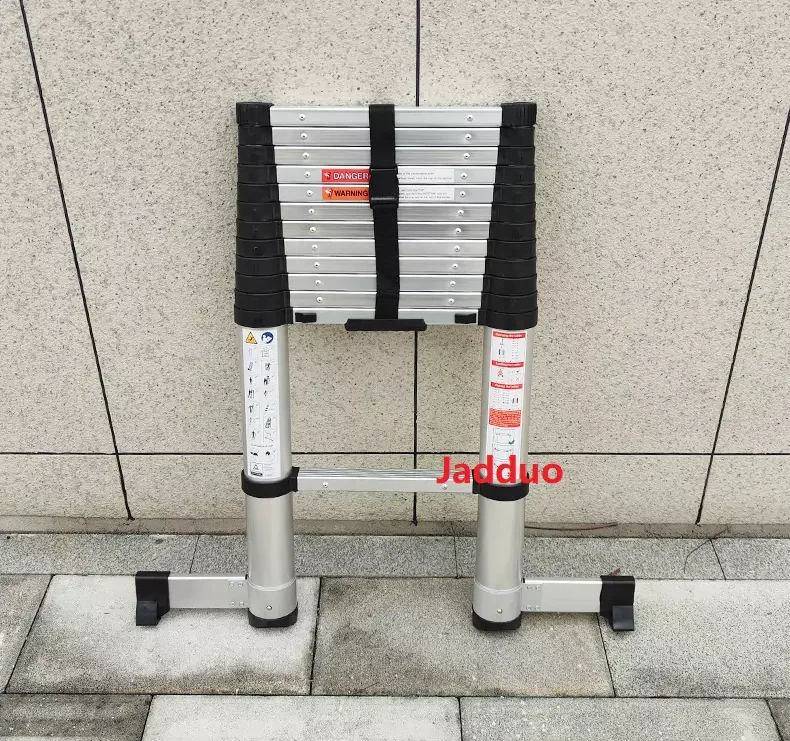
Anti-Pinch Stainless Steel Choice for Frequent Daily Use
The Stainless Steel telescopic ladder with Finger Safety Gap addresses fingers entering exposed spaces as sections retract. Its closed buffer structure and revised buckle arrangement reduce that opening. The listed 3.2m model weighs 8.6kg with 11 steps; the 3.8m model weighs 10.5kg with 13 steps. Both carry a 150kg rating. This stainless steel telescopic ladder with finger safety gap fits homes, facilities, shops, and outdoor maintenance.
Multi-Height Stainless Steel Choice for Broader Reach
The One Time Folding Slow Closed Steel Ladder 2.6/3.2/3.8m Ladder Step Space 30cm offers 2.6m, 3.2m, and 3.8m versions with 9, 11, and 13 steps. Listed gross weights are 8.5kg, 10.7kg, and 13kg. Each version has a 150kg rating and 30cm step spacing. The shorter model suits indoor access; taller sizes fit windows, shops, gardens, and minor roof-edge work.
How Should Buyers Compare Purchase Price and Long-Term Cost?
The lowest unit price may not produce the lowest operating cost. Buyers comparing aluminum vs stainless steel telescopic ladders should also consider handling, packaging, storage, maintenance, and parts.
Material Cost Changes the Initial Quotation
Raw-material prices affect quotations, but finished cost also reflects metal use, tube design, locks, stabilizers, closing parts, packaging, and order quantity. Two ladders of the same height may follow different pricing logic. Request a current specification sheet and quotation for the exact SKU instead of using a fixed material-price assumption.
Freight and Storage Depend on the Exact SKU
Closed length, carton size, and gross weight affect landed cost and storage. The 3.2m and 3.8m products differ in packing dimensions and container quantity. For telescopic ladder wholesale orders, compare packed size, carton protection, loading plan, and the height mix required by the market.
Maintenance and Replacement Affect Lifetime Value
Aluminum can reduce lifting effort for mobile workers. Stainless steel may suit damp or abrasive areas. Both need clean tubes, functioning locks, intact feet, and dry storage where practical. Replacing a worn foot or lock early may prevent further damage. Maintenance should reflect usage, transport, and spare-part availability.
What Should You Check Before Placing a Telescopic Ladder Order?
A final check should connect material choice with production control and service. Order for the task, packing plan, and customer rather than from an image.
Product Specifications and Quality Checks
Confirm material grade, height, closed size, gross weight, steps, spacing, maximum load, and safety structures. Check lock indication, retraction, feet, balance bars, finger gaps, tube dents, and rivets. Jadduo’s flow includes cutting, drilling, stamping, sleeving, assembly, and packaging. Each stage can affect alignment, movement, and packing protection. The factory equipment list also includes pipe-cutting, punching, riveting, and tube-expanding machines, which correspond to the main structural processes used in ladder production.
Wholesale, OEM and Delivery Requirements
Buyers should confirm MOQ, model mix, labels, cartons, manuals, inspection records, parts, and lead time. Jadduo’s supplied information states OEM/ODM support and a typical 15–30-day production lead time, subject to order details. A mixed range can combine a portable aluminum model with a stainless steel safety model.
Final Material Selection and Jadduo Service
Choose aluminum when frequent carrying and vehicle storage come first. Choose stainless steel where damp conditions, repeated contact, or surface wear are more likely. Then compare height, finished weight, retraction, feet, locks, packaging, and delivered cost. Aluminum vs Stainless Steel Telescopic Ladders should be selected from the work backward, not from the material name forward.
For projects involving several heights, private labels, cartons, specification sheets, or mixed-material purchasing, use Jadduo’s contact page to share the market, application, required reach, quantity, and packing needs. This gives the service team enough information to compare models and prepare product and shipment details.
FAQ
Q: Which is better for home use, aluminum or stainless steel?
A: Aluminum is often easier to move and store. Stainless steel may suit balconies, damp storage areas, or frequent use. Compare actual weight, closed size, locks, feet, and required height before choosing.
Q: Can aluminum and stainless steel telescopic ladders both support 150kg?
A: The three Jadduo models discussed here list a 150kg maximum load, including the user and tools. Verify the exact SKU and never climb before every section is locked and the feet are stable.
Q: How should importers compare Aluminum vs Stainless Steel Telescopic Ladders?
A: Compare material grade, finished weight, steps, locks, retraction control, anti-slip parts, packed size, shipment quantity, spare parts, and target use. Aluminum may suit mobile users, while stainless steel may fit wet or high-wear environments.