Reach, storage, transport, and work frequency should guide the choice. In a Telescoping Ladder vs Extension Ladder comparison, a telescoping model suits mobile maintenance and restricted storage, while an extension ladder is more practical for roofs, gutters, and tall walls. Buyers should also compare closed size, weight, locking structure, and the combined weight of the user and tools.
Jadduo develops telescopic, extension, step, platform, and insulated ladders for household, commercial, and export use.
What Separates a Telescoping Ladder from an Extension Ladder?
Both designs change height, but their structures affect carrying, storage, inspection, and setup.
Compact Nested Sections and One-Key Retraction
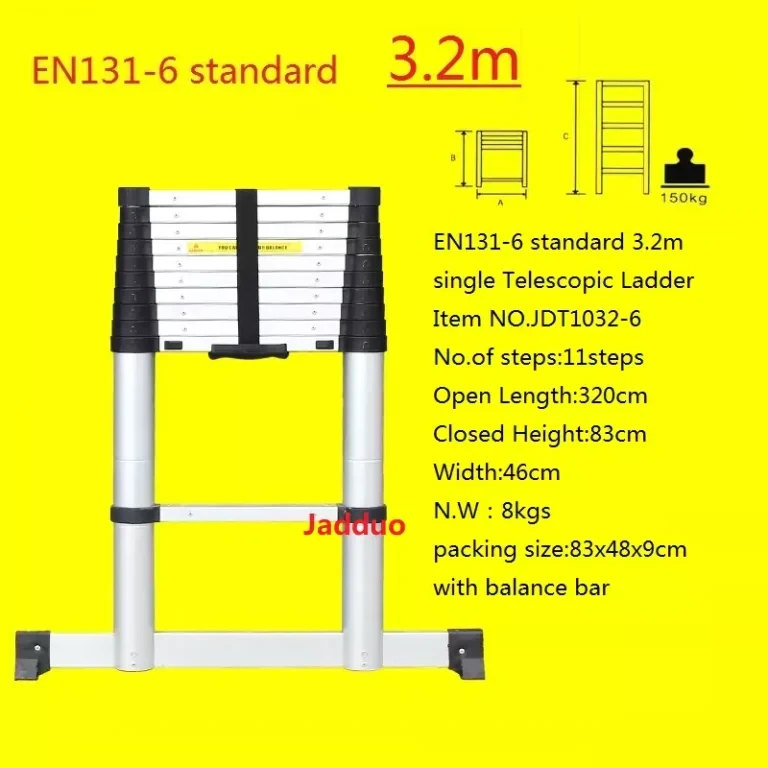
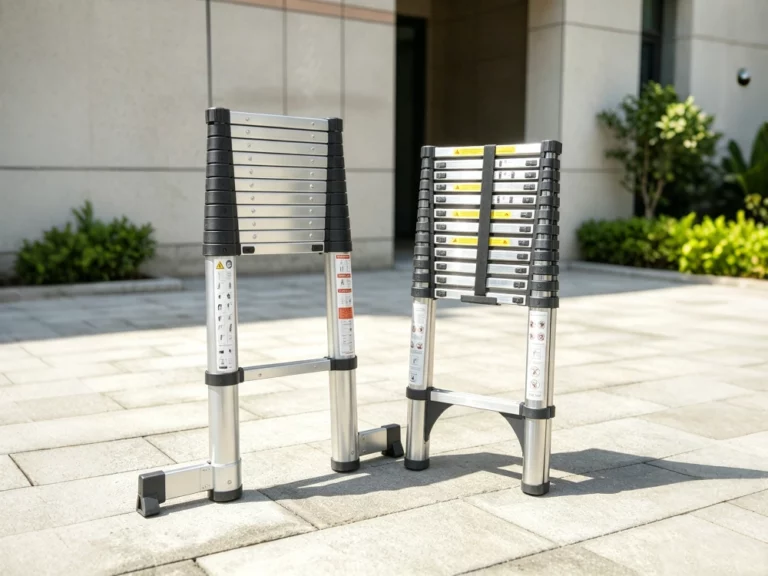
A telescoping ladder uses nested aluminum tube sections that slide inside one another. Each section must lock before climbing. The short closed form suits service vehicles, compact storerooms, and frequent movement.
The One-key telescopic ladder with round foot reliable telegraph pole covers 2.0 to 3.8 m models. Closed lengths run from 68 to 87 cm, listed gross weights range from 4.8 to 10.7 kg, and the maximum load is 150 kg. Its central control retracts the sections, while the round foot is shaped for walls, poles, and tree trunks.
Sliding Sections, Pulley Adjustment, and Greater Reach
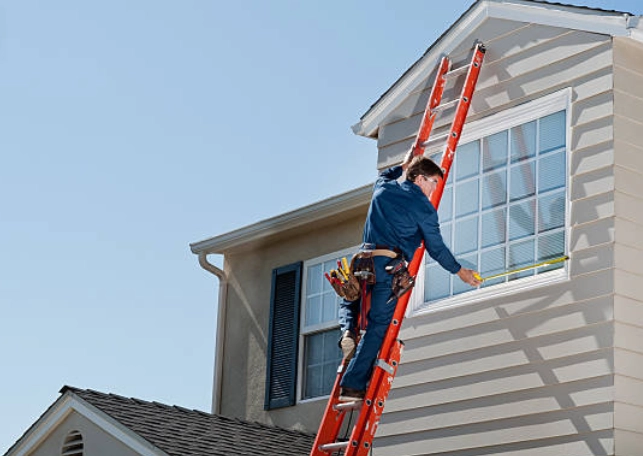
An extension ladder keeps two long sections overlapped. A rope-and-pulley system moves the upper section. It needs more storage space but provides greater exterior reach.
The 2 Section Ladder With Pulley and Rope has listed straight lengths from 253 to 780 cm and closed lengths from 164 to 434 cm. It suits roof-edge access, gutters, tall walls, warehouses, and exterior maintenance. Check the rope, pulley, section connectors, rungs, and feet before use.
A Practical Comparison of Reach, Storage, and Workload
The phrase telescoping ladder vs extension ladder should not mean “light ladder versus strong ladder.” Both ranges list a 150 kg maximum load. The main differences are reach, closed length, transport, and setup.
| Buying Factor | Telescoping Ladder | Extension Ladder |
| Closed size | Short and compact | Long when retracted |
| Transport | Car or service vehicle | Van, roof rack, or warehouse |
| Typical work | Mobile and mixed-height tasks | Roofs, gutters, exterior walls |
| Main checks | Locks and tube alignment | Rope, pulley, connectors, feet |
For more background, read this guide to choosing between telescoping and extension ladders.
Which Ladder Performs Better for Height, Storage, and Heavy-Duty Work?
A compact ladder performs better during transport, while a longer extension ladder may suit repeated access to high exterior points. This is the practical center of the telescoping ladder vs extension ladder decision.
Working Height and Reach Priorities
Start with the access point rather than the longest model. Roof edges, gutters, and tall walls often require an extension ladder. Work across several locations may suit a telescoping model because it closes into a shorter unit.
This also clarifies lightweight telescopic ladder vs heavy duty ladder performance. Heavy-duty use involves height, setup frequency, tool load, ground condition, supporting surface, and time on the ladder.
Closed Size, Carrying Weight, and Storage Efficiency
For folding extension ladder vs telescopic ladder storage, measure the closed ladder before ordering. A 68 cm telescoping model may fit in a service vehicle or closet. A two-section ladder starting at 164 cm closed length needs another storage plan.
The same applies to telescopic ladder vs folding extension ladder portability. Importers should compare packing length, gross weight, storage, and delivery handling.
Load Capacity, Stability, and Repeated Use
A 150 kg rating includes the user, tools, and carried materials.
For a leaning ladder, all locks or connectors must be engaged, the base must be stable, and the ladder should follow the 1-to-4 ratio. Dirt can interfere with telescoping locks, while worn rope, damaged connectors, or poor foot contact can affect an extension ladder.
Which Ladder Fits Your Actual Work Environment?
Roof maintenance, tree pruning, warehouse access, and vehicle travel place different demands on a ladder.
Home, Warehouse, and Mobile Maintenance
A compact telescoping ladder suits lighting checks, overhead storage, property inspection, and tree maintenance. Its short closed size helps teams move between locations, while the round foot suits walls, poles, or tree trunks.
Aluminum is not an insulating material. Work near electrical systems requires a ladder designed and rated for that environment. Fiberglass ladders are the relevant category for electrical and telecom work.
Roof, Gutter, and Exterior Access
An extension ladder for roof and gutter work needs enough reach, a stable wall, clear ground space, and room to control the rope. Its size range suits property maintenance, warehouses, and construction.
Length alone does not make a ladder safer. Check the lean, feet, upper contact, section overlap, wind, doors, vehicles, and people moving through the area.
RV, Caravan, and Rooftop Tent Access
A telescopic ladder for RV and caravan use should be selected by attachment method, not only folded size. The 2X4 Extension Telescopic Tent Ladder has a 2.05 m straight length, 115 cm closed size, listed gross weight of 5 kg, two top hooks, U-shaped treads, spring-loaded locking pins, and soft rubber contact parts.
The hooks connect the ladder to a rooftop tent or vehicle access point, while the rubber parts reduce hard contact with the vehicle body.

What Should Buyers Check Before Selecting a Model?
Before ordering, convert the application into a specification sheet. This keeps the telescoping ladder vs extension ladder discussion focused on actual use.
Dimensions, Load Rating, and Transport Planning
Record required access height, straight length, closed length, width, unit weight, step count, packing size, and maximum load. Bulk buyers should check loading plans against the exact model.
The one-key model focuses on compact transport, the two-section model on exterior reach, and the tent ladder on vehicle-based access.
Locks, Feet, Setup Angle, and Maintenance
For a telescoping ladder, inspect rung locks, tube alignment, retraction control, and feet. For an extension ladder, inspect the rope, pulley, guides, connectors, rungs, and foot covers. For a tent ladder, inspect hooks, rivets, spring pins, rubber parts, and the tent connection.
Assess maintenance through cleaning, inspection points, storage conditions, and replaceable parts. Fixed savings claims are unreliable because use frequency varies.
Certification, OEM, and Bulk Procurement
Importers should request documents for the selected model and market. These may include EN131, ANSI, GS, CE, or RoHS. Check model numbers rather than assuming one document covers the full range.
OEM discussions should cover color, logo, labels, manuals, packaging, spare parts, and batch inspection. Production control should follow pipe cutting, drilling or punching, tube expanding, riveting, assembly, labeling, strapping, and packaging. Misalignment or weak riveting can affect section movement and lock operation.
How Can Buyers Turn the Comparison into the Right Purchase?
The telescoping ladder vs extension ladder choice becomes easier once reach, closed size, transport method, supporting surface, and work frequency are written down.
Selection by Reach, Storage, and Work Frequency
Choose a telescoping ladder for limited storage, frequent vehicle transport, and mixed-height tasks. Choose a two-section extension ladder for repeated high exterior access where storage and setup space are available. Choose a hook-mounted model for rooftop-tent access. This is the clearest way to answer how to choose between a telescopic and extension ladder.
A Three-Tier Jadduo Product Match
The One-key telescopic ladder with round foot reliable telegraph pole is the portable model for walls, poles, trees, and mobile maintenance. The 2 Section Ladder With Pulley and Rope is the high-reach model for exterior walls, gutters, and warehouse access. The 2X4 Extension Telescopic Tent Ladder is the specialty option for rooftop tents, RV-related ranges, and outdoor-equipment channels.
Their structures reflect different transport, reach, and attachment needs.
Jadduo Service and Contact Support
For B2B sourcing, prepare the required height, storage limit, destination market, order quantity, target documents, labels, and packing requirements. Buyers can send these details through Jadduo’s contact page so model selection, OEM requirements, manuals, spare parts, and loading plans can be discussed against the actual project.
FAQ
Q: Telescoping Ladder vs Extension Ladder—which type is easier to store?
A: A telescoping ladder is normally easier to store because its nested sections close into a shorter package. Check the exact closed length because it changes by model.
Q: Is an extension ladder better for roof and gutter work?
A: It is often more suitable where greater reach and repeated exterior access are needed. Safe use still depends on stable ground, correct lean, secure upper contact, and inspected feet, connectors, rope, and pulley.
Q: Can a telescoping ladder handle heavy-duty work?
A: It can handle work within its stated load and application limits, but Telescoping Ladder vs Extension Ladder selection should also consider reach, work frequency, supporting surface, lock condition, and carried tools.