
Put the signed sample, order drawing and inspection form side by side. If their model codes or revision letters disagree, stop there. A tour of the cutting machines won’t tell the factory which version to build. Once those three records match, follow the route for that model.
The route changes with the model. Round and square pipe are worked differently, while a telescopic design needs lock and sliding-fit checks. Keep the purchased configuration on the specification and its factory route on the work instruction.
Set the product definition before production
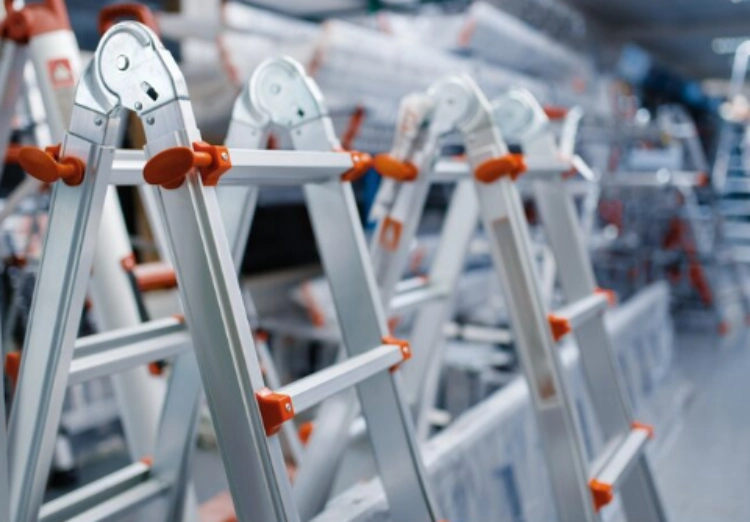
Show the rails, rungs or steps, sleeves, locks, feet, joints and attachments on the model drawing. Mark where each critical dimension is taken. A hole measured to its edge can place a bracket differently from one measured to its center.
Put the revision on both drawing and sample record. If their locks differ, settle which version the buyer approved before production starts; “sample approved” without the matching revision leaves the line guessing.
The quote, purchase order, sample tag, parts list and inspection record should carry one model code and drawing revision. A B-tagged sample with a revision C quote needs a decision before release.
For example, a buyer may approve a rail with a hole measured from its center, then receive an order drawing that dimensions the hole from its edge. Those are different references. Put the datum on the controlled drawing and record the sample’s revision before the supplier starts the run.
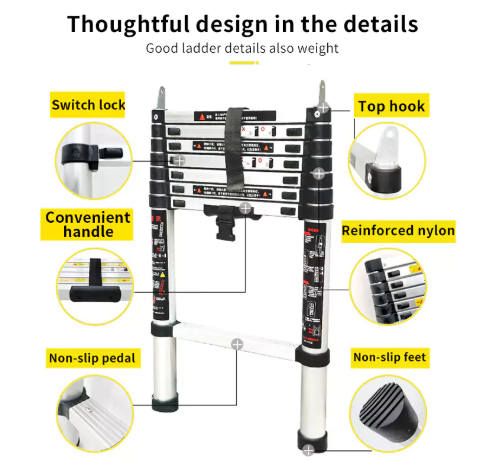
Where a ladder has two products mating, read the relevant parts of each product together. A hook-style telescopic tent ladder designed with a part that should be verify in the desired target mounting locations. A product image can demonstrate what it looks like; but a sample review can demonstrate if the parts fit as expected. Buyers looking into an alternative configuration can compare telescopic tent ladder range before finalizing the drawing.
Mark the measurement points
Hole position from rail end needs a datum and definitely needs an edge-or-center instruction. Also add method to check a formed feature too. Otherwise inspection can reference something other than what buyer intended. Otherwise inspection might consult a completely different reference than what was intended by the buyer.
Give the lock, sleeve and bracket interfaces measurable acceptance ranges. Check cosmetic details separately; they do not need to obscure the dimensions that govern fit.
Keep the tolerance for mating-part alignment separate from a cosmetic limit. Caution should also be exercised with the measurement points and methods; 2 inspectors can alternatively delegate a “pass” for measurements from different reference points. Significance of note as to where the measurement is taken and which method it should be; otherwise two inspectors might write down “pass” for measurements when different reference points are used.
After setup or a tooling change, check one rail’s profile, cut length and holes before running the batch. A wrong setting caught there affects one piece instead of a shift’s output.
Prepare tube for the model’s route
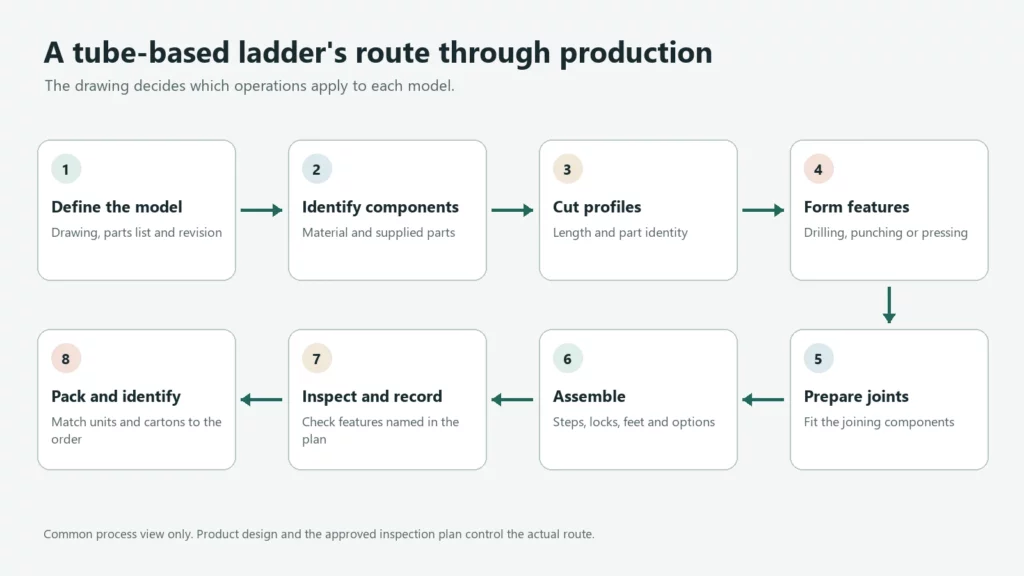
At cutting, record profile, rail length, part number and model. Keep the batch traveler attached, especially where two models share a work area before drilling.
The route then depends on profile and design. Jadduo cuts and drills round pipe, may indent or stamp it, and fits sleeves; square pipe is cut and drilled before plastic sleeves are installed. Ask for the work sheet tied to the ordered model. An equipment list describes factory capability, not the steps this particular ladder will receive.
The distinction is easier to review in a route table:
| Tube profile | Listed operations after cutting | Point to confirm on the order |
| Round pipe | Drilling, indentation or stamping, sleeve fitting | Which forming detail and sleeve belong to the model |
| Square pipe | Drilling, plastic sleeve installation | Sleeve type and installation position |
| Both, where specified | Finishing, labeling, strapping, stapling or nailing, assembly, packaging | Which steps and pack contents are required |
These are possible route steps, not a claim that every ladder passes every station. Confirm the ordered model’s route against its approved drawing and work instruction.
A fitted lock may cover a formed feature that was easy to measure at an earlier station. Keep that in-process result. Operating the assembled lock confirms function, but tells you little about a concealed dimension that nobody recorded.
Measure drilled holes from the specified datum. Inspect formed or stamped features against their acceptance rule before a joint or sleeve covers them; otherwise diagnosis may require disassembly.
Check sleeve part number and position against the bill of materials while both can be seen. A later “sleeve installed” tick cannot identify the wrong type or location.
Keep the traveler with the work
The production traveler follows a part or batch from station to station. On the ordered ladder, it should carry the model and drawing revision beside each operation and check. A blank or redacted example for that model will show how the route is controlled without revealing another customer’s order.
Jadduo lists pipe-cutting machines, presses, hole-punching equipment, riveters, tube expanders and injection-molding machines. These tell a buyer what the factory can do. For this order, ask where the quoted model is cut, punched, joined and fitted, and compare that route with the traveler.
Assemble and inspect features at the right time
At assembly, compare rails, rungs, sleeves, locks, feet and fittings with the approved parts list. Operate moving features according to their instructions. Where the ladder attaches to another product, try the actual mating component and record the approved model and revision combination.
Measure the hole before joining and operate the lock after assembly. Final inspection covers the completed unit, while those earlier results show what happened at the stations where the features were accessible.
Ask for an inspection plan with feature, station, method, limit and record field. A blank form is enough to review the layout. Actual records must identify the model, revision, order and quantity checked.
| Production point | Check to define | Useful record detail |
| Cutting | Profile and rail length | Model, part number, revision |
| Drilling or forming | Hole location or formed detail | Datum, method, result |
| Sleeve installation | Part and position | Part identity and fit |
| Assembly | Joints, locks, feet, attachment | Function or interface result |
| Pack-out | Unit, accessories, manual, carton | Order-linked packing list |
When a measurement falls outside the agreed limit, record the affected units and disposition. Hold, rework, replacement or acceptance under a written deviation are different decisions, each needing an identified approver. The next shift should not have to guess whether those parts may continue.
For workplace ladders, manufacturing checks and user checks answer different questions. The UK’s HSE explains how to select a ladder for a task and gives pre-use inspection guidance. Its ladder use guidance and condition inspection advice concern ladders in service. They do not approve a factory drawing or replace the model’s production records.
Finish, label, and pack to the order
Specify the required finishing, labeling, strapping, stapling or nailing, assembly and packing steps for this model. Check manuals, fittings, carton marks, protection and unit count at pack-out, with grouped cartons counted accordingly.
For solid wood packaging, confirm destination and route requirements under the International Plant Protection Convention’s ISPM standards for wood packaging. Those standards concern regulated wood packaging and plant products; ordinary cardboard cartons and plastic protectors are a different matter.
Before release, set the finished ladder against the controlled drawing and approved sample. Check its accessories, labels, manual, carton and unit count against the purchase order. That can catch a packing omission, though earlier dimensional results still need their own records.
What buyers should request before release
Before release, check three things:
- The sample tag and order drawing identify the same model and revision.
- The traveler names the route; the inspection record identifies the feature, method, and result.
- The quotation and packing list agree on unit count, accessories, manual, and carton.
A mismatch among those records should put release on hold until the build version is agreed.
For company details, see About us. To request a quote, Contact us with the model, selected size, revision, quantity, destination, and checks you need recorded.
Does every ladder use the same manufacturing process?
No. The model and tube profile set the route. Round pipe can be drilled, indented or stamped before sleeving; square pipe is drilled and fitted with plastic sleeves. Other ladder designs may call for different forming, joining and assembly work.
What should be checked before a ladder is packed?
Compare the finished model and fittings with the order first. Run the function and mating-interface checks specified for that design, then reconcile the manual, label, carton and unit count with the packing list. Keep any hold or approved deviation under the same model and purchase order.