The first clue may be a faint rattle while a ladder is being carried. A rivet might hold a rung, a brace, a stay or an accessory; the consequence of movement depends on which parts it joins. A buyer can reject a sample with an uncertain structural joint. A maintenance lead can tag a working ladder out of use.
At a glance
A moving structural rivet on a Jadduo ladder stops sample approval or use until the whole joint is assessed under the correct model procedure.
Structural rivet is a fastener in a load-bearing connection. Retainer is hardware that keeps a moving joint assembled. Lot identifier is the batch reference used to trace similar units.
Buyers sourcing from Jadduo should hold a sample with a moving structural joint. Keep the ladder out of use until the maker’s instructions or an authorized competent assessment establish the correct remedy.
- Locate the loose joint.
- Keep the ladder out of use.
- Trace the model and lot.

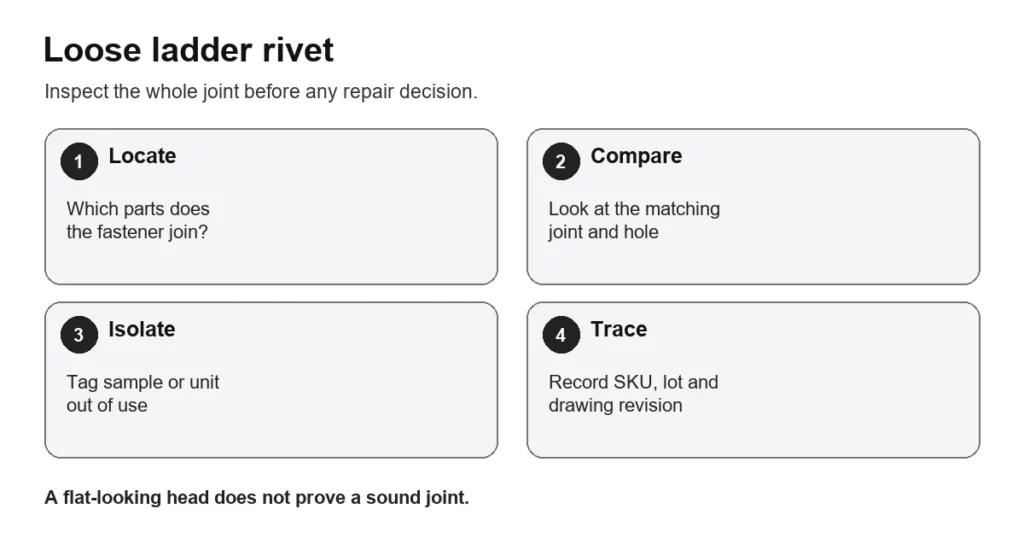
Begin by finding out what the rivet holds
Find the fastener, then follow the parts on either side of it. Is it fixing a rung to a rail, retaining a cover, or holding a moving stay? Do not rely on the ladder’s folded appearance; a stay or lock may reveal its function only after the frame opens. In the defect note, name the moving part and the stationary part. “Right rear stay shifts at the lower rail” is a better starting point than “one rivet loose.”
The HSE’s detailed ladder inspection guidance specifically lists loose rivets, damaged stays, cracked or damaged welded joints and loose rungs among conditions to look for.
Jadduo makes aluminium, telescopic, step, platform and extension ladders and supplies OEM/ODM orders. Its equipment inventory lists six riveting machines, together with punching, pipe-cutting and tube-expanding equipment. The question for the supplier is which drawing and fastener specification belong to the affected SKU.
Recognize a joint that needs investigation
Movement at the fastener
A head standing proud of the surface or a washer that no longer seats deserves a closer look. A hinge may be designed to turn; its retainer is still meant to keep the joint together. If the hole around it has opened up, the movement is no longer just the intended pivot action.
Fresh metal dust is another clue.
Damage around the hole
Take a close photograph of the hole and the surrounding rail. A crack, burr or oval-shaped opening changes the problem from “replace the rivet” to “assess the joint and member.” A new fastener cannot make a stretched hole round again. Look along the rung and brace as well: a bent connected part can continue to load a replacement fastener incorrectly.
Jadduo’s production sequence includes cutting, drilling, stamping or indenting, sleeving, labeling, assembly and packaging. Hole placement and the sequence of assembly are therefore relevant questions for a sample with joint variation. A buyer can ask whether the affected location is formed and riveted consistently across production units. The batch evidence must come from the supplier’s records and inspected units.
Missing or unsuitable parts
Lay the approved sample photograph beside the unit under review. Is a washer absent? Does one fastener stand higher than its partner? Is a hook attached with a different piece of hardware? Do not sign off on a substitute because its head looks similar. The drawing and parts list must identify it, and any repair method must belong to this model.
The HSE pre-use check covers stiles, feet, rungs, locks and fixings. It also calls for a fresh look after an event such as a drop. A ladder returned from a vehicle after rough transport deserves more than a glance at its feet. Open it where appropriate and inspect the joints before putting it back among usable equipment.
A product example: the hook is part of the check
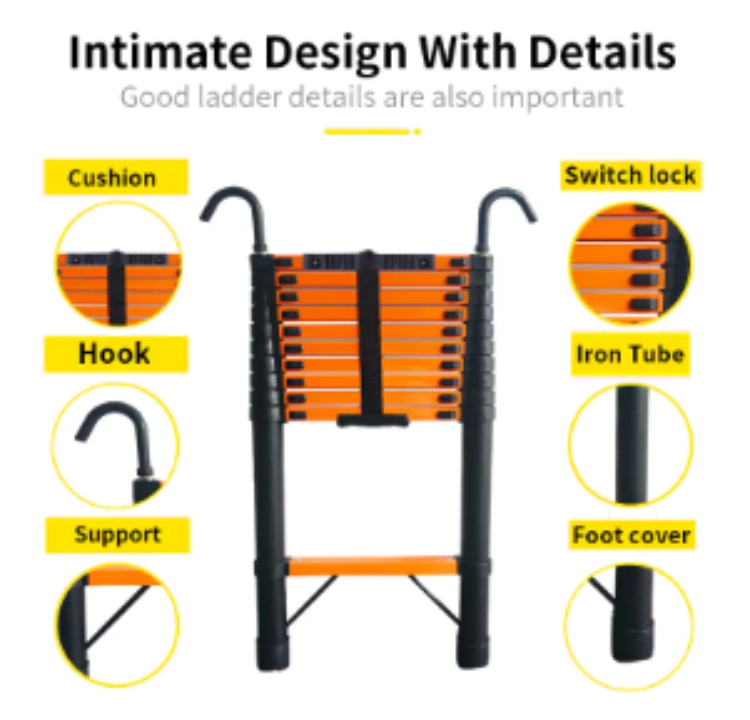
The Jadduo Anti-slip Cushion Iron Ladder with Hook describes a removable hook and a riveted hook base. That is a reason to inspect the hook attachment and its intended rotation on a sample, not a guarantee that every hook or fastener will remain sound indefinitely. Confirm that the hook and its fastener move only as the current instructions allow and that the base does not shift on the ladder structure.
The product is a telescopic leaning ladder with accessories, not a self-supporting step ladder. If the buyer’s task is instead A-frame access, choose and inspect an appropriate step ladder. If the task needs a hook, confirm the intended support and the hook’s permitted use from the model instructions. A hook described for positioning does not automatically become an anchor for fall protection or a universal attachment to any surface.
Locking mechanisms and a stable base are separate selection factors for Jadduo ladders. In a hook-equipped telescopic sample, these remain separate checks. A sound hook rivet cannot compensate for a rung section that fails to lock. A working lock cannot compensate for a cracked rail near the hook. Record the result for each assembly instead of allowing one good feature to cover another defect.
Decide whether to reject, quarantine or seek repair
If the joint is structural, hold the purchasing sample. Send the supplier the item number, photographs and a short description of the movement. Request the current drawing, cause and corrected sample. Then inspect the entire assembly again. One tight new rivet does not clear an adjacent distorted hole or bent stay. Should the same defect appear on several units, separate the lot while the supplier traces the production run.
For a ladder already in service, a “Do Not Use” tag and a place away from the working stock prevent an accidental climb. Under OSHA’s U.S. construction ladder rule, a ladder with structural defects must be identified and withdrawn until repaired.
Ask the maker whether this exact model has an approved repair. Keep the ladder segregated while the answer is documented; a quick workshop fix can erase the evidence without restoring the joint.
Put the defect into an order or maintenance record
A useful report starts with the model and lot number. Mark the joint’s location in words a stranger can follow, such as “lower left hook bracket, viewed from the climbing side.” Note whether the unit came straight from a carton or has seen service, a fall or a prior repair. One wide photograph identifies the ladder; two close photographs show the front and back of the joint. If movement is intermittent, a short unloaded video can show it without subjecting the ladder to a makeshift test.
Jadduo lists a 10,000-square-meter facility, 20 R&D staff and pre-shipment quality checks. None of those numbers tells a receiving inspector whether the rivet in hand is seated. Put the ordered SKU’s joint criteria on the purchase record and compare a production unit with the signed sample. Where a customer changes the hook or bracket, record the drawing revision. Months later, that revision may be the difference between tracing a fault and debating which joint was supplied.
Injection molding, pipe cutting, punching, riveting and tube expansion are among the factory’s documented production capabilities. For a recurring joint problem, those process stages suggest useful supplier questions: Was the hole made to the approved size? Was the correct fastener installed? Was the assembly supported during riveting? Were finished joints inspected? Do not answer these questions from appearance alone; request the supplier’s actual corrective-action record.
| What moves | Immediate disposition |
| Rung or stay at the rail | Isolate the ladder and document both sides of the joint. |
| Hook bracket on the sample | Compare the approved drawing and the current fitting. |
| Several units from one lot | Hold the lot for a supplier investigation. |
Questions buyers and users ask
Is a rattling rivet always structural?
No. If the joint’s role cannot be established on site, set the ladder aside and ask the maker before anyone climbs it.
Can a bent rivet head be hammered flat?
No. A flat-looking head can conceal a damaged shank or stretched hole. Preserve the joint for an approved assessment.
Does one failed unit mean the entire shipment fails?
First identify the lot. Set its stock aside while the supplier checks how many units share the joint configuration and production run. Sample more units under agreed criteria, then document which may be released. One bad unit is a reason to investigate; it is not a measurement of every unit in the container.
A clear stopping rule
When a joint moves unexpectedly, the safe decision is to stop using or approving that ladder until its role and condition are established.
The company profile and contact page help trace the model and lot.